Introduction
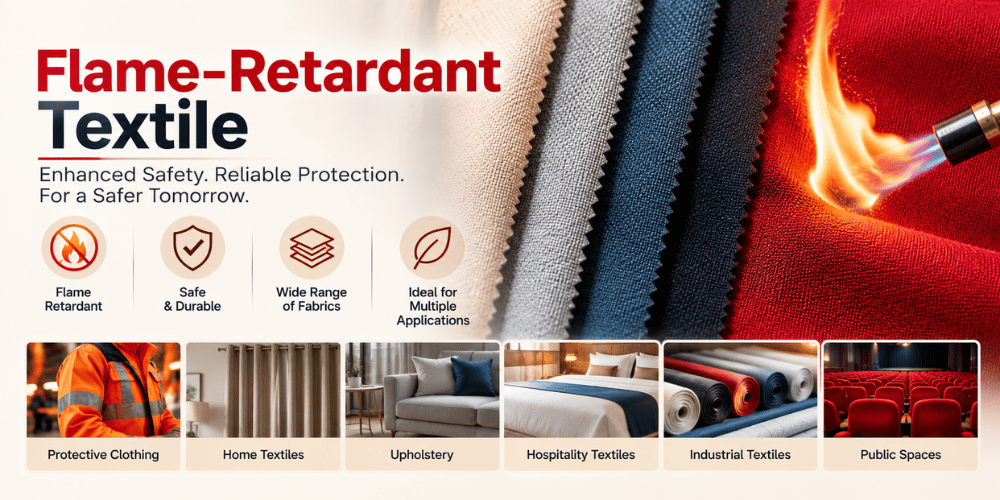
Flame-Retardant Textile is a fabric that has inherent or treated characteristics intended to reduce flame spread or improve fire performance under defined test conditions. Textile fire performance depends on fiber composition, fabric construction, treatment chemistry, application rate, drying, cleaning, environmental exposure and the applicable test method. Flame-retardant textiles can be used for curtains, stage drapes, upholstery, hotels, theatres, exhibitions, offices and other commercial applications. Buyers should verify fabric compatibility, fire-test documentation, application requirements and maintenance conditions before selecting a textile treatment.
Flame-Retardant Textile is an important material category for applications where fabrics and textile products need improved fire-performance characteristics. Gopalfiresafety provides fire-safety products and information through https://gopalfiresafety.com/, supporting businesses, contractors, architects, textile users and safety professionals looking for practical fire-protection solutions. Gopalfiresafety also shares fire-safety information, product updates and educational content through Instagram. The suitability of any textile fire-retardant treatment depends on the fabric composition, treatment chemistry, application method, required performance and applicable fire-testing requirements.
Textiles are widely used in commercial buildings, hotels, hospitals, theatres, restaurants, offices, schools, exhibition centers, event venues and residential interiors. Curtains, upholstery, carpets, stage drapes, decorative fabrics, acoustic materials and other textile products can contribute to fire development if they are not appropriately selected or treated. For this reason, textile fire protection is an important part of broader fire-safety planning.
The term Flame-Retardant Textile describes textile material designed or treated to reduce the tendency of a fabric to ignite, sustain combustion or allow flame to spread rapidly under defined conditions. It does not mean that a textile is completely fireproof or incapable of burning. Actual performance depends on the specific fabric, treatment, construction, exposure and test method.
What Is a Flame-Retardant Textile?
A Flame-Retardant Textile is a fabric or textile material that has been engineered, manufactured or treated to provide improved resistance to flame propagation under specified conditions.
Textile flame-retardant performance can be achieved through different approaches.
These can include:
- Selection of inherently flame-resistant fibers
- Chemical treatment of conventional fibers
- Application of flame-retardant finishes
- Back-coating systems
- Fiber modification
- Blending of suitable fibers
- Specialized textile manufacturing processes
The appropriate approach depends on the intended application.
For example, a curtain in a hotel may have different requirements from protective clothing used by an industrial worker. Similarly, upholstery fabric for a public building may have different testing requirements from decorative fabric used for an exhibition display.
Therefore, choosing a textile should begin with the intended application rather than simply searching for a product described as “fireproof.”
Why Textile Fire Protection Matters
Fabrics are common in occupied spaces.
They may be found in:
- Curtains
- Drapes
- Upholstery
- Carpets
- Wall coverings
- Stage curtains
- Decorative panels
- Event decorations
- Acoustic panels
- Bedding
- Mattresses
- Furniture
- Exhibition materials
Some textiles can ignite relatively easily when exposed to an ignition source. Once ignited, flames can potentially spread across a fabric surface.
A suitable flame-retardant treatment can modify the burning behavior of compatible materials and may help reduce flame spread under the applicable test conditions.
However, textile fire protection should not be considered independently from the complete fire-safety strategy.
A building may also require:
- Fire alarms
- Fire detection
- Emergency lighting
- Fire extinguishers
- Fire doors
- Smoke control
- Fire-resistant construction
- Evacuation planning
- Passive fire protection
Textile treatment is one component within this larger system.
Flame Retardant vs Fire Resistant vs Fireproof
These terms are often confused.
Flame retardant
Flame retardant generally refers to a material or treatment designed to reduce or delay flame spread or combustion under specified conditions.
Fire resistant
Fire resistant generally refers to the ability of a material, product or assembly to maintain specified performance when exposed to fire.
Fireproof
“Fireproof” is often used as a marketing term, but it can be misleading when applied broadly to combustible textiles.
A textile should not automatically be described as completely fireproof merely because it has been treated with a flame-retardant product.
For technical communication, terms such as Flame-Retardant Textile, flame-retardant treatment and textile fire performance are generally more precise.
How Flame-Retardant Textile Treatments Work
Different flame-retardant systems work through different mechanisms.
Some treatments can promote formation of a protective char layer.
The char can act as a barrier between the underlying textile and heat or oxygen.
Other formulations can influence combustion chemistry or reduce the amount of combustible material available to sustain flame propagation.
Some treatments can also modify the way heat moves through the treated material.
The exact mechanism depends on the chemistry and textile.
This is why a treatment that works well on one fabric may not provide identical performance on another.
Fabric Composition Matters
Fabric composition is one of the most important considerations when selecting a flame-retardant treatment.
Common textile fibers include:
- Cotton
- Polyester
- Wool
- Nylon
- Rayon
- Acrylic
- Polypropylene
- Blended fibers
Each fiber has different chemical and thermal characteristics.
A treatment formulated for cellulose-based fabrics should not automatically be assumed to work equally well on synthetic textiles.
Before applying a flame-retardant product, the supplier or manufacturer should confirm compatibility with the fabric composition.
Flame-Retardant Treatment for Cotton
Cotton is a cellulose-based natural fiber widely used for curtains, upholstery, clothing, bedding and decorative textiles.
Untreated cotton can support combustion.
Certain textile flame-retardant treatments are designed specifically for cellulose-based fabrics.
Performance can depend on:
- Fabric weight
- Fiber composition
- Fabric construction
- Treatment concentration
- Application rate
- Drying
- Washing
- Environmental exposure
The treatment should therefore be selected according to the manufacturer’s technical recommendations.
Flame-Retardant Treatment for Polyester
Polyester is a widely used synthetic fiber.
It is common in:
- Curtains
- Upholstery
- Event fabrics
- Decorative fabrics
- Theatre materials
- Hotel textiles
Polyester behaves differently from cotton when exposed to heat and flame.
Consequently, a cotton-specific treatment should not automatically be applied to polyester.
For polyester textiles, the manufacturer should confirm:
- Compatibility
- Recommended application method
- Application rate
- Drying conditions
- Expected fire performance
- Cleaning limitations
Blended Fabrics
Blended fabrics combine different fibers.
Examples include:
- Cotton-polyester
- Polyester-viscose
- Cotton-rayon
- Wool blends
Blended textiles can be more complicated to treat because each fiber can respond differently to heat and chemicals.
A product that performs well on pure cotton may not produce identical results on a cotton-polyester blend.
Testing representative fabric samples can therefore be useful before large-scale treatment.
Inherent Flame Resistance
Some textile fibers are manufactured with flame-resistant characteristics incorporated into the fiber itself.
This differs from applying a surface treatment after fabric manufacturing.
Inherently flame-resistant textiles can provide performance that is less dependent on surface application, although the exact characteristics still depend on the fiber and construction.
In contrast, a treated conventional textile depends on the treatment remaining effective and compatible with the fabric.
Both approaches can have suitable applications.
Surface-Applied Flame Retardants
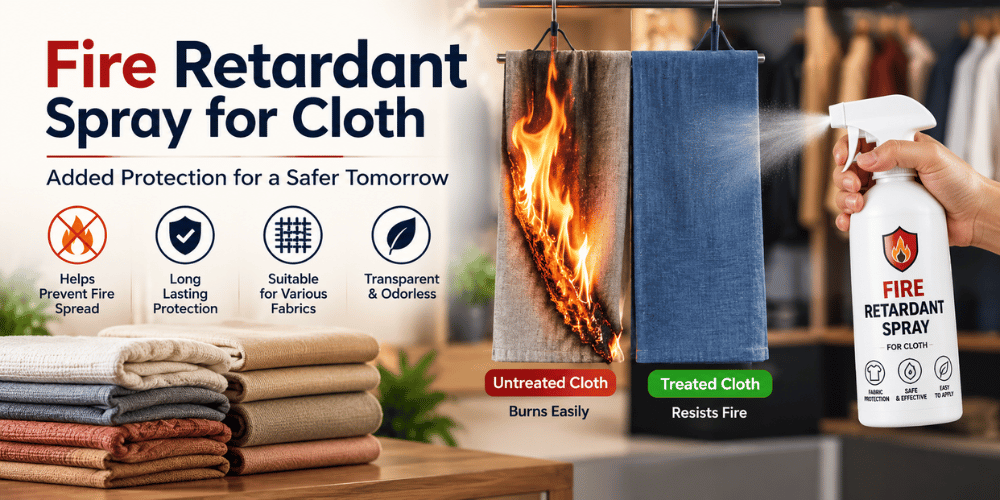
Surface-applied textile treatments are commonly used when an existing fabric needs additional fire-performance characteristics.
A spray or coating can be applied to compatible fabric using an appropriate method.
However, successful treatment depends on:
- Uniform coverage
- Correct concentration
- Correct application rate
- Proper drying
- Fabric preparation
- Environmental conditions
- Manufacturer instructions
An unevenly treated textile may have inconsistent performance.
Preparing Fabric Before Treatment
Fabric should be appropriately prepared before applying a flame-retardant treatment.
Preparation can involve:
- Cleaning
- Removing dust
- Removing oil
- Removing incompatible finishes
- Drying the textile
- Checking fabric condition
- Testing a small sample
The presence of dirt, grease, previous coatings or other finishes can affect treatment performance.
For this reason, a sample test is often a useful step before treating a large quantity of fabric.
Application Methods
Flame-retardant textile treatments can be applied using different methods depending on the product.
Potential methods include:
- Spray application
- Padding
- Dipping
- Back coating
- Industrial finishing
- Controlled textile-processing equipment
For smaller applications, spray treatment may be practical.
For large-scale textile production, controlled industrial treatment can provide more consistent application.
The method should always follow the manufacturer’s technical documentation.
Why Application Rate Matters
The quantity of flame-retardant treatment applied to a fabric can directly influence performance.
Too little treatment may not provide the intended protection.
Excessive treatment can create other issues, such as:
- Changes in fabric feel
- Surface appearance changes
- Stiffness
- Discoloration
- Compatibility problems
- Unnecessary chemical consumption
The objective is controlled application according to the manufacturer’s recommendation.
Drying Requirements
After treatment, fabric generally needs appropriate drying.
Drying conditions can affect:
- Treatment fixation
- Surface uniformity
- Fabric appearance
- Residual moisture
- Final fire-performance characteristics
Depending on the product, drying may occur naturally or under controlled industrial conditions.
The manufacturer’s instructions should specify appropriate drying requirements.
Testing Flame-Retardant Textiles
Fire testing is essential when a textile is required to meet a defined fire-performance requirement.
Testing may evaluate characteristics such as:
- Ignition
- Flame spread
- Burning behavior
- Afterflame
- Afterglow
- Smoke
- Heat release
- Vertical or horizontal flame behavior
The applicable test depends on the textile and intended use.
A test result should always be interpreted together with its test method and specimen description.
Why Test Reports Matter
A test report can provide valuable information about:
- Tested fabric
- Fabric composition
- Fabric weight
- Treatment
- Application method
- Test method
- Conditioning
- Test results
- Laboratory
- Date of testing
For commercial projects, this documentation can help demonstrate that the selected textile has been evaluated according to the required criteria.
A generic statement such as “fireproof fabric” is not equivalent to documented test performance.
Flame-Retardant Textile for Curtains
Curtains are among the most common applications for textile fire protection.
They are widely used in:
- Hotels
- Offices
- Restaurants
- Hospitals
- Schools
- Theatres
- Auditoriums
- Conference rooms
- Public buildings
Curtains can cover large surface areas and therefore deserve attention in fire-safety planning.
A suitable treatment can help improve the fire performance of compatible curtain fabrics.
Flame-Retardant Stage Curtains
Stage curtains and theatrical drapes are frequently made from large quantities of fabric.
These environments can contain:
- Lighting equipment
- Electrical systems
- Audio equipment
- Temporary structures
- Decorative materials
For this reason, fire performance is an important consideration.
Stage fabric should be selected according to the venue’s requirements and the relevant fire-testing criteria.
Flame-Retardant Upholstery
Upholstery is another important application.
Fabric may cover:
- Chairs
- Sofas
- Theatre seating
- Hotel furniture
- Restaurant seating
- Office furniture
A suitable treatment can help improve the fire performance of compatible upholstery materials.
However, upholstery often contains multiple components, such as:
- Fabric
- Foam
- Padding
- Adhesive
- Frame
Testing the fabric alone does not necessarily establish the fire performance of the complete upholstered item.
Flame-Retardant Textile for Hotels
Hotels use large quantities of fabric throughout their buildings.
Common applications include:
- Curtains
- Bedspreads
- Upholstery
- Carpets
- Decorative fabrics
- Event materials
A comprehensive hotel fire-safety program should consider all these materials.
Where textile treatment is required, hotel operators should maintain documentation showing which fabrics were treated, when they were treated and what maintenance requirements apply.
Flame-Retardant Textile for Restaurants
Restaurants can contain:
- Curtains
- Upholstery
- Decorative fabrics
- Table textiles
- Acoustic materials
Cooking equipment and electrical systems can introduce additional ignition risks.
The use of suitable fire-performance textiles can therefore form part of a broader safety approach.
Flame-Retardant Textile for Hospitals
Hospitals use curtains, privacy screens, upholstery and other textiles.
Fire-safety requirements can be especially important because patients may have limited mobility.
Textile selection should consider:
- Fire performance
- Hygiene
- Cleaning
- Durability
- Chemical compatibility
- Maintenance
A treatment should not compromise other essential properties of the textile.
Flame-Retardant Textile for Schools
Schools can contain:
- Stage curtains
- Classroom curtains
- Upholstered furniture
- Decorative materials
- Acoustic fabrics
Textile fire protection should be integrated into the overall building fire-safety plan.
Flame-Retardant Textile for Exhibitions
Exhibitions frequently use temporary fabric structures.
Examples include:
- Exhibition walls
- Drapes
- Canopies
- Decorative fabrics
- Display structures
Venue organizers may require fire-performance documentation before allowing materials into the exhibition area.
This makes documentation particularly important for exhibition contractors.
Flame-Retardant Textile and Cleaning
Cleaning can affect textile fire-retardant performance.
Depending on the treatment, washing or dry cleaning may reduce the effectiveness of a surface-applied treatment.
Before cleaning treated fabric, users should check the manufacturer’s instructions.
The instructions may specify:
- Washing temperature
- Detergent restrictions
- Dry-cleaning compatibility
- Number of washes
- Re-treatment requirements
Maintenance and Re-Treatment
A treated textile should not necessarily be considered permanently protected.
Performance can change due to:
- Washing
- Abrasion
- Chemical cleaning
- Moisture
- UV exposure
- Physical wear
- Repeated handling
A maintenance plan can therefore be useful for commercial textile applications.
Records can include:
- Treatment date
- Product used
- Fabric type
- Application method
- Application quantity
- Test documentation
- Cleaning history
- Re-treatment date
Moisture and Humidity
Environmental exposure can affect textile treatments.
Humidity and moisture can influence:
- Fabric condition
- Chemical stability
- Surface performance
- Drying
- Storage
Outdoor or semi-outdoor textiles require additional consideration because they may be exposed to rain, humidity and sunlight.
UV Exposure
Ultraviolet exposure can affect some textile finishes over time.
For fabrics used near windows or outdoors, users should check whether the flame-retardant treatment has environmental durability information.
A treatment suitable for an indoor curtain should not automatically be assumed to be suitable for long-term outdoor exposure.
A Flame-Retardant Textile is designed or treated to provide improved flame-performance characteristics under specified conditions. Selecting the correct treatment requires consideration of fabric composition, intended application, application method, testing, cleaning and environmental exposure.
Gopalfiresafety provides fire-safety information and products through gopalfiresafety.com, while its Instagram presence provides additional educational fire-safety content.
Flame-Retardant Textile: Testing, Applications, Certification and Maintenance
Understanding Textile Fire Testing
A Flame-Retardant Textile should be evaluated according to the fire-performance requirement relevant to its application.
There is no single universal fire test that applies equally to every textile.
Testing requirements can depend on:
- Fiber composition
- Textile construction
- End use
- Building type
- Geographic market
- Applicable regulations
- Contract specifications
- Customer requirements
For example, a stage curtain may have different testing requirements from upholstery or protective clothing.
This is why buyers should identify the required test method before purchasing a fire-retardant textile treatment.
Representative Sample Testing
Before treating a large quantity of fabric, representative sample testing can help identify compatibility and performance issues.
A sample can be evaluated for:
- Appearance
- Color
- Hand feel
- Treatment absorption
- Drying
- Adhesion
- Flame behavior
- Compatibility
If the treatment changes the fabric significantly, the application method or formulation may need to be reconsidered.
Laboratory Testing
Professional textile fire testing should use an appropriate laboratory and recognized test method.
A laboratory report may identify:
- Fabric composition
- Fabric mass
- Thickness
- Conditioning
- Test procedure
- Treatment
- Flame exposure
- Observed results
The report should be carefully matched to the product being purchased.
Testing one fabric does not automatically certify every fabric treated with the same product.
Certification and Compliance
Certification requirements vary by product and application.
A supplier should clearly distinguish between:
- Product certification
- Laboratory test report
- Manufacturer declaration
- Fire-retardant treatment certificate
- Material classification
- Assembly certification
These documents are not necessarily interchangeable.
When a project specification requires a specific certification, the buyer should request the exact documentation supporting that requirement.
Fire-Retardant Textile for Public Buildings
Public buildings may have large numbers of occupants.
Examples include:
- Airports
- Convention centers
- Shopping malls
- Hospitals
- Schools
- Universities
- Government buildings
- Auditoriums
- Museums
Textile materials should be selected according to the fire-safety requirements applicable to the facility.
A documented Flame-Retardant Textile treatment can support material compliance when the product and test requirements match the project.
Fire-Retardant Textile in Theatres
Theatres often contain extensive fabric materials.
These can include:
- Stage curtains
- Backdrops
- Drapes
- Acoustic curtains
- Upholstered seating
- Decorative textiles
The combination of lighting, electrical equipment and large fabric surfaces makes textile fire performance particularly important.
Theatre operators should maintain records of textile treatment and testing.
Fire-Retardant Textile for Event Venues
Event venues regularly change decorations and temporary installations.
Temporary fabric materials can include:
- Drapes
- Canopies
- Backdrops
- Exhibition fabrics
- Decorative structures
Event organizers should identify venue requirements before installing fabric.
A supplier should be able to provide appropriate documentation where required.
Fire-Retardant Textile for Acoustic Panels
Textile-covered acoustic panels are increasingly used in offices, studios, conference rooms and commercial interiors.
An acoustic panel can contain:
- Textile covering
- Foam
- Mineral fiber
- Fiberglass
- Adhesive
- Structural backing
Testing only the outer textile may not represent the performance of the complete acoustic panel.
Where fire performance is critical, the complete product should be evaluated according to the applicable requirement.
Fire-Retardant Textile for Upholstered Furniture
Furniture can combine several combustible components.
A chair may include:
- Fabric
- Foam
- Adhesive
- Padding
- Wood
- Plastic
Consequently, the fire performance of the fabric alone should not automatically be considered the fire performance of the complete chair.
Furniture manufacturers should follow the applicable testing requirements for the complete product.
Flame-Retardant Textile for Protective Clothing
Protective clothing is a specialized field.
Industrial workers may require protection from:
- Flame
- Heat
- Molten materials
- Electrical hazards
- Arc exposure
- Industrial processes
A general fabric spray should not automatically be used to manufacture protective clothing.
Protective clothing must meet the applicable performance requirements for its intended hazard.
This is an important distinction because personal protective equipment requires comprehensive evaluation.
Textile Fire Protection for Decorative Fabrics
Decorative textiles are frequently used in:
- Hotels
- Restaurants
- Retail stores
- Wedding venues
- Event spaces
- Exhibitions
Because these materials may be used primarily for aesthetics, fire-performance requirements can sometimes be overlooked.
Designers should consider fire safety at the material-selection stage rather than treating it as an afterthought.
Flame-Retardant Textile and Fabric Weight
Fabric weight can influence treatment requirements.
A lightweight fabric may absorb a treatment differently from a heavy upholstery fabric.
Important variables include:
- GSM
- Thickness
- Weave
- Fiber type
- Porosity
- Surface finish
A treatment dosage should therefore be based on the manufacturer’s recommendations rather than simply applying the same quantity to every fabric.
Color and Appearance
Some chemical treatments can affect fabric appearance.
Potential changes can include:
- Color shift
- Surface sheen
- Stiffness
- Hand feel
- Texture
- Residue
A small test area can help identify these issues before full-scale treatment.
For luxury hotels, theatres and decorative interiors, maintaining appearance can be almost as important as maintaining fire performance.
Application Equipment
The appropriate equipment depends on the treatment process.
For spray application, equipment should provide:
- Uniform coverage
- Controlled output
- Appropriate spray pattern
- Consistent application
Industrial textile treatment may require specialized padding or finishing equipment.
The objective is consistent treatment across the entire textile surface.
Ventilation and Worker Safety
Chemical textile treatments should be applied in appropriate working conditions.
Depending on the product, workers may need:
- Gloves
- Eye protection
- Protective clothing
- Respiratory protection
- Adequate ventilation
The safety data sheet and manufacturer’s instructions should be reviewed before application.
Fire-retardant performance does not remove the need for chemical-handling safety.
Storage of Flame-Retardant Products
Textile fire-retardant products should be stored according to the manufacturer’s recommendations.
Storage conditions can involve:
- Temperature
- Humidity
- Container sealing
- Shelf life
- Sunlight
- Freezing conditions
Using expired or improperly stored material may affect application performance.
Quality Control
Quality control helps maintain consistent textile fire protection.
A commercial treatment program can record:
- Fabric batch
- Treatment product
- Product batch
- Application quantity
- Date
- Operator
- Drying conditions
- Test result
- Inspection result
This documentation can become valuable during audits or project inspections.
Treatment of Large Fabric Areas
Large curtains and drapes require special attention.
Uneven application can occur when:
- Spray overlap is inconsistent
- Fabric is folded
- Sections are missed
- Treatment quantity varies
- Drying is uneven
Large installations should use a controlled treatment procedure.
Folded Fabric and Treatment
Fabric should generally be positioned so that the treatment reaches the intended surface.
If fabric is folded during spraying, some areas may receive insufficient treatment.
This is especially important for:
- Curtains
- Large drapes
- Backdrops
- Event fabrics
Uniform treatment is essential for consistent performance.
Flame-Retardant Textile and Re-Treatment
Re-treatment may be required when the original treatment loses effectiveness.
Potential causes include:
- Washing
- Dry cleaning
- Abrasion
- Moisture
- Age
- UV exposure
- Chemical contamination
The frequency of re-treatment should be based on product documentation, use conditions and applicable testing requirements.
There should not be a universal claim that one treatment lasts for a fixed number of years in every application.
Common Mistakes in Textile Fire Protection
Mistake 1: Treating every fabric with the same product
Different fibers require different treatments.
Mistake 2: Ignoring fabric blends
A blended textile can behave differently from a single-fiber fabric.
Mistake 3: Applying too little product
Insufficient treatment may not provide the intended performance.
Mistake 4: Applying excessive product
Over-treatment can affect appearance and fabric properties.
Mistake 5: Skipping sample testing
A small compatibility test can prevent large-scale problems.
Mistake 6: Assuming treatment is permanent
Cleaning and environmental exposure can affect performance.
Mistake 7: Using a general treatment for protective clothing
Specialized protective clothing requires appropriate testing and certification.
Mistake 8: Confusing test reports with certification
A laboratory test report and product certification are not automatically the same.
Mistake 9: Ignoring the complete assembly
Fabric may be only one component of an upholstered or composite product.
Mistake 10: Making unsupported fire-safety claims
Terms such as “fireproof” should not be used without appropriate technical evidence.
How to Choose a Flame-Retardant Textile Supplier
When selecting a supplier, consider:
Product compatibility
Does the treatment work with the specific fabric?
Technical documentation
Is a technical datasheet available?
Fire testing
What test method supports the performance claim?
Application guidance
Are application rate and drying instructions provided?
Maintenance
Are washing and cleaning limitations documented?
Environmental durability
Is there information for humidity, moisture or UV exposure?
Traceability
Can treated batches be identified?
Technical support
Can the supplier answer questions about textile composition and application?
Questions to Ask Before Buying
Before purchasing a textile fire-retardant product, ask:
- Which fabrics can be treated?
- Is it suitable for cotton?
- Is it suitable for polyester?
- Can it be used on blended fabrics?
- What is the recommended application rate?
- What drying conditions are required?
- Does washing affect performance?
- Is dry cleaning permitted?
- What fire test supports the claim?
- Is a technical datasheet available?
- Is a safety data sheet available?
- Is sample testing recommended?
- What environmental conditions are permitted?
- Is re-treatment required?
- What documentation is supplied?
These questions can help buyers select an appropriate product instead of relying on generic marketing terminology.
Fire-Retardant Textile for Export Projects
International textile projects can involve different regulatory requirements.
Exporters should confirm:
- Destination country
- Applicable fire regulations
- Required test standards
- Customer specifications
- Laboratory requirements
- Documentation requirements
- Labeling requirements
A textile accepted in one market may not automatically satisfy another market’s requirements.
Textile Fire Protection for India
Indian commercial projects may have requirements relating to building use, occupancy, textile application and fire safety.
The project team should confirm the applicable requirements with the relevant authority, consultant or specification.
Fire-retardant treatment should be selected based on documented requirements rather than assumptions.
Gopalfiresafety Fire-Safety Solutions
Gopalfiresafety provides fire-safety products, information and solutions for businesses and professionals.
Visit https://gopalfiresafety.com/ to explore fire-safety solutions and educational resources.
Gopalfiresafety also shares information through Instagram, helping businesses and professionals stay informed about fire protection, passive fire safety and related products.
When selecting a textile fire-retardant treatment, Gopalfiresafety recommends focusing on compatibility, application, testing, documentation and maintenance rather than relying only on the term “fireproof.”
Frequently Asked Questions
What is a Flame-Retardant Textile?
A Flame-Retardant Textile is a fabric that has inherent or treated characteristics intended to reduce flame spread or improve fire performance under specified test conditions.
Is flame-retardant fabric fireproof?
No. Flame retardancy does not mean that a textile is completely fireproof. Performance depends on the material, treatment, test method and exposure.
Can cotton be made flame retardant?
Certain treatments are designed for cotton and other cellulose-based fabrics. Compatibility and performance should be confirmed with the product manufacturer.
Can polyester be treated with flame-retardant chemicals?
Some products are designed for polyester and synthetic textiles. A treatment should only be used when the manufacturer confirms compatibility.
Can flame-retardant treatment be used on curtains?
Yes, suitable treatments can be used on compatible curtain fabrics when they meet the applicable performance requirements.
Does washing remove flame-retardant treatment?
Washing can reduce or remove some surface-applied treatments. The manufacturer’s cleaning and maintenance instructions should always be followed.
How long does textile flame-retardant treatment last?
There is no universal duration. Durability depends on the treatment, textile, cleaning, environmental exposure, abrasion and application conditions.
Can flame-retardant treatment be used on upholstery?
Suitable treatments can be used on compatible upholstery textiles, but the fire performance of complete upholstered furniture may require separate evaluation.
Is flame-retardant treatment suitable for protective clothing?
Not automatically. Protective clothing requires appropriate testing and certification for the specific hazard and application.
Why is fabric composition important?
Cotton, polyester, wool and blended fabrics respond differently to heat and chemical treatments. Product compatibility should therefore be confirmed before application.
Does a flame-retardant treatment make a textile permanently safe?
No. Fire performance can change through washing, abrasion, environmental exposure and aging. Maintenance and re-treatment requirements should be followed.
Where can I find fire-safety products?
You can visit Gopalfiresafety at https://gopalfiresafety.com/ for fire-safety products and information.
Conclusion
A Flame-Retardant Textile can play an important role in improving textile fire performance in commercial buildings, hospitality spaces, theatres, offices, exhibitions, healthcare facilities and other environments where fabrics are widely used.
The correct product should always be selected according to the fabric composition, application, required performance and applicable testing.
Cotton, polyester, wool and blended textiles can behave differently, so a treatment suitable for one fabric should not automatically be used on another. Application rate, drying, cleaning, moisture, UV exposure and maintenance can also influence long-term performance.
Testing and documentation are equally important. A supplier should be able to explain the product’s intended application, compatibility, application requirements and supporting fire-performance documentation.
Most importantly, flame retardant does not mean completely fireproof. Textile fire protection is one part of a broader fire-safety strategy that can also include fire alarms, fire detection, fire doors, passive fire protection and emergency planning.
For fire-safety products and information, visit Gopalfiresafety. You can also follow Gopalfiresafety on Instagram for fire-safety information, product updates and educational content.