UL Certified Fire Retardant Plywood: Complete Fire Safety Guide
Introduction
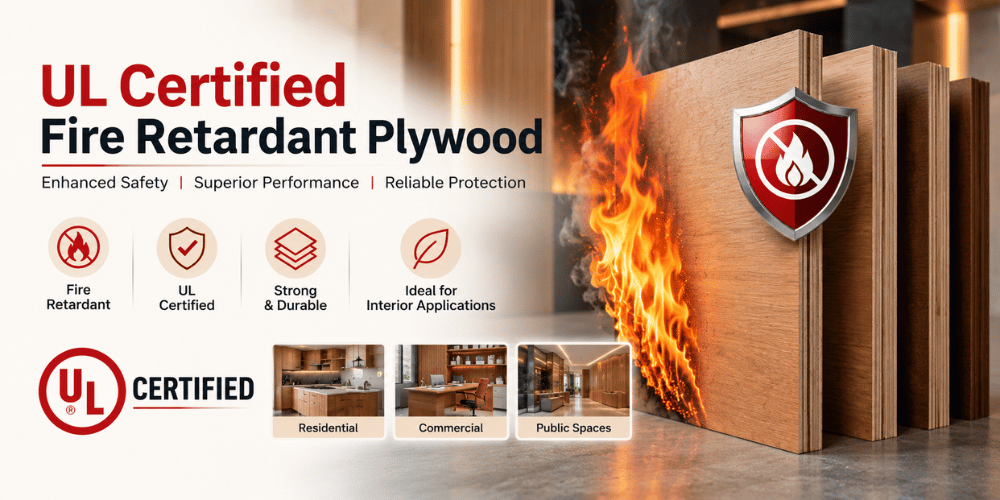
UL Certified Fire Retardant Plywood is a highly searched fire-safety material for construction, interiors, commercial buildings, partitions, wall systems and other applications where plywood needs documented fire-performance characteristics. Gopalfiresafety provides fire-safety products, information and solutions through https://gopalfiresafety.com/, helping architects, contractors, builders, distributors and project professionals understand fire-protection requirements. Gopalfiresafety also shares fire-safety information, product updates and educational content through Instagram.
When selecting UL Certified Fire Retardant Plywood, it is important to understand that the terms UL Certified, fire retardant, fire resistant, fire rated and fireproof do not automatically mean the same thing. UL certification is associated with specific products, materials, assemblies or performance requirements. UL Solutions provides Product iQ as a certification database that allows professionals to search for certified products and materials using information such as manufacturer, product type, model number, file number, category control number and other identifiers. UL Solutions
A plywood panel may be fire-retardant-treated, but that fact alone does not establish that it is UL certified. Similarly, a plywood panel included in a tested fire-resistance-rated wall assembly does not mean every plywood panel can automatically be substituted into that assembly. UL Solutions specifically provides guidance concerning plywood panels in UL fire-resistance-rated wall assemblies and identifies requirements for acceptable wood structural panels. UL Solutions
This guide explains how UL Certified Fire Retardant Plywood should be evaluated, what UL certification means, how fire-retardant-treated plywood differs from fire-rated assemblies, how testing and documentation work, where plywood may be used, and what buyers should verify before purchasing.
What Is UL Certified Fire Retardant Plywood?
UL Certified Fire Retardant Plywood refers to plywood for which a specific UL certification, classification, listing or evaluation applies to the product and its defined characteristics or application.
The most important word is specific.
A plywood product should not be called UL certified merely because it:
- Contains fire-retardant chemicals
- Has a third-party fire-test report
- Has a low flame-spread characteristic
- Has been used in a fire-rated wall
- Has been coated with an intumescent material
- Is described as fireproof by a supplier
- Uses a material that resembles a certified product
UL Product iQ allows professionals to verify certification information rather than relying only on marketing descriptions. UL explains that Product iQ contains certification information for UL-certified products, components and materials and supports searches using keywords, file numbers, CCNs, assembly numbers, design numbers and other identifiers. UL Solutions
Therefore, when a project specification requests UL Certified Fire Retardant Plywood, the purchasing team should identify exactly what certification or performance characteristic is required.
The specification should ideally establish:
- Manufacturer
- Product name
- Model or product number
- Plywood type
- Thickness
- Grade
- Treatment type
- Intended application
- Fire-performance requirement
- Applicable test method
- UL certification or evaluation information
- Installation requirements
- Environmental limitations
- Required markings
- Documentation
This prevents confusion between a genuine certified product and a plywood product that is simply marketed using fire-safety terminology.
Why Fire-Retardant Plywood Is Important
Wood-based panels are combustible materials. When plywood is used in commercial interiors, partitions, wall systems, furniture, cabinetry, ceilings or other construction applications, its reaction to fire can become an important consideration.
Fire-retardant treatment is designed to modify the burning characteristics of compatible wood materials. Depending on the treatment and test method, the objective can include reducing flame spread, limiting contribution to fire growth or achieving a defined fire-performance classification.
However, fire-retardant treatment does not automatically mean that plywood has a specific hourly fire-resistance rating.
This distinction is fundamental.
A fire-retardant-treated plywood panel and a one-hour fire-resistance-rated wall assembly are not necessarily the same thing.
A fire-resistance rating generally applies to an assembly tested under a defined test method and configuration. UL Product iQ includes fire-resistance-rated assemblies and designs, while UL guidance explains that such assemblies must be constructed according to their applicable design criteria. UL Solutions
Therefore, UL Certified Fire Retardant Plywood should be evaluated according to the exact requirement rather than treated as a universal description for every type of fire-protected plywood.
Understanding UL Certification
UL certification is a third-party conformity assessment process associated with defined requirements.
UL Solutions explains that its Product iQ database contains information about UL-certified products and provides a mechanism for users to verify certification information. UL also states that certification involves representative samples being evaluated against applicable requirements and that certified products are subject to Follow-Up Services under applicable certification programs. UL Solutions
This is why certification verification matters.
For UL Certified Fire Retardant Plywood, the buyer should look for documentation that connects the exact product to the applicable UL certification.
Useful information may include:
- UL file number
- UL category
- Product identification
- Manufacturer
- Model number
- Certification description
- Applicable standard
- Marking information
- Installation conditions
- Environmental limitations
- Certification scope
A supplier certificate that cannot be connected to the exact product should be treated cautiously.
UL Product iQ and Plywood Verification
UL Product iQ is one of the most useful resources for checking UL certification information.
The database supports searches based on different identifiers, including:
- Product name
- Manufacturer
- Keyword
- File number
- Category Control Number
- Model number
- Design number
- Assembly number
- System number
- Construction number
UL specifically describes Product iQ as a tool for locating UL Listed and UL Certified products, components and materials. UL Solutions
For buyers of UL Certified Fire Retardant Plywood, this means the verification process can begin with the product information supplied by the manufacturer.
For example, if a supplier provides a UL file number, the project team can use that information to investigate the relevant certification record.
If a supplier provides only the statement “UL certified plywood,” more information should be requested.
The purchasing team should ask:
What is the exact UL file number?
What is the product category?
What product models are covered?
What performance characteristic was evaluated?
What limitations apply?
Does the certification cover the intended application?
These questions can prevent expensive specification errors.
Fire-Retardant-Treated Wood and Plywood
UL Solutions identifies a specific evaluation-report category for Fire-retardant-treated Wood, including fire-retardant-treated lumber and plywood. UL Solutions
This demonstrates why fire-retardant-treated plywood deserves its own technical consideration.
Treatment can change how wood responds when exposed to fire, but the treatment should be evaluated according to the appropriate requirements.
Factors can include:
- Wood species
- Plywood construction
- Treatment chemistry
- Treatment penetration
- Moisture content
- Manufacturing process
- Surface condition
- Thickness
- End use
- Environmental exposure
A treatment intended for one application may not automatically provide the same performance in another application.
Fire Retardant vs Fire Resistant
One of the most common misunderstandings surrounding UL Certified Fire Retardant Plywood is the difference between fire retardant and fire resistant.
Fire retardant
Fire-retardant treatment generally modifies the burning characteristics of a combustible material.
Depending on the product and test method, it may help:
- Reduce flame spread
- Delay ignition
- Reduce fire contribution
- Promote char formation
- Alter combustion behavior
Fire resistant
Fire resistance generally refers to the ability of an assembly or construction to maintain specified performance during a fire exposure for a defined period.
For example, a wall assembly may have a tested fire-resistance rating.
The plywood component is only one part of such an assembly.
UL Solutions explains that fire-resistance-rated assemblies have specific construction requirements and that acceptable variations must remain within the published design criteria. UL Solutions
Consequently, a plywood panel should not be marketed as a “two-hour fire-rated wall” simply because the plywood itself has been treated with a fire-retardant chemical.
Plywood in UL Fire-Resistance-Rated Wall Assemblies
Plywood can play an important structural role in certain fire-resistance-rated wall assemblies.
UL Solutions specifically addresses plywood panels in UL fire-resistance-rated wall assemblies and explains the conditions under which plywood panels can be incorporated to increase structural stability. UL Solutions
The important point is that the plywood must satisfy the requirements applicable to the particular assembly.
This means a contractor cannot simply replace one material with another because both are described as “fire rated.”
A UL assembly can have requirements concerning:
- Panel thickness
- Panel type
- Fasteners
- Studs
- Gypsum layers
- Joint treatment
- Insulation
- Spacing
- Installation orientation
- Structural requirements
- Fire exposure
- Permitted substitutions
The complete assembly must remain within the published design requirements.
Surface-Burning Characteristics
Another important topic for fire-retardant-treated plywood is surface-burning performance.
Surface-burning characteristics can involve measurements such as flame spread and smoke development under a specified test method.
These measurements are different from an hourly fire-resistance rating.
For example, a plywood product may have a specified surface-burning classification while a wall constructed with plywood, gypsum, framing and insulation may have a separate fire-resistance rating.
Therefore, a specification for UL Certified Fire Retardant Plywood should state the actual performance requirement rather than using only the words “fireproof plywood.”
Why Test Standards Matter
Fire testing is meaningful only when the test method, specimen, construction and evaluation criteria are understood.
A product that performs well under one test does not automatically have every other fire-performance classification.
The project team should determine:
- What test was conducted?
- What was tested?
- What thickness was tested?
- What substrate was tested?
- What conditioning was used?
- What performance was measured?
- What classification resulted?
- What application does the report cover?
UL Product iQ provides information for certified products and fire-resistance-rated designs, making it useful when matching certification requirements to a project specification. UL Solutions
Can Normal Plywood Become UL Certified by Applying a Fire-Retardant Coating?
No—not automatically.
Applying a fire-retardant or intumescent coating to ordinary plywood does not automatically transform the finished panel into UL Certified Fire Retardant Plywood.
The coating and plywood combination must have appropriate supporting evaluation or certification if a project specifically requires certified performance for that configuration.
Important factors may include:
- Plywood type
- Plywood thickness
- Surface preparation
- Primer
- Coating type
- Coating thickness
- Number of coats
- Application method
- Drying conditions
- Topcoat
- Adhesion
- Environmental conditions
- Fire-test configuration
A coating may have its own certification for a specific substrate or application. That certification should not be extended to plywood unless the documentation specifically supports the combination.
This is particularly important for architects and contractors because using a certified coating does not automatically certify every material to which that coating is applied.
Choosing the Correct Plywood Thickness
Thickness is an important specification factor.
Plywood panels are available in various thicknesses, and their structural and fire-performance characteristics can vary depending on the product construction and application.
The correct thickness should be determined from:
- Structural requirements
- Fire-performance requirements
- Tested assembly
- Manufacturer instructions
- Project specification
- Applicable building regulations
A thicker panel is not automatically a substitute for a certified thinner panel, and a thinner panel should not be substituted for a specified product without approval.
Where Fire-Retardant Plywood May Be Used
Depending on its certification, treatment and intended application, fire-retardant-treated plywood can be considered for various applications.
Potential applications include:
- Wall panels
- Interior partitions
- Commercial interiors
- Ceiling systems
- Service areas
- Exhibition construction
- Retail interiors
- Hospitality interiors
- Office interiors
- Industrial structures
- Equipment enclosures
- Structural wall components
- Furniture and cabinetry where appropriate
- Fire-tested wall assemblies
The exact application must always be matched to the product’s technical documentation.
Commercial Building Applications
Commercial buildings frequently use wood-based panels for interior construction.
Hotels, offices, retail stores, restaurants, educational facilities and other buildings may contain plywood in:
- Partitions
- Wall linings
- Cabinets
- Displays
- Furniture
- Storage
- Decorative panels
- Service rooms
Where fire performance is required, the designer may specify fire-retardant-treated wood products or a tested fire-resistance-rated assembly.
UL Certified Fire Retardant Plywood may therefore become part of a broader passive fire-protection strategy when its certification and application are appropriate.
Hospitality and Hotel Interiors
Hotels contain large quantities of combustible interior materials.
Plywood can be used for:
- Reception counters
- Decorative walls
- Furniture
- Cabinets
- Back-of-house installations
- Service areas
- Partition components
Where fire-performance requirements apply, the designer should specify materials based on the relevant fire-performance criteria.
The important consideration is not simply whether plywood has been treated, but whether the supplied product meets the project’s documented requirements.
Retail and Exhibition Applications
Retail stores and exhibition spaces often use temporary or semi-permanent plywood structures.
Examples include:
- Display walls
- Counters
- Product stands
- Exhibition booths
- Decorative panels
- Shelving structures
Temporary construction does not automatically eliminate fire-safety requirements.
If a venue specifies fire-retardant materials, the supplier should provide documentation demonstrating the relevant performance.
Why Documentation Matters
Documentation is one of the most important parts of purchasing UL Certified Fire Retardant Plywood.
A professional product file may contain:
- Technical datasheet
- Safety information
- Certification information
- Test reports
- Installation instructions
- Maintenance information
- Product identification
- Fire-performance data
- Certification limitations
UL evaluation reports can contain product descriptions, performance characteristics, conditions of use, identification and other information relevant to the evaluated product. UL Solutions
This makes documentation useful not only during purchasing but also during project approval and inspection.
Common Purchasing Mistakes
Several mistakes occur when purchasing fire-retardant plywood.
Mistake 1: Assuming fire retardant means fireproof
Fire-retardant treatment does not mean a material can never burn.
Mistake 2: Assuming every treated plywood product is UL certified
Certification must be verified for the exact product.
Mistake 3: Using a coating certificate as a plywood certificate
A coating’s certification does not automatically certify the substrate.
Mistake 4: Ignoring the assembly
A fire-rated assembly must be constructed according to its applicable design.
Mistake 5: Ignoring installation instructions
Even a certified product may have specific installation requirements.
Mistake 6: Buying based only on a marketing brochure
Certification information should be verified through appropriate documentation and, where applicable, UL Product iQ.
Mistake 7: Assuming certification covers every thickness
Certification scope may be product-specific.
How Architects Should Specify Fire-Retardant Plywood
Architects should avoid vague specifications.
Instead of writing:
Fireproof plywood required.
A more useful specification can identify:
Material: Fire-retardant-treated plywood
Application: Defined interior or structural application
Performance: According to project fire-performance requirements
Certification: UL certification/classification where specifically required
Thickness: According to approved design
Installation: According to manufacturer and applicable assembly
Documentation: Current certification and test documentation
This approach makes the requirement clearer to contractors and suppliers.
UL Certified Fire Retardant Plywood should always be evaluated as a specific certified or evaluated product rather than as a generic synonym for fireproof plywood.
UL Product iQ provides a way to investigate certification information, while UL guidance confirms that plywood can be incorporated into certain fire-resistance-rated wall assemblies when the applicable requirements are met. UL Solutions
The most important principle is simple:
Verify the exact product, certification, test basis, application and installation requirements before approving fire-retardant plywood for a project.
UL Certified Fire Retardant Plywood: Testing, Applications, Installation and Procurement
Understanding Fire Performance in Plywood
UL Certified Fire Retardant Plywood should be considered as one element of a larger fire-safety strategy.
Fire performance can involve several different characteristics:
- Ignition behavior
- Flame spread
- Smoke development
- Heat release
- Burning behavior
- Structural stability
- Fire resistance
- Assembly performance
These characteristics should not be combined into one generic term.
A plywood panel can have a particular fire-retardant treatment while a complete wall assembly can have a separate fire-resistance rating.
This distinction is especially important in commercial construction.
Fire-Retardant Treatment of Plywood
Fire-retardant-treated plywood is generally manufactured or treated to improve specific fire-performance characteristics.
Depending on the formulation and manufacturing process, treatment may affect how wood reacts when exposed to elevated temperatures and flames.
The objective can include reducing flame propagation and changing combustion behavior.
However, performance depends on the complete product.
Important variables include:
- Wood species
- Resin system
- Veneer construction
- Treatment chemicals
- Treatment penetration
- Moisture content
- Manufacturing process
- Thickness
- Surface condition
- Environmental exposure
A product should therefore be evaluated using its manufacturer’s technical information and applicable certification.
Factory-Treated vs Site-Coated Plywood
There is an important difference between factory-treated plywood and plywood coated at a construction site.
Factory-treated plywood
The fire-retardant treatment is integrated into the manufacturing or treatment process.
The manufacturer should provide documentation defining the product and its intended use.
Site-coated plywood
A fire-retardant coating is applied after plywood production.
Performance can depend on:
- Surface preparation
- Application rate
- Coating thickness
- Number of coats
- Drying
- Environmental conditions
- Compatibility
- Substrate
- Topcoat
A site-applied coating should not automatically be represented as certified plywood.
If a project specifically requires UL Certified Fire Retardant Plywood, the certification requirement should be satisfied by the exact product or approved configuration.
Fire Resistance of Complete Assemblies
One of the most important concepts in fire safety is that a fire-resistance rating frequently belongs to an assembly.
For example, a rated wall can contain:
- Stud framing
- Gypsum board
- Insulation
- Fasteners
- Wood structural panels
- Joint treatments
- Other specified components
Changing one component can affect the tested performance.
UL Solutions explains that published fire-resistance designs have specific construction criteria and allowable variations. UL Solutions
UL also provides specific guidance for plywood panels used within fire-resistance-rated wall assemblies. UL Solutions
Therefore, contractors should never assume that any fire-retardant plywood can be inserted into any rated wall.
Structural Applications
Plywood is commonly used as a structural wood panel.
In certain wall systems, plywood can provide:
- Shear resistance
- Structural stability
- Nail-holding capacity
- Bracing
- Panel continuity
When the wall is also required to have fire resistance, the structural plywood must satisfy the applicable assembly requirements.
This is where UL Certified Fire Retardant Plywood can become relevant to both structural and fire-safety considerations.
The design professional should confirm:
- Panel type
- Thickness
- Grade
- Fastener requirements
- Framing
- Gypsum requirements
- Insulation
- Fire-resistance rating
- Applicable UL design
Fire Performance and Moisture
Moisture can be important for treated wood products.
Storage and environmental conditions can influence:
- Dimensional stability
- Adhesion
- Surface condition
- Mechanical performance
- Treatment characteristics
The manufacturer’s instructions should define appropriate storage and environmental conditions.
Plywood should normally be protected from unnecessary water exposure during transportation and storage.
Storage of Fire-Retardant Plywood
Proper storage helps preserve product quality.
Recommended practices may include:
- Store on a level surface
- Keep panels off the ground
- Protect from unnecessary moisture
- Avoid prolonged exposure to weather
- Maintain manufacturer-recommended conditions
- Prevent physical damage
- Keep certification and batch information available
- Separate approved material from unapproved substitutes
For projects using certified materials, product identification should be retained until installation and inspection are complete.
Cutting and Modification
Construction frequently requires plywood panels to be cut.
But modifications can affect the approved configuration.
Before cutting or modifying UL Certified Fire Retardant Plywood, the contractor should review the manufacturer’s instructions and the applicable assembly requirements.
Questions to consider include:
- Is field cutting permitted?
- Are exposed edges acceptable?
- Are penetrations permitted?
- Are fastener types specified?
- Are joints limited?
- Is edge sealing required?
- Does modification affect certification?
These questions are especially important when plywood is part of a fire-resistance-rated construction.
Fasteners and Installation
Fire performance is not determined by plywood alone.
Fasteners can also be part of a tested construction.
Depending on the design, requirements may specify:
- Screw type
- Nail type
- Fastener diameter
- Fastener length
- Spacing
- Edge distance
- Penetration depth
- Installation sequence
A contractor should follow the applicable tested design rather than choosing fasteners based solely on convenience.
Plywood and Wall Assemblies
UL’s guidance on plywood panels in fire-resistant wall assemblies demonstrates that wood structural panels can be incorporated into certain rated wall designs under defined conditions. UL Solutions
This is useful for projects where structural plywood is required inside a fire-rated wall.
However, the presence of plywood does not itself establish the wall’s rating.
The complete wall must comply with the relevant design.
Fire-Retardant Plywood for Interior Design
Modern interiors frequently use wood finishes because they provide warmth and visual appeal.
Applications may include:
- Feature walls
- Decorative panels
- Reception areas
- Hotel interiors
- Retail stores
- Restaurants
- Offices
- Meeting rooms
- Exhibition spaces
When fire performance is part of the project specification, designers can investigate appropriate fire-retardant wood products.
However, decorative use should not be confused with structural fire-resistance requirements.
Furniture and Cabinet Applications
Plywood is also widely used in:
- Cabinets
- Shelving
- Counters
- Tables
- Storage
- Display units
- Interior furniture
Whether a fire-retardant plywood product is required depends on the building specification and application.
A furniture panel does not automatically need the same certification as a structural fire-rated wall.
The correct requirement should be determined by the project and applicable regulations.
Exhibition and Temporary Structures
Exhibition booths often use plywood because it is:
- Easy to cut
- Lightweight compared with many alternatives
- Strong
- Flexible
- Easy to finish
But exhibition venues can have strict requirements for combustible materials.
A venue may request fire-retardant-treated plywood or documentation demonstrating specific fire performance.
In such cases, suppliers should provide current documentation rather than simply stating that the plywood is “fireproof.”
Fire-Retardant Plywood for Commercial Interiors
Commercial buildings can have large occupant loads and multiple ignition sources.
Fire-safety design can therefore involve:
- Passive fire protection
- Fire detection
- Fire alarms
- Fire suppression
- Fire doors
- Smoke control
- Fire-resistant assemblies
- Material selection
Fire-retardant plywood can form part of material selection when appropriate.
Gopalfiresafety provides information and fire-safety solutions covering different areas of fire protection and can help businesses understand the importance of documented fire-performance requirements.
Certification vs Test Report
A test report and a certification are not automatically identical.
A test report may demonstrate how a sample performed under a particular test.
Certification generally involves a broader conformity process and defined conditions.
UL Product iQ is specifically intended to provide certification information for UL-certified products and materials. UL Solutions
UL also explains that third-party certification can involve evaluation of representative samples and ongoing Follow-Up Services under applicable programs. UL Solutions
Therefore, when purchasing UL Certified Fire Retardant Plywood, ask whether the document supplied is:
- A test report
- Evaluation report
- Certification record
- Listing
- Classification
- Manufacturer declaration
- Laboratory report
Understanding the document type helps avoid incorrect claims.
UL Evaluation Reports
UL Solutions evaluation reports provide information such as:
- Applicable codes
- Code editions
- Evaluation requirements
- Product use
- Installation
- Conditions of use
- Product description
- Performance characteristics
- Markings
- Identification
UL identifies fire-retardant-treated wood under its ULET evaluation-report category. UL Solutions
This information can be useful when a project requires documentation beyond a simple product brochure.
Authority Having Jurisdiction
Certification does not necessarily eliminate the need for project approval.
UL notes that approval of building products, materials or systems is the responsibility of the applicable code authority or authority having jurisdiction. UL Solutions
Therefore, architects and contractors should consider:
- Local building codes
- Fire authority requirements
- Project specifications
- Applicable standards
- Certification requirements
- Inspection requirements
- Authority approval
This is particularly important for major commercial or public projects.
International Projects
For international construction, the project may involve standards and approval systems that differ by country.
A plywood product accepted in one jurisdiction may require additional documentation in another.
For export projects, the buyer should identify:
- Destination country
- Applicable building code
- Fire-performance requirement
- Certification body
- Required test standard
- Required documentation
- Installation conditions
The supplier should then provide documentation appropriate to that project.
How to Select a Supplier
Choosing a supplier for UL Certified Fire Retardant Plywood should involve more than comparing price.
A professional buyer should evaluate:
1. Product identification
The supplier should clearly identify the product.
2. Certification documentation
Request current certification information where certification is required.
3. Technical datasheet
The datasheet should identify product characteristics and application requirements.
4. Test documentation
Ask what fire-performance testing supports the stated claim.
5. Application suitability
Confirm that the product is suitable for the intended use.
6. Installation requirements
Understand how the product must be installed.
7. Environmental limitations
Check whether moisture, temperature or exposure affects the product.
8. Traceability
Batch and product identification can be valuable for project documentation.
Questions to Ask a Supplier
Before ordering, ask:
Is this exact plywood product UL certified?
What is the UL file number or certification reference?
Which product models are covered?
What is the certification scope?
What fire-performance characteristic was evaluated?
Which test standard applies?
What thicknesses are covered?
Is the product intended for structural use?
Can it be used in a specific UL fire-resistance-rated assembly?
Are there installation limitations?
Does the certification require a particular marking?
Can current documentation be provided?
These questions make procurement more reliable.
How to Verify a Supplier’s Claim
A practical verification process can be:
Step 1: Obtain the exact product name
Do not search only for “fireproof plywood.”
Step 2: Obtain the manufacturer
Identify the company responsible for the product.
Step 3: Request the UL information
Ask for the applicable UL file, category or certification reference.
Step 4: Search Product iQ
Use the available identifiers to locate the relevant record.
Step 5: Compare the model
Make sure the product model matches the supplied plywood.
Step 6: Review limitations
Check application, installation and environmental restrictions.
Step 7: Confirm project suitability
Ensure that the certification satisfies the project requirement.
UL states that Product iQ can be used to verify UL certification information and locate certified products, components and materials. UL Solutions
Why Generic “Fireproof Plywood” Claims Can Be Misleading
The term “fireproof plywood” is frequently used in online searches, but it can be technically imprecise.
Plywood is still a wood-based material.
A fire-retardant treatment may improve its fire performance, but that does not necessarily make it completely non-combustible.
Similarly, certification does not mean a product can withstand unlimited fire exposure.
The actual performance depends on:
- Product
- Treatment
- Thickness
- Test
- Assembly
- Installation
- Exposure
- Application
For technical specifications, precise terminology is preferable.
Maintenance and Inspection
Where treated plywood is used in an application subject to maintenance requirements, the material should be inspected for:
- Water damage
- Physical damage
- Delamination
- Unauthorized coating
- Excessive modification
- Deterioration
- Replacement with non-approved material
If a plywood panel forms part of a rated assembly, maintenance should preserve the assembly configuration.
Replacement of Certified Plywood
Replacement materials should not be selected solely based on appearance.
A replacement panel should be checked for:
- Product type
- Thickness
- Certification
- Performance
- Assembly compatibility
- Manufacturer requirements
Replacing certified material with ordinary plywood can compromise the intended fire-performance design.
Fire Safety Documentation for Projects
A project file can include:
- Product datasheets
- Certification records
- Test reports
- Installation instructions
- Delivery records
- Batch information
- Approved shop drawings
- Assembly details
- Inspection records
Maintaining documentation can make it easier for project teams to demonstrate that specified materials were actually supplied and installed.
Benefits of Properly Specified Fire-Retardant Plywood
When correctly selected and used, fire-retardant plywood can offer several practical advantages.
These may include:
- Improved fire-performance characteristics
- Suitability for specified applications
- Compatibility with construction requirements
- Potential integration into tested assemblies
- Better documentation
- Improved material traceability
- Support for fire-safety specifications
- Reduced ambiguity during procurement
The exact benefit depends on the product and certification.
Why Architects, Contractors and Buyers Should Work Together
Fire-performance specifications often involve several stakeholders.
Architect
Defines design and material requirements.
Structural engineer
Determines structural suitability.
Fire-safety consultant
Reviews fire-performance requirements.
Contractor
Installs the specified material.
Supplier
Provides compliant products and documentation.
Inspector or authority
Reviews compliance where required.
Communication between these parties reduces the chance of using an inappropriate material.
Gopalfiresafety and Fire-Safety Awareness
Gopalfiresafety focuses on fire-safety products, information and solutions for businesses and professionals.
For information about fire protection products and fire-safety solutions, visit Gopalfiresafety.
Gopalfiresafety also uses Instagram to share fire-safety information, product-related updates and educational content.
For projects involving fire-retardant wood, plywood, coatings or other passive fire-protection materials, technical documentation should always be reviewed before making a certification claim.
Frequently Asked Questions
What is UL Certified Fire Retardant Plywood?
It is plywood associated with a specific UL certification, classification or evaluation applicable to its defined product characteristics or intended application. The exact certification should be verified using official documentation and, where applicable, UL Product iQ. UL Solutions
Is fire-retardant plywood the same as fire-rated plywood?
Not necessarily. Fire-retardant treatment concerns the fire behavior of a material, while a fire-resistance rating commonly applies to a tested assembly under defined conditions.
Does fire-retardant plywood mean the plywood cannot burn?
No. Fire-retardant treatment can modify burning characteristics, but it does not mean the material is completely non-combustible.
Can ordinary plywood become UL certified by applying a fire-retardant coating?
Not automatically. A coating’s certification does not automatically certify the plywood-plus-coating combination.
How can I verify a UL plywood certification?
Obtain the exact product and manufacturer information and search the applicable certification information in UL Product iQ. UL describes Product iQ as a certification search platform for UL-certified products, components and materials. UL Solutions
Can plywood be used in a UL fire-rated wall?
Certain wood structural panels can be incorporated into specified UL fire-resistance-rated wall assemblies when the requirements of the applicable design are followed. UL Solutions
Does plywood certification automatically give a wall a fire rating?
No. The fire-resistance rating of a wall generally depends on the complete tested assembly and its required components and construction.
Is a fire-test report the same as UL certification?
Not necessarily. A test report documents performance under a particular test, while certification involves a defined conformity process. The documentation should be reviewed carefully.
Can fire-retardant plywood be used outdoors?
Suitability depends on the specific product, treatment, environmental exposure and certification. Outdoor use should be confirmed with the manufacturer.
Can fire-retardant plywood be painted?
Potentially, but compatibility and certification limitations should be checked. An additional coating can affect the surface and potentially the documented performance.
What information should I request from a supplier?
Request the exact product name, manufacturer, model, certification information, applicable test standard, technical datasheet, installation requirements and relevant test or evaluation documentation.
Where can I find fire-safety products and information?
You can explore fire-safety products and information from Gopalfiresafety through gopalfiresafety.com and follow the company’s Instagram content for updates.
Conclusion
UL Certified Fire Retardant Plywood can be an important material for projects where plywood must meet documented fire-performance requirements. However, the term should always be interpreted precisely.
The most important lesson is that fire retardant, fire resistant, fire rated and UL certified are not interchangeable terms.
UL certification should be connected to the exact product, certification scope, test basis and intended application. UL Product iQ provides a way for professionals to investigate certification information, while UL’s guidance confirms that plywood panels can be incorporated into certain fire-resistance-rated wall assemblies when the applicable requirements are followed. UL Solutions
For procurement, architects, contractors and project managers should verify the manufacturer’s identity, product model, certification information, applicable test requirements, thickness, installation conditions and project-specific approval requirements.
Most importantly, never assume that ordinary plywood becomes certified simply because it has been treated or coated with a fire-retardant product.
A properly specified and documented fire-retardant plywood product can contribute to a more reliable fire-safety strategy when it is used within its tested and approved scope.
Gopalfiresafety provides fire-safety information and solutions for professionals looking to understand fire protection requirements. Visit https://gopalfiresafety.com/ for more information and follow Gopalfiresafety on Instagram for fire-safety updates.v