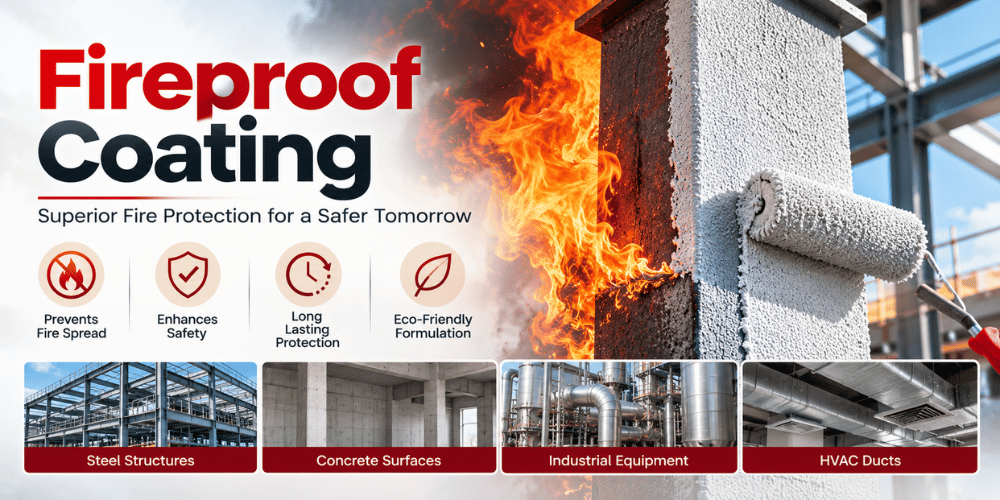
What Is a Fireproof Coating?
Introduction to Fireproof Coating
Fire safety is an essential consideration in residential buildings, commercial properties, factories, warehouses, electrical installations, and industrial facilities. A suitable Fireproof Coating can help improve the fire performance of compatible materials when it is selected and applied according to the product’s specifications and applicable testing requirements. At Gopalfiresafety, businesses and project professionals can explore fire-safety information and solutions for different protection requirements. Follow Gopalfiresafety on Instagram for fire-safety awareness, product updates, and educational content.
Fire protection is not limited to installing extinguishers, alarms, and emergency exits. It also involves considering how building materials, structural elements, cables, doors, and other components behave when exposed to fire. Coatings can form one part of a broader passive fire protection strategy, helping address specific risks when the coating system is designed for the intended substrate and application.
The term fireproof coating is commonly used to describe coatings intended to improve a material’s fire-related performance. However, no coating should automatically be considered completely fireproof under every condition. Actual performance depends on the coating formulation, substrate, applied thickness, surface preparation, installation quality, environmental conditions, and the relevant fire-test standard.
Understanding these factors helps buyers make informed decisions, avoid unsupported product claims, and select an appropriate solution for their projects.
1. What Is a Fireproof Coating?
A fireproof coating is a protective coating intended to help a compatible surface or component perform better under specified fire-exposure conditions. Depending on its formulation and purpose, a coating may slow flame spread, form an insulating layer, reduce heat transfer, or protect a particular material as part of a tested fire protection system.
Different coatings are designed for different purposes. A product intended for decorative wood surfaces, for example, should not automatically be used on structural steel or electrical cables. Each application requires a compatible product and suitable evidence of performance.
Common categories include:
- Intumescent coatings: These expand when exposed to heat and form an insulating char layer.
- Fire-retardant coatings: These are designed to improve specific fire-related characteristics, such as limiting flame spread, under defined test conditions.
- Fire-resistant protective systems: These are designed and tested to provide specified performance for a particular substrate or assembly.
- Specialist industrial coatings: These may be formulated for particular environments, materials, or fire-exposure scenarios.
The terminology used by manufacturers can vary, so purchasers should evaluate the product’s technical data sheet, installation instructions, test reports, and certification details rather than relying on the product name alone.
2. Why Fire Protection Coatings Matter
Fire can damage equipment, interrupt operations, destroy property, and endanger occupants. Coatings designed for appropriate fire protection applications may help reduce certain risks when incorporated into a properly planned safety system.
Their value depends on the particular project and the performance being sought.
Protection of structural elements
Structural steel may lose strength when heated to high temperatures. A properly specified intumescent coating system can expand under heat and form an insulating layer that slows the rate at which the steel heats up. The required performance depends on the steel section, design, exposure conditions, specified fire-resistance period, and tested or assessed coating system.
Protection of timber and wood products
Wood can ignite and contribute to fire growth. Certain fire-retardant treatments and coatings can improve the fire performance of compatible timber products under specified test conditions. They do not make wood non-combustible, and their effectiveness depends on the product, substrate, application, and intended use.
Electrical and cable applications
Cables may contribute to fire spread depending on their construction, installation, and surroundings. Specialist cable coatings are intended for particular applications and must be compatible with the cable type and installation requirements. A coating designed for steel or timber must not be assumed suitable for cables.
Industrial facilities
Factories, power facilities, storage areas, and process plants may require fire protection systems suited to their hazards. The selection should consider the expected fire scenario, operating temperature, moisture, chemicals, weather exposure, and maintenance access.
3. How Intumescent Coatings Work
Intumescent coatings are an important category of fire protection products. When exposed to sufficient heat, the coating undergoes chemical and physical changes that cause it to expand and form a thicker, carbon-rich insulating layer.
The expanded layer can slow heat transfer to the underlying substrate. On structural steel, this may delay the steel reaching temperatures associated with a loss of load-bearing capacity, provided the complete coating system has been specified for the required fire-resistance performance.
The process generally involves several stages:
- Normal service: The coating remains on the substrate under ordinary operating conditions.
- Heat exposure: Temperature rises and activates the coating’s reactive ingredients.
- Expansion: The coating swells to create a thicker protective layer.
- Char formation: The expanded material forms an insulating barrier.
- Heat transfer reduction: The layer slows heating of the protected substrate for the period demonstrated by the relevant test or assessment.
Not every coating is intumescent. Some products are intended to improve surface-burning characteristics or provide other specific forms of protection without forming an expanding char layer.
For this reason, buyers should identify the required performance before selecting a coating.
4. Main Types of Fire Protection Coatings
Choosing a coating begins with understanding the available product categories and their intended uses.
Intumescent coatings for structural steel
These coatings are used in systems designed to delay the heating of structural steel during fire exposure. They may be applied in commercial buildings, industrial facilities, infrastructure projects, and other structures where a specified fire-resistance period is required.
The necessary dry-film thickness can vary considerably. It depends on the product’s approved system, the steel section factor, the required fire-resistance period, and the exposure conditions. A generic thickness should never replace the manufacturer’s project-specific calculation and specification.
Fire-retardant coatings for wood
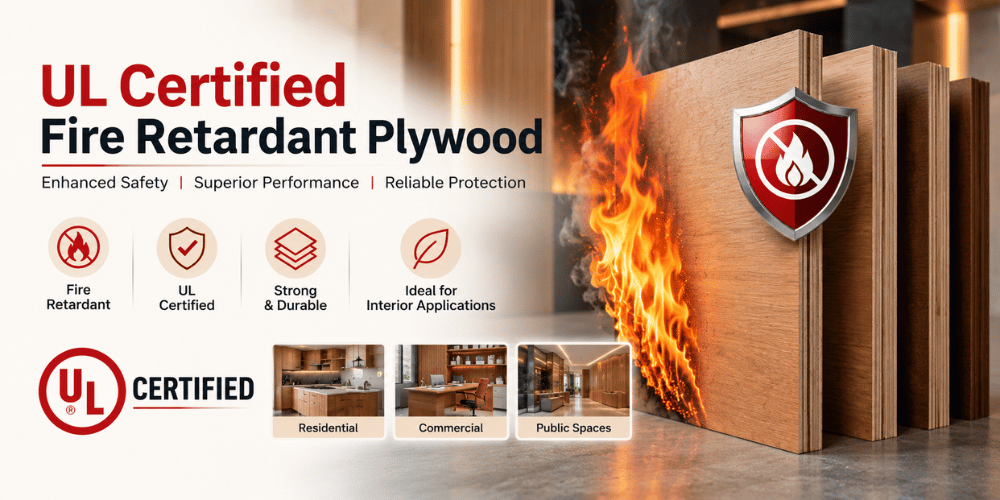
These products are designed for compatible timber, plywood, and other wood-based substrates. Their performance may relate to flame spread or other reaction-to-fire characteristics, depending on the applicable test.
A treatment that performs well on one wood species or panel construction may not achieve the same results on another. The substrate, surface preparation, coating quantity, and any decorative finish should be considered together.
Coatings for cables
Cable fire protection coatings are specialist products intended for specified cable types and installation environments. Their suitability depends on the cable construction, the required performance, application method, and compatibility with the cable’s operating requirements.
Purchasers should verify whether the product has been evaluated for the intended cable system rather than assuming that a general-purpose fire protection coating will be appropriate.
Fire-retardant coatings for other materials
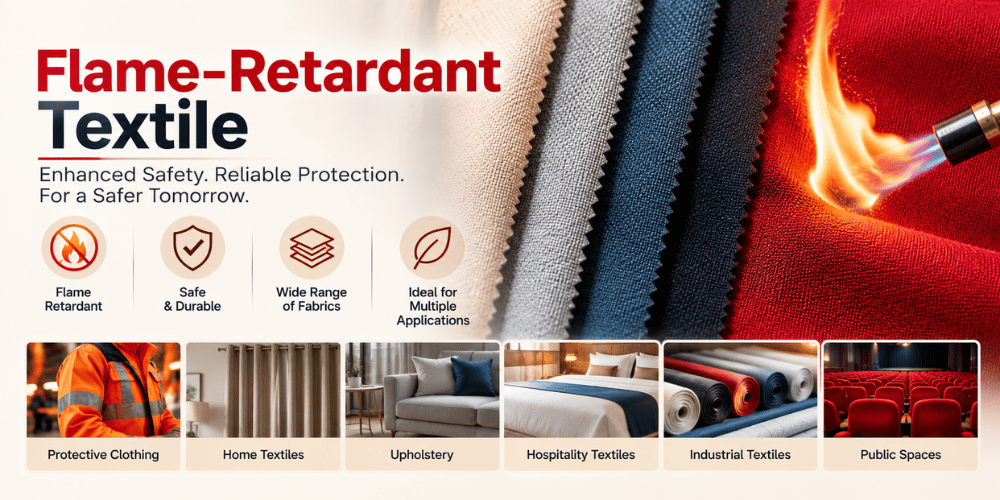
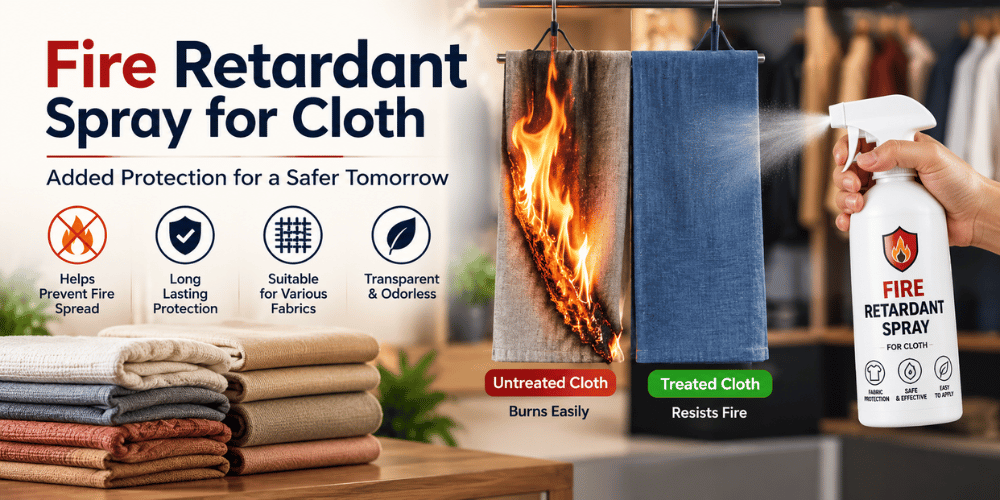
Some products are developed for particular fabrics, panels, interior finishes, or industrial substrates. These applications may require different testing methods and performance criteria. A coating’s suitability for one material does not establish suitability for another.
5. Fireproof Coating vs. Fire-Retardant Coating
The terms fireproof and fire-retardant are often used interchangeably in marketing, but they should not be treated as equivalent technical claims.
A fire-retardant coating is generally intended to improve certain fire-related characteristics of a material. Depending on the product and test method, these may include reducing flame spread or changing how the surface reacts to fire.
A fire-resistive coating system, by contrast, may be evaluated as part of a complete assembly designed to achieve a specified fire-resistance period. For example, a structural-steel coating system may be tested or assessed for a defined duration under a recognized standard.
The distinction matters because reaction to fire and fire resistance are different performance concepts. A product that improves flame-spread performance does not automatically provide a one-hour or two-hour fire-resistance rating.
Before purchasing, establish whether the project requires:
- A reaction-to-fire classification.
- Reduced flame spread for a particular surface.
- Thermal protection for structural steel.
- Protection under a specific fire scenario.
- Compliance with a building code or project specification.
- A tested and documented coating system for a particular substrate.
The selected product must match the actual requirement.
6. Common Applications of Fireproof Coating
Coating applications vary according to the material being protected and the hazards involved.
Commercial buildings
Offices, shopping centres, hotels, and public buildings may incorporate fire protection coatings as part of a broader building safety strategy. The correct system depends on the element being protected and the project’s applicable requirements.
Industrial plants
Manufacturing and processing facilities may need protection for structural steel, equipment supports, or other components exposed to potential fire hazards. The coating specification should account for the operating environment and the relevant fire scenario.
Warehouses and storage facilities
Warehouses can contain combustible goods, packaging, machinery, and extensive structural elements. Fire protection planning should consider the building design, stored materials, fire detection, suppression systems, compartmentation, and evacuation arrangements. Coatings are only one possible component of this strategy.
Infrastructure and utility facilities
Some infrastructure projects use specialist fire protection systems for steel structures, service installations, or other critical components. Project specifications should identify the relevant standards and performance criteria.
Residential and interior applications
Certain compatible coatings and treatments may be used on wood-based materials or interior finishes. Buyers should confirm that the product is intended for the exact substrate and use, including any restrictions involving occupied spaces, ventilation, or decorative topcoats.
7. Selecting a Fireproof Coating for the Right Material
Material compatibility is one of the most important factors in coating selection. Products are engineered for specific substrates, and using the wrong formulation can result in poor adhesion, inadequate performance, or premature failure.
Before choosing a product, identify the substrate clearly.
For structural steel: Verify the intended steel sections, required fire-resistance period, environmental category, primer compatibility, and specified dry-film thickness.
For wood and plywood: Check the type of timber or panel, surface condition, intended interior or exterior use, application rate, and required fire-performance test.
For cables: Confirm the cable construction, installation arrangement, operating conditions, and suitability of the coating for the cable system.
For other substrates: Obtain written confirmation from the manufacturer that the product is suitable for the material and the intended conditions.
The most appropriate Fireproof Coating is not necessarily the product with the broadest marketing claims. It is the product with suitable technical evidence for the actual application.
8. Surface Preparation Before Application
Surface preparation has a major influence on coating adhesion, appearance, and service life. Even a suitable coating may underperform if applied over contamination, loose material, incompatible finishes, or an inadequately prepared surface.
Preparation requirements vary by substrate and product. They may include removing dust, oil, grease, rust, loose paint, or other contaminants. Some systems require a specified primer, while others must be applied directly to a prepared surface.
For structural steel, the preparation method may be defined by the approved coating specification. The primer, intermediate coat, and intumescent layer must be compatible with one another.
For wood, the surface may need to be clean, dry, and free from dust or finishes that interfere with absorption or adhesion. Moisture content and the condition of the wood can affect the result.
For cables, preparation must follow the product manufacturer’s instructions and must not damage the cable sheath or compromise its intended performance.
Always follow the manufacturer’s technical data sheet and project specification. Unapproved substitutions or changes in preparation can affect the reliability of the complete system.
9. Application Methods and Equipment
The correct application method depends on the coating’s formulation, viscosity, substrate, project size, and manufacturer instructions. Common methods include airless spraying, conventional spraying, brushing, and rolling, although not every method is permitted for every product.
Airless spray application
Airless spraying is commonly used for suitable industrial coatings, particularly on larger surfaces. It can provide an efficient application method, but equipment settings, spray tips, material preparation, and application technique must follow the product instructions.
Brush application
Brushes may be appropriate for small areas, edges, touch-ups, and locations that are difficult to access with spraying equipment. The applicator must ensure adequate coverage and avoid leaving gaps or inconsistent thickness.
Roller application
Rollers can be useful for certain coatings on accessible, relatively flat surfaces. However, a roller may not be appropriate for products that require a specific application technique to achieve their tested performance.
Professional application
Large industrial projects and fire-resistance-rated systems may require trained applicators, specialist equipment, inspection, and documented quality control. The project specification should establish who is responsible for application and verification.
Application equipment should be maintained in good condition. Material should be mixed, diluted, and filtered only as directed by the manufacturer. Unauthorized thinning or mixing can alter the coating’s properties.
10. Why Coating Thickness Matters
Coating thickness is a critical parameter for many fire protection systems. Applying too little material can reduce the performance achieved by the tested system, while applying too much may create drying, curing, cracking, or other application problems.
Two measurements are commonly discussed:
- Wet-film thickness (WFT): The thickness of the coating immediately after application.
- Dry-film thickness (DFT): The thickness remaining after the coating has dried or cured as specified.
For structural-steel intumescent systems, the required dry-film thickness is determined by the approved product system and project design. Factors may include the steel section, exposed sides, required fire-resistance duration, and the conditions represented by the applicable assessment.
For other coatings, the required application quantity may instead be stated as a coverage rate or mass of product per unit area.
Do not use a single generic thickness for every substrate. The correct value must come from the product documentation and project specification.
Quality checks may include measurements at representative locations, records of application quantities, inspection of surface condition, and verification that the coating has been applied uniformly.
11. Drying, Curing and Environmental Conditions
Drying and curing are not always the same process. Drying commonly refers to the loss of water or solvent, while curing may involve additional chemical or physical changes needed to achieve the intended properties.
Environmental conditions can influence both processes. Temperature, humidity, ventilation, substrate temperature, and coating thickness may affect drying time and final performance.
Before applying a coating, check:
- The permitted temperature range.
- The acceptable relative humidity.
- The required ventilation.
- The substrate’s condition and temperature.
- The time between coats.
- The minimum time before handling or overcoating.
- The conditions required before the protected component is put into service.
A surface that feels dry may not necessarily be ready for recoating or service. Follow the manufacturer’s stated drying and curing requirements rather than relying on touch alone.
Where coatings are applied indoors, the site team should also consider ventilation, personal protective equipment, and precautions stated in the safety data sheet.
12. Fire Testing and Performance Verification
Fire-related performance should be supported by appropriate evidence. The relevant test depends on the material, intended use, type of protection, and applicable building or project requirements.
Different standards address different performance questions. A surface-burning test is not equivalent to a structural fire-resistance test. Likewise, a test of a coating applied to steel cannot automatically establish performance on plywood, cables, or fabrics.
For structural fire protection, standards such as UL 263 and ASTM E119 address fire-resistance testing of building elements and assemblies. The applicability of a specific test or design depends on the system being evaluated. Other applications may require different standards.
When reviewing test documentation, check:
- The exact product name and manufacturer.
- The substrate or assembly tested.
- The test standard and edition.
- The tested application method and thickness.
- The reported results and limitations.
- Any permitted primers, topcoats, or accessories.
- The environmental conditions represented by the evidence.
- Whether the evidence matches the proposed project.
A manufacturer’s general statement that a product is fire resistant is not a substitute for documentation relevant to the required performance.
13. Understanding UL Listing, Certification and Approval
Buyers may encounter terms such as UL Listed, UL Certified, tested, compliant, and approved in product literature. These terms should be interpreted carefully.
A UL certification claim should be verified against the exact product and intended application using the relevant UL certification information. The fact that a manufacturer has one certified product does not mean every product it sells is certified.
UL Product iQ is a resource for checking UL certification information. Depending on the product category, searches may use the product name, manufacturer, category, file number, or other identification details.
Similarly, other certification bodies and approval schemes have their own scope and requirements. A certificate or report should be reviewed to determine exactly what was evaluated.
For Gopalfiresafety-related enquiries, customers should request the relevant product documentation and verify whether it supports the performance needed for their project. Do not assume that every coating marketed for fire protection has UL certification or a fire-resistance rating.
14. Fire Protection for Steel Structures
Structural steel is used in warehouses, factories, commercial buildings, and many infrastructure projects. Although steel does not burn like timber, elevated temperatures can affect its mechanical properties and load-bearing performance.
An appropriately specified intumescent system can help delay the heating of steel during a fire. The protection provided is determined by the complete system, including the coating product, required thickness, substrate geometry, preparation, primer, and application quality.
Project designers should consider the required fire-resistance period, the steel sections involved, exposure conditions, and the applicable building regulations.
The system must be applied and inspected according to the approved specification. Areas damaged during transport or construction may require repairs using the manufacturer’s approved procedures.
A general-purpose coating should not be substituted for a specified structural fire protection system merely because both products are described as fireproof.
15. Fire Protection for Wooden Surfaces
Wood and wood-based panels are used for doors, partitions, furniture, decorative panels, and interior finishes. Their fire performance can vary according to species, density, thickness, construction, surface finish, and treatment.
A suitable fire-retardant coating may improve certain fire-related characteristics of compatible wood products. However, the performance must be demonstrated for the intended use and test method.
When selecting a product for wood, consider:
- Whether the coating is suitable for the specific wood or panel.
- Whether the intended use is interior or exterior.
- Whether a primer or topcoat is required.
- Whether the finish changes the tested performance.
- Whether the treatment must penetrate the substrate.
- Whether the product requires periodic inspection or reapplication.
- Whether the project requires a particular classification or certification.
A coating applied to a timber surface does not automatically turn the timber element into a fire-resistance-rated door, wall, or structural assembly. The entire assembly may require separate testing and evaluation.
16. Fire Protection for Electrical Cables
Electrical cables may be installed in buildings, factories, service tunnels, data centres, and industrial plants. Fire performance requirements can vary depending on the cable type, installation method, building function, and applicable regulations.
Specialist cable coatings may be intended to address particular fire-related requirements, but compatibility is essential. A coating should not adversely affect the cable sheath, electrical performance, heat dissipation, or other required characteristics.
Before specifying a cable coating, confirm the cable type, intended exposure, application conditions, maintenance requirements, and relevant performance documentation.
Cable coating should also be considered alongside cable selection, cable routing, fire stopping, compartmentation, detection, and other safety measures. It cannot replace proper electrical design or maintenance.
17. Fireproof Coating Maintenance and Inspection
The service life of a coating depends on its chemistry, the substrate, environmental exposure, installation quality, and maintenance. A coating used indoors in a controlled environment may experience different conditions from one exposed to moisture, chemicals, ultraviolet radiation, abrasion, or temperature cycling.
Regular inspections can help identify damage before it becomes more serious.
Inspection may include checking for:
- Cracking, blistering, or peeling.
- Impact damage and abrasion.
- Corrosion beneath a coating system.
- Moisture-related deterioration.
- Discoloration or other unexpected changes.
- Missing material around joints or penetrations.
- Repairs or modifications made after installation.
- Signs that the coating has been contaminated or covered with an incompatible finish.
Any repair should follow the manufacturer’s instructions. The repair material, preparation method, and thickness may need to match the original system. For rated systems, repairs should be documented and inspected according to project requirements.
18. Common Mistakes When Choosing a Fire Protection Coating
A frequent mistake is choosing a product based only on the word fireproof in its name. Marketing language does not establish a specific fire-performance rating.
Other mistakes include applying a product to an unapproved substrate, ignoring preparation requirements, using an incompatible primer, applying insufficient material, overlooking environmental restrictions, and failing to retain test documentation.
Another risk is confusing a coating’s reaction-to-fire result with a fire-resistance rating for a complete building element. These describe different types of performance.
Buyers should also avoid assuming that a certificate for one product, thickness, substrate, or assembly applies to another. Every claim must be checked against the relevant evidence.
A well-managed specification identifies the intended protection, the substrate, the performance criteria, the application method, the inspection requirements, and the documentation needed for acceptance.
19. How to Choose the Right Fireproof Coating
Selecting the right Fireproof Coating requires more than comparing prices or choosing a product with attractive marketing claims. The coating must be suitable for the substrate, environment, fire risk, and performance requirements of the project.
Start by defining the purpose of the coating. Is the objective to improve the reaction-to-fire characteristics of a surface, delay heating of structural steel, protect a specific industrial component, or meet a particular project specification? The answer determines which product category and supporting evidence are relevant.
Next, identify the material to be protected. Steel, wood, plywood, cables, and other substrates have different requirements. A coating formulated for one material should not be presumed suitable for another.
Consider the following selection criteria:
1. Application suitability: Confirm that the product is intended for the exact substrate and use.
2. Performance evidence: Request test reports, technical data sheets, certification details, and any applicable system specifications.
3. Application requirements: Check the required thickness or coverage rate, surface preparation, application method, drying time, and curing conditions.
4. Environmental exposure: Establish whether the coating will be exposed to moisture, chemicals, UV radiation, abrasion, or outdoor weather.
5. Compatibility: Verify compatibility with primers, topcoats, sealants, and adjacent materials.
6. Inspection and maintenance: Determine how the coating will be inspected, repaired, and maintained during service.
7. Project compliance: Confirm that the proposed system satisfies the applicable building code, contract specification, and approval requirements.
These checks help project teams compare products using evidence rather than broad claims.
20. What to Check in a Technical Data Sheet
A technical data sheet provides essential information about a coating’s intended application and performance. It should be reviewed before purchasing, specifying, or applying the product.
Important details may include the product’s recommended uses, substrate limitations, application methods, coverage rate, recommended thickness, drying time, curing requirements, storage conditions, and service limitations.
For specialist fire protection systems, the documentation may also identify permitted primers and topcoats, environmental categories, inspection methods, and the conditions under which test results apply.
A technical data sheet does not necessarily prove that a product is certified or approved for a particular fire-resistance rating. If certification or a specific classification is required, request the supporting certificate or report and verify its scope.
The product name, manufacturer, document revision, and intended use should match the materials proposed for the project. Outdated or generic documentation may not provide sufficient evidence.
21. Quality Control During Application
Quality control helps ensure that the coating is applied in accordance with the approved specification. It is particularly important when the coating forms part of a tested fire protection system.
Quality checks should begin before application. Inspect the substrate, confirm surface preparation, verify product identity, and ensure that the environmental conditions fall within the manufacturer’s limits.
During application, the team should record relevant information such as batch numbers, application dates, environmental conditions, coating quantities, and any required thickness measurements.
After application, inspect the surface for visible defects and verify the measurements required by the specification. Any damaged, incomplete, or inconsistent areas should be addressed using the approved repair procedure.
A practical quality-control checklist includes:
- Confirm the approved product and batch.
- Verify substrate preparation.
- Check primer and topcoat compatibility.
- Record application conditions.
- Confirm the required application rate or thickness.
- Inspect for visible defects.
- Record repairs and corrective work.
- Retain the relevant technical and test documentation.
The exact inspection method depends on the coating system. Project requirements may call for additional checks or independent inspection.
22. Fireproof Coating for Warehouses and Factories
Warehouses and factories can contain combustible materials, machinery, electrical systems, packaging, and structural elements that require careful fire-risk assessment.
A suitable coating may form part of the protection strategy for specific components, but the complete safety plan should also consider fire detection, suppression, emergency access, compartmentation, evacuation, and the nature of stored or processed materials.
For structural steel in a warehouse, the required coating system depends on the building design, the specified fire-resistance period, and the relevant assessment or approval.
For equipment and electrical installations, the selected product must be designed for the intended component and operating environment. Industrial environments may involve heat, vibration, chemicals, moisture, and mechanical damage, all of which can influence coating suitability and service life.
Before specifying a coating, facility managers should document the principal hazards, identify the components requiring protection, and establish the required performance criteria with the relevant design professionals.
23. Fire Protection Coatings in Commercial Buildings
Commercial buildings may use steel framing, timber finishes, service installations, partitions, and decorative surfaces. Different components may require different fire protection strategies.
For example, a structural column may require a tested fire-resistive coating system, while a decorative wood panel may be subject to reaction-to-fire requirements. These are not interchangeable applications.
Building owners and contractors should review the project specification and identify the applicable requirements for each material. They should also consider the effect of later changes, including repainting, renovation, replacement of materials, and installation of new services.
A coating system should not be accepted solely because it is described as suitable for commercial buildings. Its documentation must support the specific application and performance being claimed.
24. Fire Protection Coatings for Data Centres and Utility Facilities
Data centres and utility facilities depend on reliable electrical infrastructure and carefully managed fire risks. Their protection strategy may include compartmentation, fire detection, suppression, protected penetrations, cable management, and specialist materials.
Cable coatings, structural-steel protection, and other coating systems may be relevant in particular applications. However, the requirements differ according to the material and the hazard being addressed.
For cable installations, verify the coating’s compatibility with the cable system and the relevant performance evidence. For structural steel, verify that the coating system is appropriate for the specified fire exposure and required rating.
The project team should also consider equipment access, maintenance schedules, environmental conditions, and the potential impact of any treatment on equipment operation.
A Fireproof Coating should be selected only after these technical requirements have been established, rather than being treated as a universal solution for every fire risk.
25. Indoor and Outdoor Coating Requirements
Indoor and outdoor environments can place different demands on protective coatings.
Indoor applications may involve controlled temperatures, limited moisture exposure, or particular ventilation requirements. Outdoor applications may experience rain, sunlight, temperature variation, humidity, and pollutants.
These differences can affect adhesion, durability, appearance, and maintenance requirements.
Before choosing a coating, determine whether the product is approved or recommended for the intended environment. If an exterior topcoat is required, confirm that it is compatible with the fire protection system and does not invalidate the supporting performance evidence.
Where corrosion protection is also needed, the complete coating system should be specified accordingly. A fire protection coating should not automatically be assumed to provide adequate corrosion protection unless its documentation supports that use.
26. Cost Factors and Project Budgeting
The cost of a fire protection coating project depends on more than the purchase price per litre or kilogram. The total cost may include preparation, primer, application labour, equipment, scaffolding or access systems, inspection, repairs, and maintenance.
For some systems, the required thickness is a major cost factor. Structural-steel projects, for example, may require different thicknesses for different steel sections or fire-resistance periods.
Other considerations include the complexity of the surface, the number of coats, the working environment, the application method, and any project-specific testing or documentation.
When comparing quotations, confirm that the suppliers are quoting for the same substrate, performance requirement, application conditions, and scope of work.
A lower initial price may not represent the best overall value if the product lacks the necessary evidence, requires additional preparation, or is unsuitable for the service environment.
A useful quotation should clearly identify the product, quantity, coverage assumptions, application method, exclusions, documentation, and any inspection requirements.
27. How to Evaluate a Fire Protection Coating Supplier
A reliable supplier should be able to explain what the product is designed to do and provide documentation that supports its intended use.
When evaluating a supplier, ask for the technical data sheet, safety data sheet, application instructions, test reports, and certification information where applicable. Ask whether the evidence covers the exact substrate and conditions proposed for your project.
It is also useful to understand how the supplier handles product storage, batch identification, technical queries, and after-sales support.
For large or specialist projects, confirm who will be responsible for application, quality control, and inspection. These responsibilities should be established before work begins.
Gopalfiresafety’s website, https://gopalfiresafety.com/, is a starting point for exploring fire-safety information and product-related enquiries. Customers should verify the specifications and supporting documents for the particular product they are considering rather than assuming that all fire protection products have identical capabilities.
28. Fireproof Coating and Regulatory Compliance
Fire safety requirements vary according to the country, building type, application, and authority having jurisdiction. A product that meets one test requirement may not automatically satisfy every project or local code.
The project specification should identify the relevant standards, required classification or rating, and documentation needed for approval.
In India, project teams should consider the applicable building requirements, relevant Indian Standards where specified, contractual requirements, and approvals from the responsible authority. International standards may also be relevant where a project specification or approval framework calls for them.
The applicable standard should be selected according to the material and the performance question being evaluated. A test for surface flame spread, for instance, does not establish the fire-resistance duration of an entire wall or structural assembly.
For certification claims, verify the issuing organization, product identification, scope, limitations, and validity of the documentation. If a coating is described as UL Listed or UL Certified, check the relevant UL records rather than relying on a general marketing statement.
29. Storage, Handling and Workplace Safety
Correct storage and handling help preserve coating quality and reduce risks during application.
Follow the manufacturer’s storage temperature, shelf-life, container-handling, and mixing instructions. Keep containers properly identified and protected from conditions that could damage the product.
Workers should review the safety data sheet before use. Depending on the formulation and application method, precautions may include suitable gloves, eye protection, respiratory protection, ventilation, and controls for flammable materials.
Spray applications may require additional controls to protect workers and nearby occupants from airborne droplets or vapours. The work area should be managed according to the product’s safety requirements and local regulations.
Unused material, cleaning products, and empty containers should be handled and disposed of according to the manufacturer’s instructions and applicable waste requirements.
Fire protection performance does not eliminate the need for safe handling. A product must be appropriate both for the intended application and for the conditions in which it is applied.
30. Common Questions to Ask Before Purchasing
Before purchasing a coating, ask the supplier a set of questions that directly relate to the project.
Is the product suitable for my substrate? Request written confirmation for the exact material and intended use.
What performance has been demonstrated? Ask for the relevant test report, classification, or certification details.
How should the product be applied? Confirm surface preparation, application method, thickness or coverage rate, and drying conditions.
Does the coating need a primer or topcoat? Confirm the approved system and compatibility requirements.
Can it be used outdoors? Check environmental limitations and any additional protection needed.
How should the coating be inspected? Establish the required measurements, records, and acceptance criteria.
What maintenance is required? Ask about inspections, damage repairs, cleaning, and reapplication.
Does the documentation cover my project? Confirm that the product evidence supports the specific performance requirement and installation conditions.
Clear answers to these questions reduce the risk of selecting an unsuitable product or making unsupported assumptions about fire protection.
31. Why Correct Documentation Matters
Documentation is an important part of fire protection because it helps establish what was specified, what was installed, and which performance requirements were addressed.
Project records may include product data sheets, safety data sheets, test reports, certification records, approved drawings, installation instructions, application logs, inspection reports, and repair records.
For a specialist coating system, these documents should identify the product and describe the conditions under which its performance has been demonstrated.
Documentation is especially important when a building is renovated, a component is repaired, or a future inspection needs to establish whether the installed system still matches the original specification.
A product label or invoice alone may not provide enough information to establish the fire performance of the installation.
Maintain records in a format that the building owner, facility manager, inspector, and relevant authority can access when required.
32. The Role of Gopalfiresafety in Fire Safety Awareness
Fire protection decisions benefit from clear information, appropriate product selection, and attention to installation requirements. Gopalfiresafety provides an online starting point for exploring fire-safety information and product enquiries through its website.
Visit Gopalfiresafety to explore the company’s website and identify relevant product information for further evaluation. Before selecting a coating, request the documentation needed to establish its suitability for the material, intended environment, and applicable performance criteria.
You can also follow Gopalfiresafety on Instagram for educational content and fire-safety updates.
Remember that a coating is only one possible element of a comprehensive fire protection strategy. The overall plan may also require appropriate building design, alarms, extinguishers, suppression systems, compartmentation, evacuation procedures, and ongoing maintenance.
33. Frequently Asked Questions About Fireproof Coating
What is a fireproof coating?
A fireproof coating is a general term for a coating intended to improve certain fire-related characteristics of a compatible material. The specific performance depends on the product, substrate, application, and relevant test evidence. The term does not mean that a surface becomes completely immune to fire.
Is fireproof coating completely fireproof?
No coating should be assumed to make a material completely fireproof under all conditions. Products are evaluated for particular performance characteristics and exposure conditions. Always review the applicable test reports and limitations.
What is the difference between fireproof and fire-retardant coating?
Fire-retardant coatings are generally intended to improve specific reaction-to-fire characteristics. Fire-resistive coating systems may be designed to delay heating of a structural element or provide a defined level of fire resistance. The correct terminology depends on the product and evidence.
Can fireproof coating be applied to steel?
Yes, certain specialist coatings are designed for structural steel. Intumescent coatings can expand under heat and form an insulating layer. The product, thickness, primer, application, and supporting evidence must match the required steel protection system.
Can fire protection coatings be used on wood?
Certain coatings and treatments are intended for compatible wood products. Their performance depends on the wood type, product formulation, application method, and applicable test. They do not automatically give a wooden door or wall a fire-resistance rating.
Can one coating be used on steel, wood, and cables?
Not necessarily. Different substrates require different formulations and performance evidence. Always confirm the manufacturer’s suitability statement for the exact material and application.
How do I verify a UL certification claim?
Check the exact product and manufacturer against the relevant UL certification records, such as those available through UL Product iQ. Confirm that the record covers the intended application and performance requirement.
Does coating thickness affect fire performance?
Yes, for many systems, thickness or application quantity is a critical parameter. The required value depends on the product and application. Follow the approved specification and manufacturer instructions rather than using a generic thickness.
How long does a fire protection coating last?
Service life varies according to the product, substrate, application quality, and environmental exposure. Regular inspections and timely repairs help identify deterioration. Follow the manufacturer’s maintenance recommendations.
Can a fire protection coating be used outdoors?
Some products are intended for outdoor exposure, while others require additional protection or are restricted to indoor environments. Check the product’s environmental classification and topcoat requirements before use.
What documents should I request from a supplier?
Depending on the project, request the technical data sheet, safety data sheet, application instructions, relevant test reports, certification details, and inspection or maintenance guidance. Confirm that the documents relate to the actual product and intended application.
Where can I find fire-safety product information?
You can visit Gopalfiresafety to explore its website and make product-related enquiries. Verify technical specifications and certification claims before purchasing a product for a particular project.
Conclusion
Selecting an appropriate fire protection coating requires a clear understanding of the material, the fire risk, and the performance that the project must achieve. Different coating technologies serve different purposes, and no single product should be assumed suitable for every substrate or fire scenario.
A carefully specified Fireproof Coating system should have appropriate technical documentation, clear application instructions, suitable environmental performance, and evidence relevant to the intended use. Surface preparation, application thickness, drying, inspection, and maintenance all contribute to the reliability of the finished system.
Businesses should avoid relying on the word fireproof alone. Instead, they should verify the actual performance demonstrated by the manufacturer and ensure that the proposed system meets the applicable project requirements.
For fire-safety information and product enquiries, visit Gopalfiresafety and follow Gopalfiresafety on Instagram for educational updates.