Fire Retardant Spray for Cloth: Complete Guide to Fabric Fire Protection
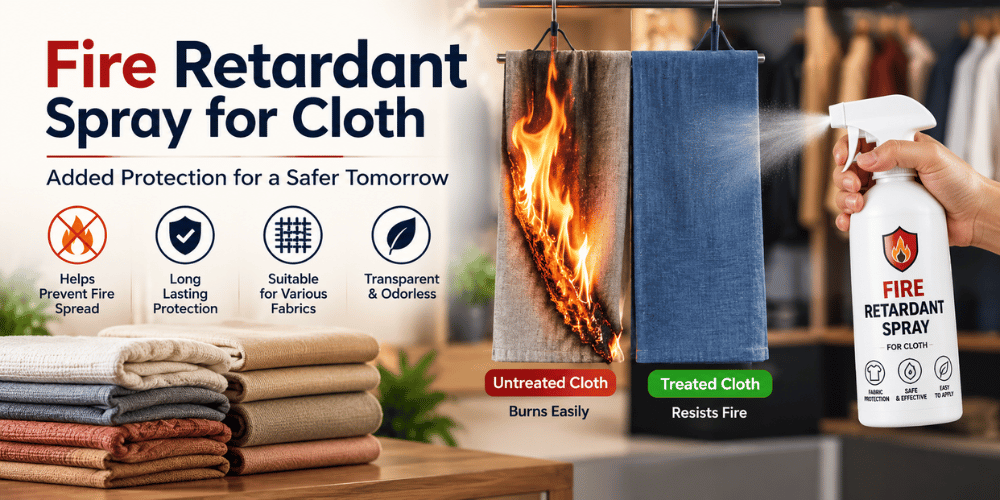
Fire safety is important wherever fabrics, textiles, curtains, upholstery, carpets, uniforms, stage materials or decorative cloth are used. Gopalfiresafety provides fire-safety products and information through https://gopalfiresafety.com/, helping businesses and professionals understand different fire protection solutions. Gopalfiresafety also shares fire-safety information and product updates through Instagram. A fire retardant spray for cloth can be used on suitable textile materials to reduce flame spread and improve the fire performance of fabrics when the product is correctly selected and applied according to its technical instructions.
Textiles are present in almost every type of building. Hotels use curtains, carpets, upholstery and decorative fabrics. Restaurants use table coverings, curtains and upholstered furniture. Event venues may use stage curtains, backdrops and temporary decorations. Offices can contain fabric partitions, acoustic materials and upholstered furniture. Residential properties may contain curtains, mattresses, carpets and other textile products.
Because many fabrics can ignite and contribute to flame spread, appropriate fire protection can be an important part of an overall safety strategy.
A fire retardant spray for cloth is generally formulated to treat compatible textile surfaces and reduce their tendency to support rapid flame propagation. However, fire-retardant treatment does not mean that every fabric becomes completely non-combustible or fireproof. The actual performance depends on the chemical formulation, fabric composition, application rate, drying conditions, washing, environmental exposure and the specific fire test used.
For this reason, fabric fire protection should always be approached as a performance-based application rather than simply a coating exercise.
What Is a Fire Retardant Spray for Cloth?
A fire retardant spray for cloth is a liquid treatment designed for application to certain textile or fabric surfaces to improve their resistance to ignition or flame spread.
Depending on the formulation, the treatment may work by:
- Reducing flame propagation
- Promoting char formation
- Reducing the rate of combustion
- Creating a protective layer
- Changing the way the textile reacts when exposed to heat
- Helping meet a specified textile fire-performance test
The exact mechanism depends on the chemistry of the product.
Some formulations are water-based, while others may use different carriers or chemical systems. Certain products are designed for natural fibers, synthetic textiles or blends, while others may have much narrower compatibility.
Therefore, the product label and technical data sheet should always be checked before treatment.
Why Fabric Fire Protection Matters
Textiles can contribute to fire development because many fabrics are combustible.
A curtain, upholstery fabric or decorative cloth can become involved in a fire and allow flames to spread across a surface.
Fire-retardant treatment can therefore be considered for certain applications where reducing flame spread is desirable.
Potential applications include:
- Curtains
- Stage drapes
- Theatre fabrics
- Hotel curtains
- Upholstery
- Decorative textiles
- Exhibition fabrics
- Event backdrops
- Canopies
- Carpets
- Fabric partitions
- Acoustic textiles
- Commercial furnishings
The appropriate treatment depends on the textile and its intended environment.
Fire Retardant vs Fireproof
One of the most important concepts to understand is the difference between fire retardant and fireproof.
Fire retardant generally describes a material or treatment that reduces the tendency of a material to ignite or spread flame under specified test conditions.
Fireproof is often used as a broad marketing term, but it should not be interpreted as meaning that a fabric cannot burn under any circumstances.
Most textiles remain combustible to some degree.
A properly evaluated treatment may improve fire performance, but the treated material still has limitations.
Therefore, technical documentation and fire-test results are more meaningful than general marketing terminology.
How Fire Retardant Fabric Treatments Work
A textile fire-retardant treatment may interact with the fabric when exposed to heat.
Depending on the formulation, several mechanisms can occur.
Char Formation
Some fire-retardant systems encourage the formation of a protective char layer.
This char can act as a barrier between the heat source and underlying textile material.
Reduced Flame Propagation
The treatment may reduce the ability of flames to travel rapidly across the textile surface.
This can be important for curtains, upholstery and decorative fabrics.
Heat Absorption or Protective Action
Certain formulations may undergo chemical or physical changes when heated, helping reduce the rate at which the underlying fabric becomes involved in combustion.
Gas-Phase Action
Some fire-retardant chemistries can influence combustion reactions in the gas phase.
The mechanism varies according to the formulation and should be confirmed from manufacturer documentation.
Choosing the Right Fabric Treatment
Not every fabric responds to the same treatment.
Before purchasing a fire retardant spray for cloth, identify the fabric composition.
Important information can include:
- Cotton
- Polyester
- Nylon
- Rayon
- Wool
- Acrylic
- Polypropylene
- Blended textiles
- Treated fabrics
- Coated fabrics
A product designed for cotton should not automatically be assumed suitable for polyester or a mixed textile.
The treatment manufacturer should specify compatible materials.
Natural Fabrics
Natural fabrics such as cotton and certain cellulose-based textiles can require specialized fire-retardant treatment.
Cotton can burn relatively readily when exposed to a suitable ignition source.
A compatible treatment may reduce flame spread under specified conditions.
However, performance can change after washing, abrasion or other forms of use.
Synthetic Fabrics
Synthetic textiles can behave differently from natural fibers.
Some may melt, shrink or form droplets when exposed to high temperatures.
Therefore, a fire-retardant treatment should be evaluated specifically for the fabric composition.
A chemical treatment that performs well on cotton cannot automatically be transferred to polyester or another synthetic textile.
Fabric Blends
Blended fabrics can be particularly important to evaluate carefully.
For example, a textile containing cotton and polyester may respond differently from either fiber individually.
The treatment should therefore be compatible with the complete fabric construction.
Surface Preparation
Before applying a fabric treatment, the textile should generally be clean and free from contaminants that could interfere with treatment.
Potential contaminants include:
- Dust
- Oil
- Grease
- Wax
- Dirt
- Cleaning residues
- Previous coatings
- Fabric softener residues
The exact preparation requirements depend on the product.
If the manufacturer specifies washing or cleaning before treatment, those instructions should be followed.
Application of Fire Retardant Spray
Application procedures vary by product.
A typical application may involve:
- Identifying the fabric
- Confirming product compatibility
- Cleaning the fabric
- Preparing the spray equipment
- Applying the specified quantity
- Maintaining uniform coverage
- Allowing adequate drying
- Checking the finished treatment
- Conducting testing when required
The manufacturer’s instructions should take priority over generic application methods.
Why Application Rate Matters
The quantity of treatment applied can affect performance.
Too little material may fail to provide the intended treatment level.
Too much material may cause:
- Stiffness
- Discoloration
- Residue
- Uneven appearance
- Odor
- Changes in fabric texture
Therefore, application should follow the manufacturer’s recommended coverage rate.
Uniform Coverage
Uniform application is important because untreated areas can behave differently from treated areas.
Spraying should therefore be controlled to avoid:
- Missed areas
- Heavy spots
- Runs
- Pooling
- Uneven coverage
For large curtains or textile panels, application should be planned systematically.
Drying Requirements
The treated textile should be allowed to dry according to the manufacturer’s instructions.
Drying can depend on:
- Temperature
- Humidity
- Air movement
- Fabric thickness
- Application quantity
- Product formulation
Incomplete drying can affect handling and may interfere with subsequent testing.
Fire Testing of Treated Fabrics
Fire performance should be evaluated using an appropriate textile fire test.
Different standards address different properties.
Depending on the intended application, testing may evaluate:
- Ignition
- Flame spread
- Burning behavior
- Afterflame
- Afterglow
- Flame propagation
- Heat release
- Smoke characteristics
The correct test depends on the project and market.
A treatment should not be described as compliant with a specific standard unless the exact product and treated textile have appropriate supporting documentation.
Importance of Test Reports
A test report can provide important information about the performance of a treated textile.
It may identify:
- Fabric type
- Fabric construction
- Treatment
- Application quantity
- Test method
- Conditioning
- Test result
- Laboratory
- Test date
This information helps determine whether the tested configuration corresponds to the actual application.
Fire Retardant Spray for Curtains
Curtains are one of the most common applications for textile fire protection.
Curtains are used in:
- Hotels
- Restaurants
- Offices
- Hospitals
- Schools
- Auditoriums
- Theatres
- Conference halls
- Residential buildings
Large curtains can provide significant combustible surface area.
A suitable fire-retardant treatment may therefore be considered when required by project specifications or textile fire-safety requirements.
Stage Curtains and Theatre Fabrics
Stage curtains and theatrical textiles can have specific fire-safety considerations.
Common materials include:
- Stage drapes
- Backdrops
- Blackout fabrics
- Decorative cloth
- Scenic textiles
- Acoustic curtains
Because stage environments can contain lighting equipment, electrical equipment and other heat sources, textile fire performance should be considered carefully.
Hotel Textile Protection
Hotels contain significant quantities of textiles.
Examples include:
- Curtains
- Upholstered chairs
- Sofas
- Bed coverings
- Decorative fabrics
- Carpets
- Conference-room drapes
A fabric fire protection program can form part of a broader hotel fire-safety strategy.
The treatment should be compatible with cleaning and maintenance practices.
Restaurant and Hospitality Applications
Restaurants can use curtains, decorative fabrics, upholstery and other textile materials.
Heat sources and cooking equipment can introduce additional fire risks.
Textile protection should therefore complement other measures such as:
- Kitchen fire protection
- Fire extinguishers
- Detection
- Emergency procedures
- Electrical safety
- Ventilation maintenance
No fabric treatment should be considered a substitute for a complete fire-safety system.
Exhibition and Event Fabrics
Temporary events frequently use fabric backdrops, banners, curtains and decorative materials.
Because these installations may be assembled quickly, organizers should verify the fire performance requirements before installation.
Important factors can include:
- Fabric type
- Treatment documentation
- Installation location
- Exposure to lighting
- Electrical equipment
- Duration of use
- Storage conditions
Upholstery Fire Protection
Furniture upholstery can contribute to fire development.
Treatment options may be considered for certain textile upholstery applications.
However, upholstery systems can contain multiple components, including:
- Outer fabric
- Foam
- Padding
- Adhesives
- Frame materials
The performance of the complete furniture construction can therefore differ from the performance of the fabric alone.
Fire Retardant Treatment for Carpets
Carpets are another textile category that may require fire-performance evaluation.
A carpet treatment must be compatible with:
- Fiber type
- Backing material
- Adhesive
- Cleaning system
- Installation method
A treatment for loose fabric should not automatically be assumed suitable for installed carpet.
Reapplication and Maintenance
Fire-retardant treatment may not remain unchanged indefinitely.
Factors that can affect performance include:
- Washing
- Wet cleaning
- Dry cleaning
- Abrasion
- UV exposure
- Moisture
- Dust accumulation
- Chemical contamination
- Repeated handling
Therefore, maintenance and reapplication requirements should be established according to the product instructions.
Washing and Fire-Retardant Performance
One of the most important questions for treated textiles is whether the treatment is durable after washing.
Some treatments may be designed for temporary or non-wash applications.
Others may be formulated for improved durability.
The user should never assume wash durability without supporting technical information.
Commercial vs Residential Applications
Commercial environments can have more demanding fire-safety requirements because of occupancy, building type and local regulations.
Residential applications can also benefit from textile fire protection, particularly in areas containing large quantities of fabric.
However, the required performance should always be determined according to the actual application.
Fire Retardant Spray for Decorative Textiles
Decorative textiles are often used in interior design.
They can include:
- Wall hangings
- Decorative drapes
- Fabric panels
- Event decorations
- Ceiling decorations
- Display fabrics
Because decorative textiles can sometimes be installed close to lighting or electrical equipment, fire performance should be evaluated carefully.
Storage of Treated Fabrics
Treated textiles should be stored appropriately.
Potential considerations include:
- Dry environment
- Protection from contamination
- Avoiding chemical contact
- Avoiding excessive moisture
- Protection from physical damage
Storage conditions can affect both the textile and its treatment.
Safety During Application
The product’s safety data sheet should be reviewed before applying a textile fire-retardant product.
Depending on the formulation, personal protective equipment may include:
- Gloves
- Eye protection
- Suitable clothing
- Respiratory protection where specified
Adequate ventilation may also be required.
Gopalfiresafety and Textile Fire Protection
Gopalfiresafety provides fire-safety information and products through https://gopalfiresafety.com/.
For customers investigating textile fire protection, understanding the difference between fire-retardant treatment, fire resistance and complete fire-test performance is important.
Gopalfiresafety also shares educational fire-safety information through Instagram, helping businesses and professionals learn more about fire protection technologies.
Part 2: Fire Retardant Spray for Cloth
A properly selected fire retardant spray for cloth can be useful for improving the fire performance of compatible textiles. However, the treatment should always be considered together with the textile composition, application environment, required test standard and maintenance conditions.
Textile fire protection is not simply about spraying a chemical onto fabric. The entire process—from product selection to testing and maintenance—can affect the final result.
How to Evaluate a Fabric Fire-Retardant Product
Before purchasing a textile treatment, review the product’s technical documentation.
Important information can include:
- Recommended fabric types
- Application method
- Coverage rate
- Drying time
- Fire-test information
- Cleaning limitations
- Storage requirements
- Shelf life
- Safety information
- Reapplication guidance
This information can help determine whether the product is suitable for the intended application.
Fabric Identification Before Treatment
Fabric identification is an important first step.
If the textile composition is unknown, testing or manufacturer consultation may be necessary.
Look for information such as:
- Fiber composition
- GSM
- Fabric construction
- Backing
- Existing coating
- Dye type
- Previous treatment
Different textile constructions can produce different fire-test results.
Small-Scale Testing
Before treating a large quantity of fabric, a small test area can be useful.
A sample test can help evaluate:
- Appearance
- Color change
- Texture
- Stiffness
- Drying
- Adhesion
- Compatibility
Where fire performance is critical, laboratory testing should be considered rather than relying solely on a visual or small-scale application test.
Color and Appearance
A textile treatment should ideally preserve the appearance of the fabric.
However, some formulations can change:
- Color
- Gloss
- Texture
- Softness
- Hand feel
Testing on a small sample before large-scale treatment can help identify potential appearance issues.
Fabric Softness
Certain treatments can make fabrics feel stiffer.
This may be acceptable for curtains or decorative panels but less desirable for clothing, upholstery or flexible textiles.
Therefore, the intended use should be considered before selecting a product.
Fire Retardant Treatment for Clothing
Clothing is a specialized textile application.
A general-purpose fabric spray should not automatically be used on garments intended for occupational or protective applications.
Protective clothing may require specific performance testing, construction and certification.
For industrial protective clothing, buyers should rely on products specifically intended and evaluated for that use.
Fire-Retardant Treatment for Upholstery
Upholstery requires careful consideration because the fabric interacts with foam, padding and other materials.
The performance of fabric alone may not represent the performance of the complete upholstered article.
For regulated or high-risk applications, the appropriate complete-assembly test should be considered.
Fire Retardant Spray for Stage Backdrops
Stage backdrops can be large and vertically oriented, making flame-spread behavior important.
When selecting a fire retardant spray for cloth for stage materials, consider:
- Fabric composition
- Size
- Installation method
- Distance from lighting
- Electrical equipment
- Required fire standard
- Treatment durability
Documentation should be retained after treatment.
Fire Retardant Spray for Hotel Curtains
Hotel curtains may be washed or professionally cleaned repeatedly.
Therefore, durability is an important consideration.
The treatment manufacturer should specify whether the treated textile can withstand the planned cleaning process.
If treatment is removed during cleaning, re-treatment may be necessary.
Fire Retardant Spray for Event Decorations
Temporary event decorations can include:
- Fabric arches
- Drapes
- Backdrops
- Hanging fabrics
- Decorative panels
- Exhibition displays
Event organizers should determine fire-safety requirements before materials are installed.
Textile Fire Protection in Public Buildings
Public buildings can have high occupant loads.
Examples include:
- Auditoriums
- Convention centers
- Schools
- Universities
- Museums
- Shopping centers
- Transport facilities
Where textiles are widely used, fire performance can become an important part of the overall fire-safety plan.
Fire Retardant Spray and Flame Spread
One key purpose of textile fire-retardant treatment is reducing flame spread under specified test conditions.
A successful treatment may change the way a flame moves across a textile surface.
However, actual performance depends on the tested fabric and treatment conditions.
This is why laboratory results should be interpreted carefully.
What Fire Retardant Spray Cannot Do
A textile fire-retardant product cannot make every fabric completely immune to fire.
It does not eliminate:
- Ignition risk
- Heat exposure
- Smoke generation
- Structural fire risk
- Electrical hazards
- Other combustible materials
It is one component of a broader fire-safety strategy.
Importance of Fire Safety Regulations
Buildings and projects may be subject to specific fire-safety requirements.
These requirements can depend on:
- Building type
- Occupancy
- Location
- Material use
- Project specifications
- Local authority requirements
Therefore, the required textile fire performance should be confirmed before procurement.
Certification and Compliance
When a supplier claims that a textile treatment meets a specific standard, buyers should request supporting documentation.
The documentation should ideally identify:
- Product
- Fabric
- Test method
- Test conditions
- Laboratory
- Test result
- Applicable limitations
A certificate for one textile should not automatically be applied to a different textile.
Fire Retardant Spray vs Fire-Rated Material
These terms should not be confused.
A fire-retardant spray is a treatment.
A fire-rated material or assembly has a defined tested performance under a particular fire-resistance test.
For example, a fire-rated door is generally evaluated as a complete assembly, while a textile treatment may be evaluated for flame-spread or other textile fire characteristics.
Environmental Conditions
Humidity and moisture can affect certain textile treatments.
A product designed for indoor dry environments may not be appropriate for outdoor applications.
Outdoor textiles can experience:
- Rain
- Humidity
- UV exposure
- Temperature changes
- Dust
- Pollution
The product manufacturer should specify environmental limitations.
UV Exposure
Long-term sunlight exposure can affect some fabrics and chemical treatments.
For outdoor or sun-exposed textile applications, UV durability should be considered where relevant.
Cleaning and Chemical Exposure
Cleaning agents can affect treated fabrics.
Strong detergents, solvents or bleaching products may reduce treatment performance or damage the textile.
Cleaning instructions should therefore be documented.
Inspection of Treated Fabrics
Treated fabrics should be visually inspected periodically.
Look for:
- Tears
- Contamination
- Staining
- Heavy wear
- Changes in texture
- Water exposure
- Cleaning damage
If the textile has been substantially altered, its fire performance may need to be reassessed.
Record Keeping
For commercial applications, maintaining treatment records can be useful.
Records may include:
- Fabric identification
- Treatment product
- Batch number
- Application date
- Application quantity
- Applicator
- Test report
- Maintenance history
- Re-treatment date
This information can help with future inspections.
Fire Retardant Treatment for Large Fabric Areas
Large installations should be treated systematically.
Examples include:
- Auditorium curtains
- Exhibition walls
- Theatre drapes
- Hotel ballroom curtains
- Large decorative installations
The applicator should ensure consistent treatment throughout the entire fabric.
Professional Application
For important commercial applications, professional application can provide better control over:
- Coverage
- Application quantity
- Drying
- Documentation
- Quality checks
The appropriate approach depends on the product and project.
Common Mistakes When Using Fire Retardant Spray for Cloth
Mistake 1: Treating an Unknown Fabric
Unknown fabric composition can create compatibility problems.
Mistake 2: Assuming Every Spray Works on Every Textile
Different products have different compatibility ranges.
Mistake 3: Applying Too Little Product
Insufficient application may not achieve the intended performance.
Mistake 4: Applying Too Much Product
Excess treatment can affect appearance and fabric feel.
Mistake 5: Ignoring Washing
Cleaning can potentially reduce treatment performance.
Mistake 6: Using Unsupported Certification Claims
A product should not be advertised as meeting a particular fire standard without appropriate documentation.
Mistake 7: Treating Fire Retardant as Fireproof
Fire-retardant treatment does not mean that fabric cannot burn.
Mistake 8: Ignoring Complete-Assembly Requirements
For upholstery, protective clothing and other systems, fabric performance may not represent the performance of the complete product.
Benefits of Proper Textile Fire Protection
A properly selected and applied treatment can provide several potential benefits:
- Reduced flame spread
- Improved textile fire performance
- Additional protection for certain applications
- Support for project fire-safety requirements
- Improved risk management
- Better documentation of fire-performance measures
The actual benefit depends on the product and tested application.
Selecting a Fire Safety Supplier
When searching for a supplier, consider:
- Product range
- Technical documentation
- Application guidance
- Test information
- Customer support
- Product traceability
- Availability
- Experience with fire-safety products
Gopalfiresafety provides fire-safety products and information for customers seeking different types of fire protection solutions.
Fire Safety Equipment and Textile Protection
Textile treatment should not be considered independently from other fire-safety equipment.
A building may also require:
- Fire alarms
- Smoke detectors
- Fire extinguishers
- Fire doors
- Emergency lighting
- Fire stopping
- Fire suppression
- Evacuation procedures
An integrated approach provides multiple layers of protection.
Frequently Asked Questions
What is a fire retardant spray for cloth?
A fire retardant spray for cloth is a treatment formulated for compatible textile materials to reduce flame spread or improve fire performance under specified test conditions.
Can fire retardant spray make cloth fireproof?
No. Fire-retardant treatment does not generally mean that a textile becomes completely fireproof. Performance depends on the product, fabric and test conditions.
Can fire retardant spray be used on cotton?
Some textile treatments are specifically formulated for cotton and other cellulose-based fabrics. The manufacturer’s compatibility information should be checked before use.
Can it be used on polyester?
Some products may be suitable for polyester, while others may not be. The exact fabric composition and product technical documentation should be checked.
Does washing remove fire-retardant treatment?
It can, depending on the treatment. Some products have limited wash durability, while others are designed for specific laundering conditions. Always follow the manufacturer’s instructions.
Can the treatment be used on curtains?
Yes, certain textile fire-retardant products are designed for compatible curtains and drapes. The fabric and intended application should be verified before treatment.
Is fire-retardant treatment suitable for clothing?
Only products specifically intended and tested for the relevant clothing application should be considered for protective or occupational garments.
How should treated fabric be maintained?
Maintenance should follow the treatment manufacturer’s instructions. Cleaning, abrasion, moisture, UV exposure and chemical contact can potentially affect performance.
Does every fire-retardant spray have certification?
No. Certification and testing vary by product and application. Buyers should request documentation for the exact product and textile configuration.
Where can I learn more about fire safety products?
Gopalfiresafety provides fire-safety products and educational information through https://gopalfiresafety.com/, with additional fire-safety updates available through Instagram.
Conclusion
A fire retardant spray for cloth can be a useful textile fire-protection solution when the treatment is compatible with the fabric and applied according to the manufacturer’s specifications. Curtains, stage fabrics, upholstery, exhibition materials, decorative textiles and other fabric products may benefit from appropriate fire-performance treatment depending on their application.
The most important considerations are fabric composition, product compatibility, application quantity, drying, fire testing, cleaning requirements, environmental exposure and maintenance.
Businesses should avoid treating “fire retardant” and “fireproof” as interchangeable terms. A fire-retardant treatment can improve specific fire characteristics, but it does not make every textile completely non-combustible.
For commercial and high-risk applications, buyers should request technical documentation and verify that the tested textile configuration matches the intended use.
Gopalfiresafety provides fire-safety products and resources through https://gopalfiresafety.com/. Businesses, contractors and fire-safety professionals can also follow Gopalfiresafety on Instagram for fire-protection information and product updates.
When textile fire protection is combined with appropriate fire detection, firefighting equipment, passive fire protection and emergency procedures, it can form one part of a broader strategy for managing fire risk.
A fire retardant spray for cloth can be an effective way to improve the fire performance of suitable textile materials when the correct product is selected, applied at the specified rate and maintained according to the manufacturer’s instructions. Fabric fire protection is relevant to hotels, theatres, event venues, restaurants, offices, schools, hospitals, exhibition centers, commercial buildings and many other environments where textiles are used.
The performance of a treated textile depends on several factors, including fiber composition, fabric construction, treatment chemistry, application quantity, drying conditions, washing, environmental exposure and the fire test used to evaluate the material. For this reason, textile fire protection should be approached as a complete process rather than simply applying a spray and assuming that the fabric is permanently fireproof.
Gopalfiresafety provides fire-safety products and information through https://gopalfiresafety.com/, helping businesses and professionals understand different approaches to fire protection. Gopalfiresafety also shares fire-safety information and product updates through Instagram.
Understanding Textile Fire Performance
Textiles can behave differently when exposed to an ignition source. Some fabrics ignite quickly, while others may melt, shrink, char or resist flame propagation for longer periods.
Factors affecting textile fire behavior include:
- Fiber type
- Fabric weight
- Fabric construction
- Surface treatment
- Dye
- Moisture content
- Fabric density
- Backing material
- Presence of coatings
- Environmental conditions
This means that two fabrics that look almost identical can have very different fire characteristics.
A fire retardant spray for cloth should therefore be selected based on the actual textile rather than its appearance.
Fiber Composition and Fire Retardant Treatment
The first step in selecting a textile fire treatment is identifying the fiber composition.
Common textile fibers include:
- Cotton
- Polyester
- Nylon
- Rayon
- Acrylic
- Wool
- Polypropylene
- Linen
- Blended fibers
Each fiber has different thermal and combustion characteristics.
A treatment designed for one material may not produce the same results on another.
Cotton Fabrics
Cotton is widely used in curtains, upholstery, clothing, decorative textiles and event fabrics.
Because untreated cotton can support combustion, compatible fire-retardant treatment may be used where improved fire performance is required.
However, treatment durability can be affected by washing and repeated use.
Polyester Fabrics
Polyester is common in curtains, upholstery, event fabrics and commercial textiles.
Its behavior under heat differs from cotton. Depending on the construction and temperature, polyester may soften, shrink or melt.
A suitable treatment should therefore be specifically evaluated for polyester.
Wool Fabrics
Wool naturally has different combustion characteristics from many synthetic fibers.
Nevertheless, natural resistance does not mean that every wool textile meets every required fire-performance standard.
Testing remains important when specific performance is required.
Blended Fabrics
Blended textiles combine two or more fibers.
For example, cotton-polyester fabrics can behave differently from pure cotton or pure polyester.
When treating blended materials, the treatment manufacturer’s compatibility information should be followed carefully.
Selecting a Fire Retardant Spray for Different Applications
The intended use of the fabric is just as important as its composition.
A treatment used on a hotel curtain may not be appropriate for a protective garment.
Similarly, a product intended for decorative fabric may not be appropriate for upholstery or outdoor textiles.
Curtains
Curtains are among the most common applications.
Commercial curtains can be found in:
- Hotels
- Restaurants
- Offices
- Conference rooms
- Schools
- Hospitals
- Auditoriums
- Theatres
A suitable textile treatment can help reduce flame spread when evaluated under an appropriate fire test.
Stage Curtains
Stage curtains can cover large areas and may be positioned near lighting, electrical equipment and other heat sources.
Fire-performance requirements should therefore be established before treatment.
The treatment process should include appropriate documentation so that venue operators can demonstrate what product was applied and when.
Exhibition Fabrics
Exhibition stands often use temporary fabric walls, banners, curtains and decorative materials.
These materials may be installed in large public venues where fire-safety requirements can be specific.
Organizers should verify the required performance before the event rather than treating the fabric as an afterthought.
Hotel Curtains and Drapes
Hotels frequently use large quantities of fabric.
Curtains may be cleaned periodically, which makes treatment durability an important consideration.
A fire-retardant treatment should therefore be compatible with the hotel’s planned cleaning process.
Upholstered Furniture
Upholstered furniture is a more complex application because the fabric is only one component.
An upholstered item may include:
- Outer fabric
- Foam
- Padding
- Adhesives
- Frame
- Backing
Testing the fabric alone does not necessarily establish the fire performance of the complete furniture assembly.
Fire Retardant Spray for Decorative Fabric
Decorative fabric is used extensively in interior design.
Examples include:
- Decorative curtains
- Wall textiles
- Ceiling fabrics
- Event backdrops
- Hanging decorations
- Exhibition panels
- Decorative partitions
Because these materials can sometimes be positioned near heat-producing equipment, their fire performance should be considered during project planning.
Fabric Fire Protection for Events
Temporary events can create unique challenges.
Event materials may be:
- Installed quickly
- Moved frequently
- Stored between events
- Exposed to lighting
- Subject to repeated handling
If a fire retardant spray for cloth is applied to event fabric, the organizer should maintain treatment documentation and follow the manufacturer’s maintenance instructions.
Fire Retardant Treatment and Washing
Washing is one of the most important factors affecting treated textiles.
Depending on the chemistry, washing can potentially remove or reduce a surface treatment.
Before treating a fabric, determine:
- Whether washing is permitted
- Which detergent can be used
- Whether dry cleaning is permitted
- Whether treatment must be reapplied
- Whether the product is durable through a specified number of wash cycles
A product should not be described as permanently fire retardant unless its technical documentation supports that claim.
Dry Cleaning Considerations
Some commercial textiles are professionally dry-cleaned.
Solvents and cleaning processes can affect certain treatments.
Therefore, dry-cleaning compatibility should be confirmed with the treatment manufacturer.
Moisture and Humidity
Environmental moisture can affect some textile treatments.
Indoor fabrics generally experience different conditions from outdoor fabrics.
Outdoor applications can involve:
- Rain
- High humidity
- Condensation
- UV radiation
- Temperature changes
The treatment should be selected for the expected environment.
Outdoor Fabric Applications
Outdoor textiles may include:
- Canopies
- Temporary structures
- Outdoor event fabrics
- Shade fabrics
- Decorative installations
Outdoor fire protection can be more demanding because environmental exposure may affect the treatment.
If outdoor use is intended, the product documentation should specifically support that application.
UV Exposure and Textile Treatments
Sunlight can gradually affect both textile fibers and chemical treatments.
Long-term UV exposure may change:
- Color
- Strength
- Surface properties
- Treatment performance
For fabrics exposed to strong sunlight, UV durability should be considered.
Importance of Fabric Testing
When fire performance is critical, testing provides a more reliable basis for evaluating the treated textile.
Testing may assess properties such as:
- Ignition behavior
- Flame spread
- Afterflame
- Afterglow
- Burning rate
- Smoke generation
The relevant test depends on the intended application.
Fire Test Standards
Different countries, building types and industries can use different fire-test standards.
A textile product may be evaluated according to a standard dealing with flame propagation, surface burning, ignition or another fire characteristic.
The applicable standard should be established from the project specification and relevant authority requirements.
A product should not be marketed as meeting a standard merely because its chemistry is similar to another tested product.
Why Exact Test Configuration Matters
Suppose a fire-retardant treatment is tested on one specific cotton fabric.
The result does not automatically prove that the same treatment will produce the same result on:
- Polyester
- Cotton-polyester blends
- Heavy upholstery
- Carpet
- Foam-backed fabric
- Coated fabric
The test result belongs to the tested configuration.
This is an important principle when purchasing textile fire protection.
Laboratory Testing
Professional laboratories can evaluate treated textiles under defined conditions.
Testing can provide information about:
- Material behavior
- Flame spread
- Ignition
- Burning characteristics
- Treatment effectiveness
For large commercial projects, testing may be required before materials are accepted.
Sample Testing Before Large-Scale Treatment
A small fabric sample can be treated before the entire installation.
This can help identify:
- Color changes
- Stiffness
- Surface residue
- Odor
- Compatibility
- Drying behavior
However, a small visual test does not replace formal fire-performance testing when certification or compliance is required.
Application Equipment
Depending on the product, application may be performed using:
- Hand sprayers
- Pressure sprayers
- Commercial spray equipment
- Controlled application systems
The equipment should provide uniform coverage.
The manufacturer’s instructions should specify whether a particular application method is required.
Application Coverage
Coverage is an important consideration.
If a product requires a specified quantity per square meter, the applicator should ensure that the correct amount is distributed consistently.
Uneven application can produce inconsistent treatment.
Problems With Under-Application
Under-application can result in insufficient treatment.
Potential causes include:
- Excessive spray distance
- Poor equipment calibration
- Insufficient passes
- Incorrect dilution
- Uneven spraying
Problems With Over-Application
Over-application can result in:
- Fabric stiffness
- Residue
- Uneven appearance
- Extended drying time
- Changes in texture
The recommended application rate should therefore be followed.
Dilution Requirements
Some products are supplied ready to use.
Others may require dilution.
Incorrect dilution can change product performance.
The manufacturer should specify:
- Dilution ratio
- Water quality
- Mixing procedure
- Application equipment
- Storage after dilution
Users should never improvise a dilution ratio.
Drying the Treated Fabric
Drying is an important part of the treatment process.
Factors can include:
- Air circulation
- Temperature
- Humidity
- Fabric thickness
- Treatment quantity
The treated textile should not be put into service until the manufacturer specifies that it is sufficiently dry.
Ventilation During Application
Adequate ventilation can be important during application, particularly for products with strong odors or specific safety requirements.
The product’s safety data sheet should be reviewed before use.
Personal Protective Equipment
Depending on the formulation, application may require:
- Gloves
- Safety glasses
- Protective clothing
- Respiratory protection
The exact requirements should come from the manufacturer’s safety documentation.
Storage of Fire Retardant Products
The treatment itself should also be stored appropriately.
Important considerations may include:
- Temperature
- Direct sunlight
- Freezing
- Container closure
- Shelf life
- Ventilation
Always follow the manufacturer’s storage instructions.
Fire Retardant Spray for Cloth in Hotels
Hotels are a major potential application because textiles are extensively used throughout guest rooms and public areas.
Possible applications include:
- Curtains
- Upholstered furniture
- Decorative textiles
- Conference drapes
- Restaurant fabrics
A hotel fire-safety program should combine textile protection with detection, alarms, extinguishers, emergency exits and other fire protection measures.
Fire Retardant Spray for Cloth in Hospitals
Hospitals use curtains, privacy screens, upholstery and other textile materials.
Fire protection can be especially important because some occupants may require assistance during evacuation.
Textile selection should therefore be coordinated with the overall fire-safety strategy.
Fire Retardant Spray for Cloth in Schools
Schools use curtains, stage materials, upholstered furniture and decorative fabrics.
School authorities can consider textile fire performance when selecting materials for:
- Auditoriums
- Classrooms
- Libraries
- Activity rooms
- Stage areas
Fire Retardant Spray for Cloth in Offices
Office environments can contain:
- Curtains
- Acoustic fabric
- Upholstery
- Fabric partitions
- Decorative materials
Fire protection should be considered together with electrical safety and emergency evacuation planning.
Fire Retardant Spray for Cloth in Restaurants
Restaurants use textiles for:
- Curtains
- Upholstery
- Decorative fabrics
- Table coverings
Kitchen areas also introduce additional heat and ignition hazards.
Textile protection should therefore complement kitchen fire protection rather than replace it.
Fire Retardant Spray for Cloth in Theatres
Theatres can have extensive textile use.
Common materials include:
- Stage curtains
- Backdrops
- Acoustic curtains
- Decorative fabrics
- Seating upholstery
Because these materials can cover large areas, appropriate fire-performance requirements should be identified early in the project.
Fire Retardant Spray for Cloth in Exhibition Centers
Exhibition halls can contain temporary structures and large fabric displays.
The treatment status of exhibition materials should be documented so that venue operators can verify fire-safety requirements.
Fire Retardant Spray for Cloth and Acoustic Panels
Acoustic products can use textile coverings.
The fire behavior of the complete acoustic panel can differ from the behavior of the fabric covering alone.
Therefore, if a panel is required to meet a specific fire classification, the complete panel should have appropriate supporting test documentation.
Fire Retardant Spray and Foam
Foam-backed fabrics require special attention.
Foam can have very different fire characteristics from the outer textile.
Treating only the fabric surface may not establish the fire performance of the complete product.
Fire Retardant Spray for Mattresses
Mattresses are complex assemblies containing:
- Fabric
- Foam
- Padding
- Springs
- Adhesives
- Cover materials
A general textile spray should not automatically be used as a mattress fire-safety solution.
Mattress fire performance should be evaluated using the relevant product-specific requirements.
Fire Retardant Spray for Protective Clothing
Protective clothing requires specialized evaluation.
Examples include:
- Industrial protective clothing
- Fire-resistant workwear
- Welding garments
- Heat-protective garments
A general-purpose textile spray should not be assumed to provide certified protective performance.
Certification Claims
Marketing terms can sometimes create confusion.
Statements such as:
- Fireproof
- Fire resistant
- Fire retardant
- Certified
- Approved
- Flameproof
should be supported by appropriate technical evidence.
If a product is claimed to meet a particular standard, the exact product and test documentation should be verified.
Fire Retardant Spray for Cloth and Compliance
Compliance depends on the application.
For example, the requirement for a hotel curtain may differ from the requirement for industrial protective clothing.
Before selecting a treatment, identify:
- Building type
- Textile application
- Fabric composition
- Required fire performance
- Applicable standard
- Required certification
- Maintenance conditions
This provides a structured procurement process.
Maintaining Treated Fabrics
Maintenance should be planned from the beginning.
Inspection can identify:
- Damage
- Staining
- Washing
- Abrasion
- Treatment loss
- Fabric replacement
- Environmental exposure
When a fabric is heavily altered or replaced, its fire-treatment status should be reassessed.
Re-Treatment
Some textile treatments may require reapplication after:
- Washing
- Dry cleaning
- Heavy abrasion
- Long-term use
- Replacement
- Significant contamination
The manufacturer’s instructions should define when re-treatment is necessary.
Documentation for Commercial Projects
For commercial projects, retain records such as:
- Product name
- Product batch
- Fabric type
- Application date
- Application quantity
- Treatment area
- Applicator
- Test report
- Maintenance records
Good documentation can make future inspections easier.
Common Mistakes in Textile Fire Protection
Using the Wrong Product
A product designed for one fiber may not be appropriate for another.
Ignoring Fabric Construction
Backing, coatings and blends can change fire behavior.
Applying an Incorrect Quantity
The application rate can affect performance.
Ignoring Cleaning
Cleaning may affect treatment durability.
Assuming Treatment Is Permanent
Not every treatment is permanent.
Using Unsupported Certification Claims
Certification should always be verified against documentation.
Treating Fabric as Completely Fireproof
Fire-retardant treatment reduces specific fire characteristics; it does not eliminate every fire hazard.
Ignoring Other Fire Protection Measures
Textile treatment is only one component of an overall fire-safety strategy.
Benefits of Proper Textile Fire Protection
When correctly specified and applied, textile fire-retardant treatment can provide potential benefits such as:
- Reduced flame spread
- Improved fire performance
- Additional protection for combustible textiles
- Support for project specifications
- Better fire-risk management
- Documented treatment history
Actual performance depends on the tested product and application.
Choosing a Fire Safety Supplier
When evaluating suppliers, customers should consider:
- Technical knowledge
- Product quality
- Documentation
- Test information
- Product compatibility
- Application guidance
- Availability
- Customer support
Gopalfiresafety provides fire-safety products and information for customers exploring different fire protection solutions.
Gopalfiresafety for Fire Protection Information
Gopalfiresafety provides fire-safety resources through https://gopalfiresafety.com/.
The website can be used to explore fire-safety products and learn about different protection technologies.
Gopalfiresafety also uses Instagram to share fire-safety information, product updates and educational content.
Customers should review the technical information for each product and confirm suitability for the intended application before purchase.
Frequently Asked Questions
What is a fire retardant spray for cloth?
A fire retardant spray for cloth is a treatment designed for compatible fabrics to reduce flame spread or improve specific fire characteristics under defined conditions.
Is fire retardant spray the same as fireproofing?
No. Fire-retardant treatment and fireproofing are not interchangeable technical concepts. A treated fabric can still burn when exposed to sufficient heat or an ignition source.
Which fabrics can be treated?
Compatibility depends on the formulation. Cotton, polyester, blends and other textiles may require different treatments.
Can treated curtains be washed?
Some treatments can withstand specific cleaning processes, while others cannot. The manufacturer’s washing and maintenance instructions should always be followed.
How often should fabric be retreated?
There is no universal interval. Re-treatment depends on the product, textile, cleaning process, environmental exposure and manufacturer’s instructions.
Can I use a fabric fire-retardant spray outdoors?
Only if the product documentation supports outdoor use. UV, rain and humidity can affect certain treatments.
Does treatment change the appearance of fabric?
Some products may change texture, color, stiffness or surface feel. Testing a small sample before large-scale application is recommended.
Is a fire-retardant treatment suitable for protective clothing?
Only products specifically tested and intended for the relevant protective-clothing application should be used.
Can one fire-retardant product be used on every type of fabric?
No. Textile composition and construction can significantly affect treatment performance.
How can I verify a fire-retardant product?
Review the manufacturer’s technical datasheet, safety information and applicable test documentation. Confirm that the tested textile and application correspond to your intended use.
Final Conclusion
A fire retardant spray for cloth can form an important part of textile fire protection when used correctly. Curtains, stage drapes, hotel fabrics, exhibition materials, upholstery and decorative textiles can all present different fire-performance requirements.
The most important principle is to match the treatment to the fabric and application. Fiber composition, fabric construction, application quantity, drying, washing, environmental exposure and testing can all influence the final performance.
Businesses should also distinguish between a fire-retardant treatment and a fire-rated or fire-resistant assembly. A textile treatment does not automatically make an entire product or building component fire rated.
For important commercial applications, technical documentation and appropriate fire testing should be reviewed before installation or use. Records of treatment, testing and maintenance should also be retained where appropriate.
Gopalfiresafety provides fire-safety products and information through https://gopalfiresafety.com/. Businesses, contractors and fire-safety professionals can also follow Gopalfiresafety on Instagram for additional fire-safety information and product updates.
When combined with fire detection, firefighting equipment, passive fire protection, emergency procedures and proper maintenance, textile fire protection can contribute to a broader and more structured approach to fire-risk management.