Understanding UL Certification and Fire-Resistant Curtains
Introduction
Fire safety is an essential consideration when selecting curtains for hotels, hospitals, theatres, offices, shopping centres, educational institutions and industrial buildings. Curtains are often installed across large areas and can be located near electrical equipment, lighting systems, heating appliances and other potential ignition sources. Choosing suitable materials can help reduce fire risks and support a building’s overall safety strategy. At Gopalfiresafety, we believe that understanding product performance, fire-test documentation and certification requirements is important before purchasing fire-safety materials. Readers can also follow Gopalfiresafety on Instagram for updates, product information and educational content about fire protection.
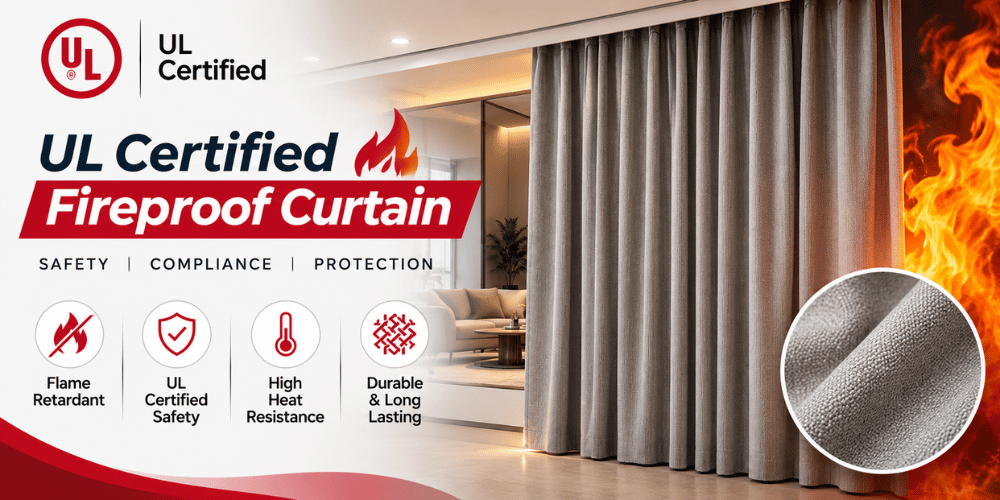
The search phrase UL Certified Fireproof Curtain is commonly used by people looking for curtains with verified fire-safety performance. However, buyers should understand that no ordinary curtain should be described as completely fireproof without clear technical evidence. A curtain may be flame retardant, tested according to a recognised fire-test method or certified by an independent organisation. These descriptions have different meanings.
UL certification is product-specific. It relates to a particular product, the applicable requirements and the scope stated in the certification documentation. A supplier’s statement that a curtain is fire resistant does not automatically mean that it has UL certification.
This guide explains the meaning of fire-resistant curtains, how UL certification works, the differences between fire-retardant and fireproof materials, common curtain fabrics, important testing considerations and how buyers can verify certification claims.
1. What Is a UL Certified Fireproof Curtain?
A curtain described as a UL Certified Fireproof Curtain is generally being marketed as a curtain with fire-safety performance and UL certification. However, the exact certification claim must be checked before the description is accepted.
UL Solutions is an independent organisation that provides testing, inspection and certification services for products and systems. Products that meet the applicable requirements may be authorised to carry the relevant UL certification mark.
The certification applies to the specific product covered by the certification record. It does not automatically apply to every curtain manufactured by the same company, every fabric made from a similar fibre or every product advertised as fire resistant.
For example, a manufacturer may offer several curtain materials with different compositions, weights, coatings and intended applications. If one product has been evaluated and certified, buyers should not assume that all the manufacturer’s other curtains have the same certification.
Before purchasing a curtain based on a UL claim, request:
- The manufacturer’s full legal name.
- The exact product name and model.
- The UL certification mark or relevant identification details.
- The UL file number or unique certification identifier, where applicable.
- The applicable standard or certification requirements.
- The product category and intended application.
- The official certification record.
- Technical data and installation instructions.
- Cleaning and maintenance recommendations.
The documentation should match the product being supplied. A general brochure, test certificate for a different fabric or photograph of a UL logo is not enough to establish that a particular curtain is certified.
It is also important to understand that certification does not mean a product can withstand every fire condition. The actual performance depends on the product’s construction and the scope of its evaluation.
2. Understanding UL Certification
UL Solutions provides testing and certification services for many types of products, materials and systems. Its certification marks communicate that a product has been evaluated against applicable requirements within a defined scope.
The terms UL Listed, UL Classified and UL Certified are related, but their use depends on the certification programme and mark.
UL explains that its enhanced certification marks may display the word CERTIFIED, while traditional Listing and Classification marks remain valid. The exact mark and its accompanying information should be interpreted using the relevant certification documentation.
Certification can provide useful evidence to buyers, architects, contractors, consultants and facility managers. It helps them distinguish products evaluated through a recognised third-party process from products supported only by a manufacturer’s own claims.
However, buyers must remember three important points:
- Certification applies to a specific product, not automatically to an entire company.
- The certification scope determines the applications and requirements covered.
- A UL mark should be verified against the official certification information.
The presence of a UL logo in a supplier’s advertisement should never replace proper verification.
For additional information, visit the official UL Solutions website.
3. Difference Between Fireproof, Fire-Resistant and Flame-Retardant Curtains
These terms are frequently used in product descriptions, but they do not have identical meanings.
Fireproof curtains
The word fireproof suggests that a material cannot burn or be damaged by fire. This is an absolute description and should be treated cautiously.
Most textile curtains are not completely immune to fire. Even specialised materials may experience heat damage, shrinkage, melting, charring, smoke production or structural deterioration.
For this reason, a supplier should not describe a curtain as completely fireproof without a clearly defined technical basis.
Fire-resistant curtains
Fire-resistant is a broader description of a material designed or evaluated to withstand certain fire-related conditions.
The term must be understood in relation to the applicable test method. A result from one test does not necessarily establish performance under another fire exposure.
Flame-retardant curtains
Flame-retardant curtains are made from fabrics that have been designed or treated to reduce ignition or flame spread under specified test conditions.
Some fabrics use specialised fibres, while others receive chemical treatments during manufacturing or after production.
A flame-retardant curtain may still ignite under severe conditions. Its purpose is to achieve a defined level of performance, not to provide unlimited protection.
When searching for a UL Certified Fireproof Curtain, buyers should identify the exact fire-safety requirement rather than relying only on marketing terminology.
4. Why Fire-Resistant Curtains Are Important
Curtains are common in buildings because they provide privacy, control daylight, improve appearance and contribute to interior design. However, they are also combustible materials unless their construction and treatment provide suitable fire performance.
Large curtains may cover windows, walls, stages or room partitions. In some buildings, they are installed near electrical fittings, decorative lights, heaters or other potential ignition sources.
If a curtain catches fire, flames may spread across the fabric and involve nearby materials. Smoke and heat can also affect occupants and interfere with evacuation.
Selecting appropriate curtain materials is therefore an important consideration in building fire safety.
Fire-resistant curtains may be relevant in:
- Hotels and resorts.
- Hospitals and healthcare facilities.
- Theatres and auditoriums.
- Schools and universities.
- Shopping malls.
- Offices and conference centres.
- Exhibition halls.
- Restaurants and banquet halls.
- Industrial facilities.
- Public buildings.
The required performance depends on the building’s occupancy, local regulations, project specifications and the curtain’s intended use.
A suitable curtain can contribute to fire-risk reduction, but it cannot replace smoke detection, fire alarms, sprinklers, emergency exits, extinguishers or evacuation planning.
5. Common Types of Fire-Resistant Curtain Fabrics
Different textile materials have different properties. The correct choice depends on the project, appearance requirements, environmental conditions and fire-performance specifications.
Polyester curtains
Polyester is commonly used for residential and commercial curtains because it is available in many colours, patterns, weights and textures.
Its physical behaviour under heat differs from natural fibres. Depending on the construction, polyester can soften, shrink or melt when exposed to high temperatures.
Some polyester fabrics are manufactured using specialised flame-retardant fibres or receive a suitable treatment. Buyers should review the final fabric’s test results rather than assuming that all polyester curtains provide the same performance.
Cotton curtains
Cotton is a natural fibre used in decorative curtains, drapes and other textile products.
Untreated cotton can ignite and burn. In applications requiring improved fire performance, suitable cotton fabrics may receive flame-retardant treatment.
The durability of the treatment is an important consideration. Washing, dry cleaning, abrasion and environmental exposure may affect certain treatments.
Buyers should ask whether the treatment is durable and whether the supplied fabric has been tested after the relevant cleaning or ageing process.
Wool curtains
Wool has natural characteristics that can make it useful in certain textile applications. It may be selected for its appearance, insulation and other physical properties.
However, natural fibre characteristics do not automatically establish compliance with a fire-safety requirement.
The completed curtain should be evaluated according to the applicable project specification and test method.
Modacrylic fabrics
Modacrylic is a specialised synthetic fibre used in some flame-resistant textile applications.
It may be incorporated into fabric blends to achieve specific performance characteristics. The final result depends on the fibre composition, yarn construction and manufacturing process.
Buyers should request documentation for the finished textile rather than relying only on the general characteristics of the fibre.
Fibreglass curtains
Fibreglass-based fabrics are used in some specialised industrial and technical applications. They may be selected where particular heat-related properties are required.
The final performance depends on the fabric construction, coatings, stitching, edges and installation arrangement.
A fibreglass fabric should not automatically be treated as suitable for every fire-protection application. Its technical specifications and intended use must be checked.
Specialised coated fabrics
Some curtains and technical textile barriers use coatings or laminated layers to achieve specific functional properties.
The coating can influence flexibility, durability, surface behaviour and fire performance. It may also change how the fabric reacts to cleaning, moisture and ageing.
The finished construction should be evaluated rather than considering the base fabric alone.
6. How Flame-Retardant Curtain Materials Work
Flame-retardant materials are designed to influence how a fabric behaves when exposed to heat or flame.
Different formulations use different mechanisms. Some treatments promote the formation of a protective char layer. This layer can help limit heat transfer and reduce the release of combustible gases from the underlying textile.
Other formulations influence chemical reactions during thermal decomposition or alter the way the material responds to flame exposure.
The performance of a treated fabric depends on several variables:
- Fibre composition.
- Fabric construction.
- Weight and thickness.
- Treatment formulation.
- Chemical concentration.
- Application quantity.
- Treatment uniformity.
- Drying and curing conditions.
- Environmental exposure.
- Cleaning and maintenance.
A treatment that works effectively on one fabric may not work in the same way on another.
For example, cotton and polyester have different physical and chemical characteristics. A treatment designed for one fibre type should not be assumed suitable for another without manufacturer confirmation.
The finished curtain should be assessed using the relevant fire-test requirements. Applying a chemical product does not automatically establish certification.
7. Where Fire-Resistant Curtains Are Used
The use of fire-resistant curtains depends on the building’s function and the requirements of the project.
Hotels and resorts
Hotels use curtains in guest rooms, conference halls, restaurants, corridors and event spaces.
Because these buildings accommodate visitors who may be unfamiliar with the layout, fire-safety planning is especially important.
Hotel operators should consider the fabric composition, cleaning frequency, durability and applicable fire-performance requirements before selecting curtains.
Hospitals and healthcare facilities
Healthcare buildings use curtains for privacy, room separation and interior design.
Curtains may be found in patient rooms, treatment areas, waiting spaces and other locations.
The selection process should consider the building’s fire-safety requirements as well as hygiene, cleaning and replacement procedures.
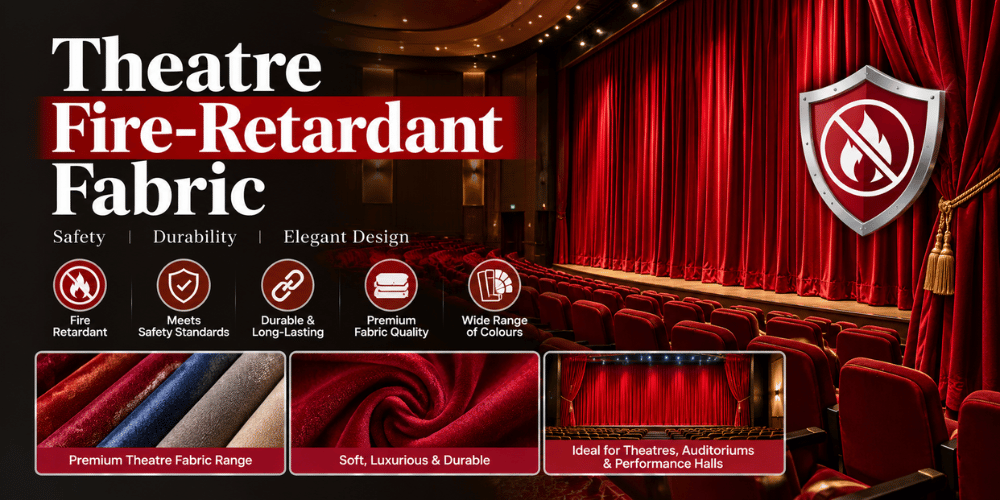
Theatres and auditoriums
Theatres often contain stage curtains, backdrops, decorative fabrics and acoustic materials.
These textiles may cover large areas and can be located near stage lighting and electrical equipment.
The selected material should meet the requirements relevant to its particular use. A test report for a decorative curtain should not automatically be applied to a different stage or acoustic construction.
Educational institutions
Schools, colleges and universities use curtains in classrooms, laboratories, libraries, halls and auditoriums.
Facility managers should identify the relevant requirements before selecting materials. Curtain installations should also be inspected periodically for damage and deterioration.
Offices and commercial buildings
Offices use curtains and blinds to control light, improve privacy and create comfortable working environments.
The appropriate material depends on the building design, occupancy and project specifications.
Exhibition and event venues
Exhibition centres and temporary event spaces may use curtains, fabric partitions, stage backdrops and decorative textiles.
These installations may be assembled and removed repeatedly. Buyers should maintain documentation and ensure that the fire-performance evidence applies to the actual material being installed.
Industrial facilities
Industrial curtains may be used as partitions, screens or protective barriers in certain work areas.
Their selection should account for the operating environment, including heat, sparks, chemicals, abrasion and mechanical stress.
A decorative curtain should not be substituted for a purpose-designed industrial barrier.
8. Important Fire-Test Considerations
A fire-test report provides evidence of how a sample performed under a specific laboratory procedure.
Different test methods measure different aspects of fire behaviour. Some focus on ignition or flame spread, while others evaluate heat release, smoke or other performance characteristics.
A test report should clearly identify the tested sample, method, preparation conditions, results and any limitations.
When reviewing a curtain test report, ask:
- What exact fabric was tested?
- What was the fibre composition?
- Was the sample treated or untreated?
- Was the finished curtain construction tested?
- Which test standard was followed?
- What were the actual test results?
- Was the laboratory competent for the test?
- Does the report apply to the intended installation?
The report should match the supplied material as closely as possible.
For example, a report for an untreated fabric cannot automatically establish the performance of a treated curtain. Similarly, a report for a small fabric sample may not address every aspect of a completed curtain assembly.
A test report is not automatically a UL certification record. Buyers should keep these types of evidence separate.
9. Understanding UL Certification Marks
UL certification marks provide information about products that have been evaluated through relevant UL certification programmes.
The mark may include information such as:
- UL identification.
- Certification wording.
- Product identity.
- Geographic scope.
- Unique identification or file number.
- Other details required by the certification programme.
The exact appearance depends on the certification type and market.
A UL Certified Fireproof Curtain claim should therefore be supported by documentation that identifies the curtain itself and explains the relevant certification scope.
Do not assume that the presence of the UL logo on a company’s website means every product sold by that company is certified.
UL Solutions explains that its Product iQ database can be used to search certification information using details such as a manufacturer, product type, file number or model number.
Official resource: UL Product iQ certification information.
10. How to Verify a Curtain Certification Claim
Verification should take place before purchasing, specifying or advertising a curtain as UL certified.
Start by requesting the exact product name and manufacturer information. Ask the supplier to provide the certification mark details and relevant identification number.
Then compare the supplied information with the official certification record.
Check the following:
Manufacturer: The company name should match the certification information.
Product identity: The model or product description should match the curtain being offered.
Certification scope: Review the specific requirements and intended use covered.
Geographic scope: Confirm whether the certification applies to the market where the product will be installed.
Mark details: Check the mark and identification information against official guidance.
Product changes: Confirm that changes in materials, coatings or construction have not made the available documentation unsuitable.
If the supplier cannot provide sufficient documentation, do not describe the curtain as UL certified.
11. Key Points to Remember
Fire-resistant curtains can help support building fire safety when selected for the correct application.
However, the terms flame retardant, fire resistant, fireproof and UL certified should not be used interchangeably.
Buyers should verify the actual fabric construction, relevant test results and certification scope. A manufacturer’s general statement or an image of a certification logo is not enough.
When evaluating a UL Certified Fireproof Curtain, the most important questions are whether the exact product is certified, what requirements it meets and whether those requirements apply to the intended installation.
12. How to Choose the Right Fire-Resistant Curtain
Choosing a suitable fire-resistant curtain requires careful consideration of the building, intended application, fabric construction and required fire-performance level. A curtain that works well in a hotel guest room may not be suitable for a theatre, hospital or industrial facility.
Before purchasing, buyers should identify the exact requirements of the project. These may come from local building regulations, fire-safety consultants, architects, insurers or the building’s technical specifications.
The following factors should be considered.
Intended application
Identify where the curtain will be installed. Common applications include:
- Hotel rooms and conference facilities.
- Hospital rooms and treatment areas.
- Theatre stages and auditoriums.
- Office partitions and meeting rooms.
- Educational institutions.
- Exhibition and event spaces.
- Industrial work areas.
The fire-performance requirements may differ between these applications. Confirm the applicable requirements before selecting the material.
Fabric composition
Check whether the curtain is made from polyester, cotton, wool, modacrylic, fibreglass or a specialised blend.
Fibre composition affects how the fabric responds to heat, moisture, cleaning and chemical treatment.
Fabric weight and thickness
Curtain weight and thickness can influence handling, appearance, installation and material performance. The correct specification should be based on the actual application rather than appearance alone.
Certification requirements
If the project requires UL certification, request documentation for the exact curtain model. Check the certification scope and verify the record through official UL resources.
Maintenance requirements
A curtain used in a hotel or hospital may need frequent cleaning. A treatment that is affected by washing may not be suitable unless a defined maintenance and retesting process is available.
Installation conditions
Consider the curtain’s location in relation to lighting, electrical fittings, heating appliances and other possible ignition sources.
A suitable curtain should meet the project’s documented requirements and should be installed according to the manufacturer’s instructions.
13. Understanding Curtain Technical Data Sheets
A technical data sheet provides important information about a curtain’s construction and performance.
Before accepting a product, request the latest technical data sheet from the manufacturer or authorised supplier.
A useful document may contain:
- Product name and model.
- Manufacturer information.
- Fabric composition.
- Fabric weight.
- Thickness and dimensions.
- Available colours and finishes.
- Flame-retardant treatment information.
- Applicable test standards.
- Fire-test performance.
- Cleaning instructions.
- Installation recommendations.
- Storage and handling information.
- Product limitations.
The technical data sheet should match the exact product being supplied.
For example, if a manufacturer offers a curtain in several weights and fabric compositions, documentation for one version should not automatically be used for all other versions.
It is also important to understand the difference between a technical data sheet and a certification document. A TDS describes product properties, while certification documentation establishes the scope of a relevant third-party certification.
A buyer looking for a UL Certified Fireproof Curtain should request both the technical product information and the applicable certification evidence.
14. Fire-Test Reports: What Should Buyers Check?
Fire-test reports are important because they provide evidence of a material’s performance under specified laboratory conditions.
However, not all fire tests measure the same properties. Some evaluate flame spread, while others examine ignition, heat release or smoke-related characteristics.
A test report should clearly identify the material, testing method, sample preparation, laboratory and results.
When reviewing the report, check the following:
Tested material: Confirm that the fabric description matches the purchased curtain.
Test method: Check the standard and edition used by the laboratory.
Sample preparation: Determine whether the material was tested untreated, treated, coated or laminated.
Test results: Review the actual measurements and classifications rather than relying on a general statement such as passed.
Laboratory information: Check the testing organisation and its competence for the specific test.
Limitations: Review any restrictions stated in the report.
Product identity: Make sure the report refers to the correct manufacturer, model and fabric construction.
A report for one textile cannot automatically be applied to every curtain made from the same fibre.
For example, a report for a particular polyester fabric may not establish the performance of a different polyester curtain with another weight, coating or backing.
A fire-test report also does not automatically establish UL certification. These are different types of evidence and should be reviewed separately.
15. Understanding Curtain Fabric Treatments
Some curtains are manufactured using fibres designed for flame-resistant performance. Others receive a chemical treatment during production or after the fabric has been manufactured.
The treatment process depends on the textile composition and the chemical formulation.
Some treatments are designed to influence the way fabric responds to heat. They may promote char formation, reduce the release of combustible gases or alter the material’s response to flame exposure.
However, the performance of a treatment depends on correct application and fabric compatibility.
Important considerations include:
- Fabric absorbency.
- Chemical compatibility.
- Treatment concentration.
- Application quantity.
- Uniformity of application.
- Drying temperature.
- Curing conditions.
- Fabric weight and construction.
- Environmental exposure.
- Cleaning requirements.
A treatment suitable for cotton may not be suitable for polyester. Likewise, a product intended for an uncoated textile may not work properly on a laminated or coated fabric.
Before treating curtains, obtain the manufacturer’s written instructions. Never assume that a general-purpose chemical treatment is appropriate for every textile.
16. Can Existing Curtains Be Made Flame Retardant?
In certain situations, existing curtains may be suitable for flame-retardant treatment. However, this depends on their fibre composition, condition, previous treatment and the compatibility of the chemical product.
Before treating existing curtains, assess the fabric carefully.
Identify the material
Determine whether the curtain is made from cotton, polyester, a blended textile or another material.
If the composition is unknown, seek assistance from the manufacturer or a suitable textile testing service.
Inspect the condition
Look for tears, stains, damaged seams, deterioration and surface contamination.
A treatment will not repair damaged fabric or restore its original mechanical strength.
Check previous treatments
Existing curtains may have received coatings, dyes, finishes or cleaning treatments that affect compatibility.
Ask the treatment manufacturer whether the product can be applied to the existing textile.
Conduct a sample assessment
Where appropriate, test a small sample to identify changes in appearance, texture, flexibility and other physical properties.
Verify the final performance
If the project requires specific fire-test performance, the treated material should be evaluated using the appropriate test method.
Applying a flame-retardant chemical does not automatically make the finished curtain UL certified.
This distinction is important when buyers specify a UL Certified Fireproof Curtain for a regulated or commercial project. The certification must apply to the actual finished product and intended use.
17. Curtain Installation and Fire-Safety Considerations
Correct installation is an important part of curtain safety.
Even a suitable fabric can create problems if it is installed incorrectly or placed in an unsuitable location.
Before installation, review the manufacturer’s instructions and the building’s fire-safety requirements.
Check the installation location
Identify nearby electrical equipment, lighting systems, heaters and other potential ignition sources.
Ensure that the curtain does not interfere with equipment or required safety arrangements.
Use suitable supporting hardware
Curtain tracks, brackets, hooks and other supporting components should be suitable for the curtain’s weight and intended use.
Follow clearance requirements
Maintain any required clearances from heat sources and electrical equipment. Do not allow curtains to cover ventilation openings, emergency equipment or other safety-related installations.
Check the complete assembly
A curtain installation may include the fabric, backing, lining, seams, attachments and supporting hardware.
Where the project specifies performance for an assembled system, confirm that the available test evidence covers the relevant construction.
Inspect after installation
Check for damage, loose attachments, uneven installation and other issues.
Record the product identity and retain relevant technical and certification documents.
18. Cleaning and Maintenance of Fire-Resistant Curtains
Curtains can collect dust and dirt during normal use. In hotels, hospitals, theatres and public buildings, cleaning may be frequent.
Maintenance is important because some flame-retardant treatments can be affected by washing, dry cleaning, abrasion or chemical exposure.
Always follow the manufacturer’s instructions.
Regular inspection
Inspect curtains for:
- Tears and holes.
- Damaged stitching.
- Loose fittings.
- Surface deterioration.
- Stains and contamination.
- Changes in fabric appearance.
- Damage caused by sunlight or moisture.
Cleaning procedures
Use only cleaning methods approved by the manufacturer.
Avoid unapproved detergents, solvents or chemical treatments. These may affect the fabric or its fire-retardant properties.
Cleaning records
Maintain records of cleaning dates, methods and service providers.
For large commercial installations, records help facility managers track the condition of the materials.
Retreatment requirements
Some treated fabrics may require retreatment after specific cleaning processes or periods of use. This depends on the treatment manufacturer’s instructions.
Do not apply another chemical product without checking compatibility.
Replacement planning
Replace curtains that are damaged, deteriorated or no longer suitable for their intended application.
Where a project requires certified materials, replacement curtains should also be checked against the relevant certification requirements.
19. Common Mistakes When Buying Fire-Resistant Curtains
Purchasing mistakes can result in unsuitable products, additional costs and problems during project inspections.
The following are common issues buyers should avoid.
Mistake 1: Assuming fireproof means completely non-combustible
The word fireproof is often used loosely in marketing. Buyers should ask for measurable performance information and avoid accepting absolute claims without evidence.
Mistake 2: Assuming flame retardant means UL certified
A curtain may have flame-retardant properties without being UL certified. Certification must be established through the applicable official documentation.
Mistake 3: Accepting a generic certificate
A supplier may provide a report or certificate for a related fabric. This does not prove that the actual curtain is covered.
Always match the documentation to the product being purchased.
Mistake 4: Ignoring fabric composition
Different fibres respond differently to heat and chemical treatments.
Always confirm the material composition before selecting a product.
Mistake 5: Ignoring cleaning requirements
A curtain may perform well initially but experience changes after repeated cleaning.
Check whether the treatment is durable and whether the product has specific cleaning restrictions.
Mistake 6: Choosing only by appearance
Colour, texture and design are important for interior projects, but they should not be the only selection criteria.
The curtain must also meet the applicable technical requirements.
Mistake 7: Buying without checking the certification scope
A certification mark should be supported by an official record that identifies the relevant product and scope.
Do not assume that a manufacturer’s entire product range is covered.
Mistake 8: Not maintaining documentation
Keep technical data sheets, test reports, certificates, invoices and installation records.
These documents may be needed for future maintenance, inspection and procurement.
20. How to Evaluate a Fire-Resistant Curtain Supplier
Choosing a reliable supplier is important for commercial and industrial projects.
A supplier should provide clear product information and avoid making unsupported certification claims.
Consider these factors when evaluating a supplier.
Product knowledge: The supplier should understand fabric types, treatment methods and application requirements.
Technical documentation: Ask for technical data sheets and relevant test reports.
Certification transparency: If UL certification is claimed, request exact identification details and verify the product through official records.
Product traceability: Manufacturer details, product names and model information should be clear.
Application support: The supplier should be able to explain whether the curtain is suitable for the intended use.
Maintenance guidance: Cleaning, inspection and replacement instructions should be available.
Communication: A reliable supplier should answer technical questions clearly rather than relying only on promotional language.
Gopalfiresafety provides a website where customers and businesses can explore fire-safety information and available product details. Visit Gopalfiresafety to learn more. Confirm the availability, specifications and certification status of any specific product directly before purchasing.
21. Cost Factors for Fire-Resistant Curtains
The cost of a fire-resistant curtain depends on its construction, size, materials and required performance.
There is no single price that applies to all fire-resistant curtains.
Important cost factors include:
- Fibre composition.
- Fabric weight and thickness.
- Manufacturing process.
- Specialised flame-retardant fibres.
- Chemical treatment.
- Coating or lamination.
- Custom dimensions.
- Colour and finish.
- Fire testing.
- Certification requirements.
- Installation hardware.
- Cleaning and maintenance.
- Order quantity.
A specialised curtain may cost more than a standard decorative curtain because it may require additional manufacturing processes, testing and documentation.
However, the cheapest product is not always the most suitable option.
For commercial procurement, buyers should compare quotations based on the same technical requirements. This makes it easier to understand the actual difference between products.
If UL certification is required, include the exact certification requirement in the quotation request. This reduces the possibility of receiving an ordinary flame-retardant fabric when a certified product is needed.
22. Documentation Checklist Before Purchasing
Before approving a curtain purchase, use this checklist:
- Identify the curtain’s intended application.
- Confirm the applicable fire-safety requirements.
- Check the fabric composition.
- Request the technical data sheet.
- Obtain relevant fire-test reports.
- Verify the test method and edition.
- Request manufacturer and product details.
- Ask for certification identification information if UL certification is claimed.
- Verify the certification through official UL resources.
- Check the certification scope and limitations.
- Review installation instructions.
- Obtain cleaning and maintenance guidance.
- Keep batch and product traceability information.
- Retain all supporting documentation.
This process can help businesses avoid purchasing products based only on marketing descriptions.
23. Fire-Resistant Curtains as Part of a Complete Fire-Safety Plan
Curtains are only one component of a building’s overall fire-safety arrangement.
A complete fire-protection strategy may include:
- Fire alarm systems.
- Smoke detectors.
- Automatic sprinkler systems.
- Fire extinguishers.
- Emergency lighting.
- Clearly marked escape routes.
- Fire doors.
- Evacuation procedures.
- Staff training.
- Routine inspections.
The correct combination depends on the building’s design, occupancy, fire-risk assessment and applicable regulations.
For example, a theatre may require suitable stage materials, fire detection, emergency lighting and evacuation arrangements. Selecting a suitable curtain does not eliminate the need for these other protections.
Similarly, a hotel may use fire-resistant curtains as part of its interior material selection, but it must still maintain alarms, extinguishers, escape routes and other required safety systems.
Fire safety should be planned as a complete system rather than relying on one product.
24. Future Developments in Fire-Resistant Curtain Technology
Textile manufacturers continue to explore ways to improve fire performance while maintaining appearance, flexibility, durability and ease of maintenance.
Some areas of development include:
Advanced fibre technology: Specialised fibres and blends are being developed for specific protective textile applications.
Improved chemical treatments: Manufacturers continue to develop treatments intended to provide consistent performance and better compatibility with different textile constructions.
Durable finishes: Longer-lasting treatments may reduce the frequency of retreatment where the product and application support such use.
Improved testing: Better testing and quality-control processes help manufacturers understand how fabrics perform under defined conditions.
Environmental considerations: Manufacturers are also considering chemical safety, waste management and the environmental impact of textile treatments.
However, new technology should always be evaluated through suitable documentation and testing. A new treatment or material should not be assumed to meet a particular standard or certification requirement without evidence.
25. Frequently Asked Questions
What is a UL Certified Fireproof Curtain?
It is a search phrase for a curtain expected to have fire-safety performance and UL certification. Buyers must verify the exact product, certification record and intended application. The term fireproof should not be interpreted as meaning that the curtain cannot be damaged by fire.
Are all fire-resistant curtains UL certified?
No. A curtain may be tested or treated for flame-retardant performance without having UL certification. The certification status must be checked separately.
How can I verify a UL-certified curtain?
Ask the manufacturer for the product name, model and certification identification details. Use the official UL certification resources to verify the information and its scope.
What is the difference between flame-retardant and fire-resistant curtains?
Flame-retardant describes materials designed or treated to reduce certain fire behaviours. Fire-resistant is a broader description that must be interpreted according to the relevant test or performance requirement.
Can curtains be completely fireproof?
Ordinary textile curtains should not be assumed to be completely fireproof. Even specialised materials can be damaged by extreme heat or fire exposure.
Which fabric is best for fire-resistant curtains?
There is no single best fabric for every application. Polyester, cotton, wool, modacrylic and fibreglass-based materials may be used in different applications. Selection should depend on the project requirements and supporting test evidence.
Can existing curtains receive flame-retardant treatment?
Some existing curtains may be suitable for treatment. Compatibility must be confirmed based on the fibre composition, condition, previous finishes and treatment manufacturer’s instructions.
Does washing reduce flame-retardant performance?
It can affect certain treatments. Follow the manufacturer’s cleaning instructions and check whether durability testing or retreatment is required.
Are fire-resistant curtains necessary in hotels?
The requirements depend on local regulations, building specifications and the intended application. Hotel operators should consult the relevant fire-safety professionals and authorities.
What documents should I request from a curtain supplier?
Request the technical data sheet, relevant fire-test reports, manufacturer details, installation instructions and certification documentation where applicable.
Is a fire-test report the same as UL certification?
No. A fire-test report records performance under a specific test method. UL certification is a separate third-party certification process with a defined scope.
Does UL certification apply to every curtain from one manufacturer?
No. Certification applies to the specific products covered by the relevant certification record. Other models or fabric constructions may not be included.
How often should fire-resistant curtains be inspected?
Inspection frequency should follow the building’s maintenance programme, manufacturer instructions and applicable requirements. Curtains should also be checked after damage, cleaning or other significant changes.
Can a curtain’s colour affect its fire performance?
Changes in dyes, finishes or manufacturing processes may influence performance. Buyers should verify that the test evidence applies to the exact fabric variant being supplied.
Why is documentation important when purchasing curtains?
Documentation helps buyers verify product identity, test results, certification claims, installation requirements and maintenance instructions. It also supports future inspections and replacement decisions.
26. Conclusion
Fire-resistant curtains are an important consideration for many commercial, institutional and industrial environments. Selecting the right material requires an understanding of fibre composition, fire-test requirements, treatment methods, installation conditions and maintenance needs.
The phrase UL Certified Fireproof Curtain should be used carefully. UL certification applies to specific products and defined certification scopes. A general statement that a curtain is flame retardant or fire resistant does not automatically establish UL certification.
Before purchasing, buyers should request technical data sheets, relevant test reports and official certification information. They should verify that the documents match the exact curtain being supplied and that the product is suitable for the intended application.
Businesses should also consider cleaning, inspection and replacement requirements throughout the curtain’s service life. These practices support more consistent fire-safety management.
Gopalfiresafety encourages businesses, contractors, facility managers and procurement teams to make informed decisions when evaluating fire-safety products. Visit https://gopalfiresafety.com/ for company information and fire-safety resources. Follow Gopalfiresafety on Instagram for further updates and educational content.
Final reminder: Always verify the exact product’s certification, test evidence and intended application before advertising or specifying it as UL certified.