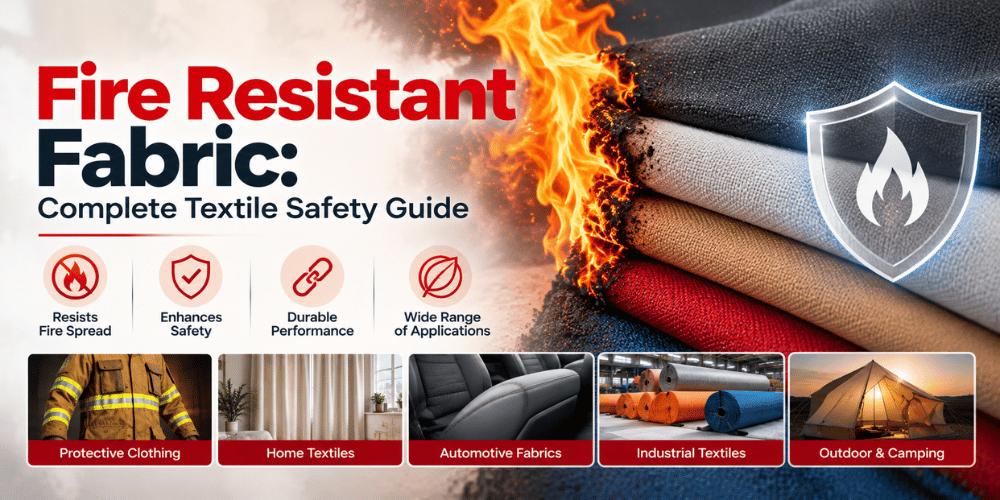

UL Listed Fire Retardant Fabric Coating: A Complete Guide to Textile Fire Safety
1. Introduction
UL Listed Fire Retardant Fabric Coating is a search topic for businesses looking to understand textile fire protection, coating performance, and product certification. Gopalfiresafety, through its website https://gopalfiresafety.com/, provides a starting point for exploring fire-safety products and information. Facility managers, textile manufacturers, contractors, and procurement professionals can also follow Gopalfiresafety on Instagram for fire-safety awareness and product-related updates.
Fabric is widely used in commercial interiors, theatres, hotels, auditoriums, exhibition spaces, industrial facilities, and public buildings. Curtains, backdrops, upholstery, partitions, and decorative textiles can contribute to fire growth depending on their composition, location, and exposure conditions. Selecting an appropriate fire-retardant coating may be one part of a broader strategy for managing these risks.
However, not every fire-retardant coating is suitable for every textile, and not every coating carries a UL Listing. A responsible selection process begins by identifying the intended application, determining the applicable fire-safety requirements, and checking the product’s technical documentation.
This guide explains fabric fire-retardant coatings, their possible applications, the significance of UL Listing, testing considerations, surface compatibility, application practices, and the questions buyers should ask before selecting a product.
2. What Is a Fire-Retardant Fabric Coating?
A fire-retardant fabric coating, specifically a UL Listed Fire Retardant Fabric Coating, is a formulation applied to a textile to modify particular fire-related characteristics under defined conditions. Depending on its chemistry and intended use, a coating may help reduce flame spread or influence how a treated material responds to heat and ignition.
The performance of a coated textile depends on several factors, including:
- The base fabric and fibre composition.
- The coating formulation and its compatibility with the material.
- The amount of coating applied and the application method.
- Drying or curing conditions.
- The final fabric construction and any additional finishes.
- The test method and performance criteria used for evaluation.
- Cleaning, abrasion, moisture, and other environmental exposure.
A coating should not be assumed to make a textile completely fireproof. Its performance must be understood in relation to the actual product, fabric, and relevant test conditions.
Coating versus treatment The words coating and treatment are sometimes used interchangeably, but they may describe different application processes. A coating may form a layer on the fabric surface, while another treatment may be designed to interact with the fibres or textile structure. The exact behaviour depends on the product formulation.
Buyers should check the technical data sheet to understand how the product is intended to work, which materials it supports, and what preparation and application procedures are required.
Why the distinction matters A product developed for a rigid building substrate may not be appropriate for flexible textile materials. Likewise, a treatment intended for one fabric type may not work as expected on a different fibre blend or coated textile. Before purchasing, confirm that the product manufacturer specifically identifies the intended textile application and provides the necessary instructions and supporting evidence.
3. What Does UL Listed Mean?
UL Listing refers to a product certification status associated with UL Solutions. It should not be treated as a generic description for any product that claims fire-retardant performance.
A product’s certification status relates to a defined scope, which can include the product identity, intended use, applicable requirements, and conditions of evaluation. Buyers must therefore verify that the particular product and application fall within the relevant listing.
UL Listed versus fire-retardant These terms describe different things.
- Fire-retardant: Describes a material or product intended to provide specified fire-related performance.
- Tested: Indicates that a sample or product was evaluated using a particular test method.
- UL Listed: Indicates a specific listing status that must be verified against the relevant official certification information.
A product may have fire-test documentation without being UL Listed. Similarly, a supplier’s claim that a formulation has been tested does not establish that every use of that product is covered by a listing.
Verify the exact product Before using the phrase UL Listed Fire Retardant Fabric Coating in procurement specifications or marketing materials, check the official listing information and the manufacturer’s documentation. Confirm the exact product name, manufacturer, intended application, and any conditions or limitations. If the listing does not cover the proposed coating or textile use, do not imply that it does.
Why accurate claims matter Certification claims can influence purchasing decisions, project approvals, insurance reviews, and compliance assessments. Incorrect statements may cause a buyer to select a product that does not meet the project’s requirements. For this reason, product listings and technical claims should be verified before purchase, application, or publication.
4. Why Fabric Fire Protection Matters
Textiles serve functional and decorative purposes in many environments. Their fire behaviour may be relevant where fabrics are used near people, electrical equipment, lighting, heat sources, or other combustible materials.
Commercial buildings Offices, hotels, meeting spaces, reception areas, and commercial venues may contain curtains, upholstered furniture, acoustic fabrics, and decorative textiles. The building’s applicable requirements should guide material selection. A UL Listed Fire Retardant Fabric Coating may be considered only when it is suitable for the specific fabric and the intended application.
Theatres and auditoriums Performance venues may contain stage curtains, scenic backdrops, drapes, and temporary decorative materials. Large fabric surfaces and changing production layouts make careful material selection important. Coatings, paints, printing inks, and other finishes can affect the final textile’s properties. The venue should confirm that the finished material—not just an untreated base fabric—meets the applicable requirements.
Hospitality environments Hotels and hospitality venues use textiles for privacy, comfort, appearance, and light control. Curtains, upholstery, and decorative fabrics may require different specifications according to their location and use. A coating selected for one curtain construction should not automatically be assumed suitable for other fabrics throughout the property.
Industrial and institutional settings Some industrial or institutional facilities use specialised textile materials, protective covers, curtains, or flexible partitions. The appropriate fire-performance criteria depend on the specific application and environment. Facility managers should consult relevant technical specialists and regulatory requirements rather than selecting a coating solely because it carries a broad fire-safety description.
5. How Fire-Retardant Fabric Coatings Work
The way a coating influences a fabric’s fire behaviour depends on its formulation and the textile being treated. Different products may operate through different mechanisms, so the product’s technical documentation should be the primary source for application-specific claims.
Changing surface behaviour Some coatings are designed to alter how the treated surface responds when exposed to heat or flame. Their effect may depend on the thickness and uniformity of the coating, the substrate, and the conditions under which the product was tested.
Interaction with the textile A coating can behave differently on different fabrics. Fibre type, weave, surface finish, and absorbency may affect how a formulation spreads, adheres, dries, or performs. The manufacturer’s compatibility guidance should be followed before treating a textile. A coating intended for one fabric should not be assumed to perform equivalently on another.
The importance of application conditions Incorrect preparation, insufficient coverage, uneven application, or unsuitable curing conditions may affect the result. The application process should follow the manufacturer’s written instructions. Changing the recommended quantity, thinning the formulation, or combining it with other products may invalidate the intended performance or damage the textile.
Performance must be tested The visual appearance of a coated fabric cannot demonstrate its fire performance. Where required, testing should address the relevant material and intended use under the appropriate method. A test result for one sample should not be generalised to all fabrics, coatings, or application conditions.
6. Fabric Types and Coating Compatibility
Not all fabrics respond in the same way to a coating. Material compatibility should be confirmed before the product is purchased or applied.
Cotton fabrics Cotton textiles are used in curtains, drapes, backdrops, and various decorative applications. Their absorbency and construction can affect how a coating is applied and retained. Before treating cotton, confirm that the coating manufacturer specifically supports the intended fabric and use. Check whether the product may change the fabric’s texture, flexibility, colour, or cleaning requirements.
Polyester fabrics Polyester is common in commercial textiles because it can offer useful durability and a broad range of appearances. However, polyester fabrics vary in weave, finish, density, and construction. A coating intended for cotton should not automatically be used on polyester. The supplier should confirm compatibility and identify any relevant application restrictions.
Blended fabrics Blended textiles combine different fibres to achieve particular characteristics. Their behaviour may differ from that of either fibre used separately. The coating manufacturer should confirm whether the exact blend is supported. If the textile contains additional finishes, backing materials, or laminated layers, these should also be considered.
Upholstery fabrics Upholstery materials may include decorative face fabrics, backing layers, padding, adhesives, and other components. Treating the visible fabric does not automatically establish the fire performance of the complete upholstered item. The intended product and construction should be evaluated against the relevant requirements. Obtain guidance before applying a coating to assembled furniture.
Printed and coated textiles Printing inks, paints, waterproofing finishes, and existing coatings may affect adhesion or performance. Applying another coating can also change the fabric’s appearance or flexibility. Check whether the manufacturer permits application over the existing finish and whether the final construction requires additional evaluation.
7. Applications in Commercial and Public Spaces
The suitability of a coating depends on the particular textile installation and the requirements governing that environment.
Curtains and drapes Curtains may be used in offices, hotels, theatres, conference rooms, and other public spaces. Before applying a UL Listed Fire Retardant Fabric Coating, confirm the fabric type, cleaning method, and required fire-performance criteria. Where curtains are already installed, consider whether the treatment can be applied safely and evenly without damaging the fabric or surrounding equipment.
Stage backdrops Backdrops may contain printed images, paints, multiple layers, and decorative components. The complete material should be considered when determining whether a coating is appropriate. Theatre teams should coordinate with the coating manufacturer, fabric supplier, and venue safety personnel before approving a treatment.
Exhibition fabrics Exhibition stands and temporary displays may use fabric panels, banners, decorative coverings, and suspended textiles. These installations can change frequently, so the approval process should include temporary materials. The organiser should confirm the applicable requirements for the venue and obtain relevant product documentation before installation.
Office and hospitality upholstery Furniture fabrics may have complex constructions and cleaning requirements. Before coating upholstery, confirm whether the product is intended for that specific use and whether it affects the appearance, feel, or maintenance of the material. A coating applied to a fabric sample should not be assumed to establish the performance of the entire finished furniture assembly.
8. Reading a Technical Data Sheet
The technical data sheet is an important source of information when assessing a coating. It describes the product’s intended application, properties, limitations, and recommended use. Before selecting a coating, review the following information:
Product identity and intended use Check the manufacturer’s name, exact product name, and stated application. Confirm that fabric or textile use is explicitly supported.
Substrate compatibility Look for a list of compatible materials and any restrictions. If the exact textile is not listed, ask the manufacturer for written clarification before proceeding.
Preparation and application Review the instructions for cleaning, surface preparation, application equipment, quantity, number of coats, and drying or curing conditions.
Performance documentation Check the relevant test standards, test reports, and certification information. Also, verify whether the product truly qualifies as a UL Listed Fire Retardant Fabric Coating for your exact intended application.
Cleaning and durability Review the product’s resistance to washing, abrasion, moisture, and other conditions relevant to the textile’s service environment.
Health and safety Consult the safety data sheet for handling, ventilation, personal protective equipment, storage, and disposal requirements. Ensure that staff understand these instructions before application.
9. Surface Preparation Before Coating
Surface preparation can influence coating adhesion, appearance, and consistency. The correct procedure depends on the textile and the formulation.
Inspect the fabric Look for dirt, dust, oil, stains, loose fibres, damaged seams, and existing finishes. Confirm that the textile is in a condition suitable for the proposed application. If the fabric is damaged or its composition is unknown, seek professional guidance before proceeding.
Clean according to instructions Do not use a cleaning process unless it is compatible with the textile and permitted by the coating manufacturer. Residues from detergents or other products may affect application. Allow the fabric to reach the condition specified by the manufacturer before treatment.
Test compatibility Where recommended, conduct a small-area compatibility check to identify possible changes in colour, texture, flexibility, or appearance. A small-area check is not a substitute for fire-performance testing or certification. It only helps identify certain practical compatibility concerns.
Protect nearby areas If the application method creates mist or overspray, protect nearby surfaces and equipment according to the product instructions. Ensure that the work area has the required ventilation and that unauthorised people are kept away.
10. Application, Drying, and Quality Control
The coating should be applied by trained personnel following the manufacturer’s instructions. The process should not be improvised to achieve a desired result.
Apply the specified quantity The required quantity and application method depend on the product and textile. Uneven coverage or an unapproved application quantity may affect the final result. Record the product identity, batch information where available, application date, and relevant process details.
Follow drying and curing instructions Drying and curing requirements can differ between formulations. Temperature, humidity, airflow, and textile construction may influence the process. Do not reinstall or use the fabric before the manufacturer-specified conditions have been met. Follow the product’s ventilation and handling instructions.
Inspect the finished textile After application, inspect the fabric for visible unevenness, discolouration, stiffness, damage, or other changes. If the textile appears unsuitable, consult the manufacturer before use. Visual inspection alone cannot establish fire performance. Where compliance requires testing or other verification, follow the applicable procedure.
Keep quality records Retain the product specification, application records, fabric identification, technical data sheet, safety data sheet, and relevant test or certification documentation. These records help the organisation trace the treatment and manage later cleaning, maintenance, or replacement.
11. Common Mistakes When Selecting Fabric Coatings
Selecting a coating based on a broad marketing claim can lead to unsuitable products, unexpected fabric changes, or documentation gaps. Procurement teams should evaluate both technical suitability and certification status.
Choosing a suitable fabric fire-retardant coating requires careful consideration of the textile, intended use, application procedure, fire-performance evidence, and maintenance requirements. A coating should never be selected based on the words “fire-retardant” or “UL Listed” alone.
For a product described as UL Listed, verify the exact listing and its scope before making purchasing or compliance decisions. Testing and certification claims should be supported by product-specific documentation.
Gopalfiresafety, through https://gopalfiresafety.com/, provides a starting point for exploring fire-safety information and products. You can also follow Gopalfiresafety on Instagram for fire-safety awareness and updates.
UL Listed Fire Retardant Fabric Coating: A Complete Guide to Textile Fire Safety — Part 2
This part continues the guide for Gopalfiresafety, focusing on certification verification, fire testing, commercial applications, maintenance, and purchasing decisions.
A key point throughout this article: a fire-retardant coating should only be described as UL Listed when the exact product and its intended application are supported by the relevant official listing. Fire-retardant performance, laboratory testing, and product listing are not interchangeable claims.
12. How to Verify UL Listing for a Fabric Coating
When evaluating a product marketed as a UL Listed Fire Retardant Fabric Coating, buyers should verify its certification rather than relying solely on a supplier’s brochure or website.
Confirm the exact product name Start with the manufacturer’s complete product name and identification details. Similar product names do not necessarily indicate identical formulations or certification status. Ask the supplier for the official listing information and any associated documentation. Check that the product supplied matches the product identified in those records.
Check the scope of the listing A listing applies within a defined scope. It should not be assumed to cover every substrate, application method, or finished assembly. For a textile coating, establish whether the documentation specifically supports the intended fabric application. A listing for a different product or use should not be presented as proof that a fabric coating is listed.
Review manufacturer documentation Request the technical data sheet, safety data sheet, applicable test reports, and information supporting any certification claim. The documents should be consistent in identifying the manufacturer and product. If the listing’s scope or applicability is unclear, obtain written clarification from the manufacturer or the relevant certification organisation.
Keep verification records Retain the listing details, date of verification, product identity, and documents reviewed. These records help procurement teams demonstrate why a product was selected and provide a reference for future maintenance or replacement.
13. Understanding Fire-Test Standards for Coated Fabrics
Fire-test standards evaluate specific material characteristics under defined conditions. The relevant test depends on the fabric’s intended use and the requirements applicable to the building or project.
Identify the required performance Before purchasing a UL Listed Fire Retardant Fabric Coating, establish what the project needs to demonstrate. Requirements may concern flame spread, ignition behaviour, or other characteristics defined by the relevant standard. The project specification should identify the applicable test method and acceptance criteria rather than relying on a general claim that a product is fire-retardant.
Check what was tested A test report should identify the sample and the test procedure. Relevant details may include the textile composition, fabric construction, coating formulation, application quantity, and curing conditions. If the tested sample differs from the proposed material, ask whether the results apply to the actual product and installation.
Understand the limitations of test results A successful test establishes performance under the conditions of that test. It does not automatically demonstrate performance under every possible fire scenario. Similarly, a report for a coated fabric sample does not necessarily establish the performance of a complete upholstered item, curtain assembly, or finished building component.
Verify the report’s relevance Review the laboratory, report identification, test date, standard used, sample description, and results. Where required, check the laboratory’s relevant accreditation and the authenticity of the documentation. The objective is to establish whether the evidence supports the intended use—not simply whether a document exists.
14. Industrial Applications of Fabric Fire-Retardant Coatings
Industrial facilities may use technical textiles for protective covers, flexible partitions, curtains, equipment enclosures, and other specialised applications. The suitability of a coating depends on the material’s function and the risks associated with its operating environment.
Industrial curtains and partitions Industrial curtains may be used to separate work areas, control dust, or create flexible barriers. Before applying a coating, determine whether the textile has to meet specific fire-performance requirements. A product intended for decorative curtains should not automatically be considered appropriate for industrial use. Confirm the manufacturer’s stated application, environmental limitations, and relevant test evidence.
Protective fabric covers Protective covers may be exposed to abrasion, moisture, oils, cleaning chemicals, or outdoor conditions. These factors can affect the durability of a coating and its suitability for the intended use. The coating manufacturer should confirm compatibility with the actual fabric and operating conditions. Where required, verify the performance of the finished material under the relevant test method.
Equipment and machinery surroundings Fabric used around equipment must not interfere with ventilation, moving components, electrical systems, or required safety clearances. A fire-retardant coating does not make an otherwise unsuitable installation safe. Industrial facility managers should review the complete installation with the relevant safety and engineering personnel.
15. Commercial Buildings and Public Facilities
Commercial buildings often contain textiles for privacy, decoration, acoustics, and light control. The requirements for these materials depend on the building’s use, applicable regulations, and the location of each installation.
Offices and meeting rooms Office curtains, partition fabrics, and decorative textiles should be selected according to the project’s fire-safety specification. The fabric’s appearance and maintenance needs should be considered alongside documented performance.
Hotels and hospitality venues Hotels may use a variety of curtain fabrics, blackout materials, upholstery, and decorative textiles. Different materials may require different treatments or maintenance procedures. Before selecting a coating, confirm that the product is suitable for the specific fabric and that the relevant documentation covers the intended use.
Schools and institutional buildings Educational and institutional buildings may contain curtains, stage drapes, display materials, and other textiles. Facility managers should follow the applicable requirements and maintain records of material selection and treatment. Temporary event decorations should also be included in the venue’s approval process.
Exhibition and event venues Exhibition stands frequently use printed fabrics, banners, temporary partitions, and decorative coverings. Printing, lamination, and other finishing processes can affect the finished material. Organisers should verify the requirements for each venue and ensure that the documentation matches the actual product being installed.
16. Applying Coatings to Existing Fabric
Treating existing textiles can be attractive when replacement is costly or when a particular material is difficult to source. However, treatment should only proceed after compatibility and performance requirements have been established.
Assess the existing textile Identify the fibre composition, weave, weight, backing, existing finish, and cleaning history. If the material cannot be identified reliably, obtain professional guidance before selecting a coating.
Confirm compatibility with the manufacturer Ask the coating manufacturer whether the product is suitable for the exact textile and intended application. Request written instructions and information about possible changes in appearance, flexibility, texture, or durability.
Follow the specified application process Use the recommended preparation, application method, quantity, drying conditions, and protective equipment. Do not improvise by mixing products, changing concentrations, or applying additional coats without manufacturer approval.
Verify the final result Where required, obtain evidence demonstrating that the treated textile meets the applicable fire-performance criteria. A coating’s general product information does not automatically establish the performance of every fabric treated with it. If the manufacturer cannot confirm suitability or the required evidence is unavailable, consider an alternative material with appropriate documentation.
17. Health, Safety, and Environmental Considerations
The safe use of a fabric coating requires attention to both the product and the working environment. Requirements vary according to the formulation, application method, and location.
Review the safety data sheet Before application, read the product’s safety data sheet and technical data sheet. These documents should guide handling, ventilation, protective equipment, storage, and disposal. Do not assume that every water-based coating is harmless or that every spray formulation requires identical precautions.
Provide suitable ventilation Follow the manufacturer’s ventilation instructions, particularly when spraying or applying coatings indoors. Prevent unnecessary exposure to application mist, vapours, or other product emissions. Where the instructions require respiratory protection or other personal protective equipment, make sure the equipment is appropriate and used correctly.
Protect workers and occupants Keep people who are not involved in the application away from the work area when required. Protect surrounding equipment and surfaces from unintended contact or overspray. For occupied buildings, coordinate the work with facility management so that treatment, drying, and any required curing take place under the specified conditions.
Store and dispose of products properly Store coatings in accordance with the manufacturer’s instructions and applicable safety requirements. Follow the product documentation and local rules for disposing of unused material, containers, and cleaning residues.
18. Maintenance and Durability of Coated Fabrics
A coating’s long-term suitability depends on the product formulation, textile, application conditions, and environment. Maintenance requirements should be established before the fabric is returned to service.
Cleaning procedures Some coatings may be affected by washing, dry cleaning, detergents, solvents, or mechanical abrasion. The correct procedure must come from the manufacturer of the actual product. Do not assume that a coated curtain can be cleaned using the same process as an untreated textile.
Inspection for damage Inspect treated fabric for peeling, cracking, discolouration, unusual stiffness, or other changes that may indicate deterioration. Also examine seams, backing materials, and attachment points. Visible changes do not independently establish whether a fabric has passed or failed a fire test, but they may indicate that professional assessment is needed.
Re-treatment and replacement Some products may require re-treatment after particular cleaning processes or exposure conditions. Others may have different maintenance requirements. Follow the manufacturer’s guidance rather than applying a universal re-treatment schedule. If the fabric is damaged or the treatment’s suitability can no longer be established, seek advice on further evaluation or replacement.
Maintain records Keep the following information where applicable:
- Product name and manufacturer.
- Fabric identification and intended application.
- Relevant technical and safety documents.
- Application date and treatment details.
- Cleaning and inspection history.
- Test reports and certification information.
- Repairs, re-treatment, or replacement records. Good recordkeeping supports traceability and helps organisations make informed maintenance decisions.
19. How to Evaluate Suppliers and Certification Claims
A supplier should be able to explain what a coating is designed to do, which fabrics it supports, and what evidence is available for its claimed performance.
Ask for exact product details Request the full product name, manufacturer, technical data sheet, and safety data sheet. Confirm that the product is intended for the specific textile application.
Verify UL certification independently UL Solutions provides Product iQ, a database for checking certification information, products, components, and associated guide information. Buyers can search using information such as a manufacturer name, model, category, or file number. Use the official UL Product iQ database to investigate a supplier’s claim. Confirm the product identity, certification scope, and applicable limitations rather than relying on a logo or a general statement. UL Solutions also explains that certification information can include conditions or special limitations, and that a listing should be understood within its documented scope.
Distinguish certification from a manufacturer’s claim A manufacturer’s statement that a product meets a particular standard is not necessarily equivalent to independent product certification. UL’s guidance explains that a claim which cannot be verified in its certification database may require further investigation and supporting documentation. If the exact product or textile application cannot be verified, do not market it as UL Listed until the claim has been properly substantiated.
Evaluate after-sales support Ask the supplier about technical support, application guidance, maintenance restrictions, and the process for addressing product concerns. Clear written answers are especially important for large projects or applications with strict compliance requirements.
Gopalfiresafety’s website, https://gopalfiresafety.com/, can be used to explore fire-safety information and products. Contact Gopalfiresafety directly to confirm the availability and documentation of any specific fabric coating before making a purchase.
20. Cost Factors and Project Planning
The cost of a fabric coating project depends on more than the price of the product. A complete estimate may include material preparation, application labour, testing, installation, maintenance, and possible replacement.
Product and application costs Compare the product price, coverage information, application requirements, and any preparation needed for the textile. Coverage should be calculated from the manufacturer’s guidance rather than assumed from a generic estimate.
Testing and verification costs If the project requires particular fire-performance evidence, allow for any necessary testing or independent verification. Confirm which material configuration must be evaluated before committing to the work.
Labour and site preparation The project may involve removing curtains, preparing fabrics, protecting surrounding surfaces, providing ventilation, and reinstalling the treated material. These tasks can affect the overall budget.
Long-term maintenance Cleaning restrictions, inspection needs, re-treatment requirements, and expected service life can influence total ownership costs. A lower initial price does not necessarily represent better value if the product is unsuitable for the application or requires additional work to meet the project’s requirements.
21. Common Purchasing Mistakes
Avoid these mistakes when selecting a fabric coating:
- Assuming every fire-retardant product is a genuine UL Listed Fire Retardant Fabric Coating. Verify the exact product and scope in official certification records.
- Using the wrong coating for the fabric. Obtain written compatibility confirmation.
- Relying on a report for a different material. Check the sample description and application conditions.
- Ignoring the final textile construction. Consider backing, printing, adhesives, linings, and other finishes.
- Overlooking safety instructions. Follow the technical and safety data sheets.
- Assuming the treatment lasts indefinitely. Confirm cleaning, inspection, and re-treatment requirements.
- Accepting vague certification claims. Ask for traceable documentation.
- Ignoring project-specific requirements. Verify the applicable standard and acceptance criteria before purchase.
22. Frequently Asked Questions
What is UL Listed Fire Retardant Fabric Coating? It describes a fabric coating claimed to have UL Listing status and intended for fire-retardant textile applications, specifically categorized as a UL Listed Fire Retardant Fabric Coating. The exact product and intended use must be verified in the relevant official certification documentation.
Is every fire-retardant fabric coating UL Listed? No. Fire-retardant performance and UL Listing are different claims. Verify certification for the exact product rather than assuming that all coatings in this category are listed.
How can I check whether a coating is UL Listed? Search the official UL Product iQ database using the manufacturer name, product details, or certification number. Review the listing scope and any limitations.
Can a fire-retardant coating be applied to any fabric? No. Compatibility depends on the coating formulation, fibre composition, construction, and existing finish. Obtain confirmation from the manufacturer before application.
Does a coating make fabric completely fireproof? No. A coating may improve specified fire-related characteristics under defined conditions, but it does not make a textile immune to fire.
Can treated fabric be washed? That depends on the product and textile. Follow the manufacturer’s cleaning instructions and confirm whether washing or dry cleaning affects the treatment.
What documents should buyers request? Request the technical data sheet, safety data sheet, relevant test reports, fabric compatibility information, application instructions, and evidence supporting any certification claim.
Is a fire-test report the same as UL Listing? No. A test report records results under a specified method, while a listing is a certification status with a defined scope. The two should not be treated as interchangeable.
Can existing curtains be treated instead of replaced? Possibly, if the coating is confirmed to be compatible with the exact fabric and the finished material can meet the applicable requirements. Treatment should not be assumed suitable without supporting evidence.
Where can I find fire-safety products and information? Visit Gopalfiresafety to explore its website and contact the company about specific products, availability, and technical documentation.
Conclusion
A fabric coating should be selected on the basis of verified suitability, reliable technical documentation, and the requirements of the intended application. For any product described as UL Listed Fire Retardant Fabric Coating, confirm the precise certification claim through official records before relying on it in a specification, purchasing decision, or marketing statement.
The correct process includes identifying the textile, reviewing compatibility, following application and safety instructions, verifying performance where required, and maintaining complete records. These steps help organisations avoid unsupported claims and make more informed fire-safety decisions.
Gopalfiresafety, through https://gopalfiresafety.com/, provides a starting point for exploring fire-safety information and products. You can also follow Gopalfiresafety on Instagram for fire-safety awareness and updates.