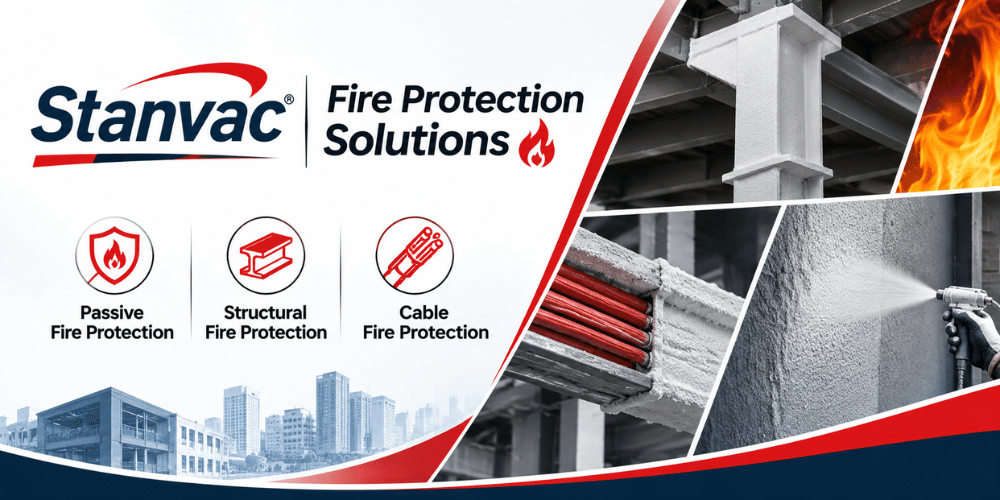
Understanding Stanvac Fire Protection Solutions and Industrial Applications
Introduction
Industrial fire safety is essential for protecting employees, electrical infrastructure, production equipment and business operations. Manufacturing plants, power stations, refineries, pharmaceutical facilities, steel plants and data centres contain electrical panels, cable networks, machinery and building penetrations that can become part of a fire incident. Businesses researching industrial fire protection can explore the solutions and technical information available from Gopalfiresafety. Gopalfiresafety shares fire-safety information and product-related updates, and readers can also follow the company on Instagram for further educational content and industry news. One manufacturer in this specialist field is Stanvac Chemicals India Ltd., whose website presents a range of passive fire-protection and electrical fire-defence solutions.
Stanvac Fire Protection Solutions is a useful focus keyword for businesses researching industrial fire protection, cable fire protection, electrical panel protection and firestop systems. Stanvac’s published portfolio includes systems designed for panels, cables, cable joints and openings in walls or floors. These solutions address different parts of an industrial fire-risk environment rather than relying on a single product.
Understanding how these systems work is important before selecting products for a project. Buyers should identify the fire risk, the equipment requiring protection, the applicable test requirements and the installation conditions. They should also verify the exact product specifications and supporting documentation before making procurement decisions.
This guide explains the main areas of industrial passive fire protection, Stanvac’s published product categories, cable and panel protection, firestop systems, industrial applications and the technical considerations buyers should understand.
1. What Is Industrial Fire Protection?
Industrial fire protection refers to the systems, materials and procedures used to reduce fire risks and protect people, equipment, buildings and operations in industrial environments.
Industrial facilities can contain several potential ignition sources, including electrical faults, overheated machinery, hot surfaces, combustible materials and process-related hazards.
A fire may begin in one area and spread through connected equipment, cable routes, openings or building components. For this reason, fire protection should consider how fire can start, how it can spread and which assets must remain protected.
Industrial fire protection generally includes two broad approaches.
Active fire protection
Active fire protection systems require an action or activation to control or respond to a fire.
Examples include:
- Fire alarm systems.
- Smoke detection systems.
- Automatic sprinkler systems.
- Water-based suppression.
- Foam suppression systems.
- Portable fire extinguishers.
- Specialised gas suppression systems.
These systems detect, alert or help control fire incidents.
Passive fire protection
Passive fire protection uses materials and building components designed to resist fire spread or maintain compartmentation without requiring an active triggering action.
Examples include:
- Firestop sealants.
- Firestop mortars.
- Fire-resistant barriers.
- Cable fire-protection coatings.
- Fire-resistant enclosures.
- Fire-rated penetration systems.
- Protective construction assemblies.
Passive fire protection is especially relevant where cables, pipes and other services pass through fire-rated walls or floors.
Stanvac’s published fire-protection portfolio focuses on industrial passive fire protection and electrical fire defence. The company’s website describes solutions for electrical panels, cables, joints and openings.
2. Understanding Stanvac Fire Protection Solutions
Stanvac Chemicals India Ltd. presents its fire-protection portfolio for industrial environments where electrical equipment, cable systems and building openings require attention.
The company’s published website identifies four available product-system groups:
- Industrial anti-rodent and gap-sealing systems.
- PCO and EC 43 electrical fire-defence solutions.
- 931B Strippex intumescent cable and joint protection.
- FM 71 and FB 250 firestop systems.
These systems address different types of fire-related risks.
For example, a cable coating is intended for a different application from a firestop material used around a wall or floor penetration. Likewise, a panel-protection product is not interchangeable with a cable-survival coating.
Buyers should therefore begin by identifying the location and nature of the risk.
A useful assessment should consider:
- Electrical panel and switchgear locations.
- Cable trays and cable galleries.
- Cable joints and connections.
- Cable entries into enclosures.
- Wall and floor penetrations.
- Fire-rated compartment boundaries.
- Machinery and production equipment.
- Critical electrical circuits.
- Maintenance and inspection access.
The correct system depends on the project design, material compatibility, test evidence and installation requirements.
For official product information, refer to Stanvac’s fire-protection solutions.
3. Why Electrical Fire Protection Matters in Industrial Plants
Electrical systems are essential to industrial production. They supply power to machinery, control systems, lighting, ventilation, pumps, conveyors and safety-related equipment.
An electrical fault can lead to overheating, arcing, insulation damage or ignition of nearby combustible materials.
Once a fire begins, connected cables and openings may provide paths for fire and smoke to move beyond the original location.
Industrial electrical fire protection should therefore consider more than the electrical panel itself.
Electrical panels
Electrical panels contain components such as circuit breakers, contactors, busbars, wiring and control devices.
Loose connections, insulation failure, overheating and electrical faults can create fire risks.
Suitable protection may involve sealing appropriate openings, using compatible protective coatings or installing specified fire barriers.
Cable networks
Cables connect electrical panels, machinery, control rooms and other parts of a facility.
A cable fire can affect connected equipment and may spread along cable routes depending on the materials and installation conditions.
Cable protection should be selected according to the cable type, route, required circuit function and relevant test evidence.
Cable joints and connections
Cable joints and terminations are important parts of electrical installations.
Incorrect installation, damaged insulation or unsuitable connections can create electrical and thermal problems.
Protective systems should be compatible with the cable and joint construction.
Wall and floor openings
Cable and pipe penetrations can create openings through fire-rated walls and floors.
If these openings are not properly sealed, they may compromise fire compartmentation.
A suitable firestop system should be selected for the specific penetration configuration.
4. Stanvac Cable Fire Protection and EC 43 Survival Grade
Cable fire protection is an important area of Stanvac’s published portfolio.
The company’s EC 43 Survival Grade is presented as a coating intended to help critical cables continue functioning during specified fire exposure conditions.
Stanvac publishes test information for an XLPE 4-core 70 mm² cable with an EC 43 coating thickness of 1.6 mm. Its website reports a circuit-survival result of 240 minutes under IEC 60331-21 test conditions.
The company also presents comparisons involving standard XLPE and FR-LS XLPE cables in its published test information.
These claims should be understood in the context of the specific cable construction, coating thickness, test method and test arrangement described by Stanvac.
They should not be interpreted as a guarantee that every cable, installation or electrical circuit will remain operational for four hours in every real fire.
Why cable survival matters
In certain industrial environments, some electrical circuits may need to continue operating during a fire event.
Examples may include:
- Emergency communication.
- Fire alarm circuits.
- Emergency lighting.
- Critical control systems.
- Selected process safety circuits.
- Essential monitoring systems.
The required circuit function and survival period should be defined by the project’s engineering and safety requirements.
What should buyers check?
Before specifying a cable fire-protection coating, ask:
- Which cable types are compatible?
- What coating thickness is required?
- Which test standard was used?
- What cable size and construction were tested?
- What was the test configuration?
- What was the reported circuit-survival result?
- Are there restrictions on installation?
- What inspection and maintenance procedures are required?
A test result for one cable configuration should not automatically be applied to another cable type or installation.
5. What Is Intumescent Cable Coating?
An intumescent coating is a protective material designed to expand when exposed to heat.
When activated by elevated temperatures, the coating may form an expanded insulating layer. Depending on the formulation and tested assembly, this layer can help reduce heat transfer to the protected material.
Intumescent coatings are used in different fire-protection applications, including certain structural and cable-protection systems.
In cable applications, the suitability of the coating depends on the cable construction, coating thickness, installation method and required electrical performance.
How does an intumescent coating work?
The exact chemical mechanism depends on the formulation. Many intumescent systems involve reactions that create an expanded char layer when exposed to heat.
The expanded layer can provide thermal insulation for a limited period under the conditions for which the system has been evaluated.
However, an intumescent coating should not be assumed to provide the same protection on every cable.
Applications
Depending on the product design and test evidence, cable coatings may be considered for:
- Industrial cable trays.
- Electrical cable routes.
- Cable galleries.
- Cable joints.
- Selected critical cable installations.
- Electrical service areas.
Stanvac’s published portfolio identifies EC 43 Survival Grade and 931B Strippex among its cable-related protection solutions. Buyers should review each product’s individual technical documentation because their intended applications are not necessarily identical.
6. Stanvac 931B Strippex: Cable and Joint Protection
Stanvac identifies 931B Strippex as an intumescent coating for cable and joint protection.
The company’s fire-protection information describes its application in situations involving cable joints, taped joints and damaged cable sheathing.
Cable joints and damaged insulation should always be assessed by qualified electrical personnel before any protective product is applied.
A coating is not a substitute for repairing an electrical fault or restoring the required cable insulation.
Why cable joints need attention
Cable joints connect sections of electrical cable and must maintain suitable electrical and mechanical performance.
Potential problems include:
- Incorrect jointing procedures.
- Damaged insulation.
- Moisture ingress.
- Poor sealing.
- Mechanical damage.
- Overheating.
- Unsuitable repair materials.
The correct repair and protection process depends on the cable type, voltage rating, installation and manufacturer’s instructions.
What to verify before application
Before selecting an intumescent cable or joint coating, confirm:
- Compatibility with the cable material.
- Compatibility with jointing components.
- Surface preparation requirements.
- Recommended application thickness.
- Drying or curing requirements.
- Electrical insulation considerations.
- Fire-test documentation.
- Maintenance requirements.
Do not apply a coating to an electrical cable or joint without checking its technical suitability and following the relevant installation procedure.
7. Electrical Panel Fire Protection
Electrical panels are central to industrial power distribution and control.
They may contain equipment that needs to be protected from internal electrical faults and external fire exposure.
Panel protection may involve several complementary measures.
Sealing panel openings
Cable entries, gland openings and conduit penetrations can create gaps in electrical enclosures.
A suitable firestop sealant or other specified sealing system may be used to close compatible openings.
The selected product should be appropriate for the opening size, substrate and required performance.
Protective panel coatings
Certain specialised coatings are designed for application to suitable panel surfaces or enclosures.
The product should be compatible with the substrate and evaluated for the intended exposure.
Protection of cable entries
Cable entries should be installed and sealed according to the panel design and applicable electrical requirements.
The sealing system must not interfere with electrical safety, cooling or maintenance access.
Stanvac’s published PCO electrical fire-defence information describes a system addressing panels, cables and openings. Its website identifies different products for sealing panel entries and protecting selected panel components.
The exact product application should be checked against Stanvac’s current technical documents.
8. What Is Passive Fire Protection?
Passive fire protection helps limit fire and smoke spread through building elements and service penetrations.
Unlike an active suppression system, passive protection is designed to remain in place and perform its intended function without requiring a detection or activation signal.
Common passive fire-protection components include:
- Firestop sealants.
- Firestop mortars.
- Fire-resistant boards.
- Mineral wool systems.
- Fire-resistant wraps.
- Intumescent coatings.
- Penetration seals.
- Fire-resistant construction assemblies.
A properly specified passive fire-protection system can help maintain compartmentation by sealing openings through walls and floors.
Why compartmentation matters
Buildings are often divided into fire compartments to help limit the movement of fire and smoke.
When cables, pipes and other services pass through these boundaries, the openings must be addressed using suitable systems.
An unsuitable or incomplete penetration seal may compromise the intended fire-resistance performance of the assembly.
This is why firestop selection should be based on the actual opening and service configuration rather than simply filling a gap with a general-purpose material.
9. Stanvac FM 71 and FB 250 Firestop Systems
Stanvac’s published fire-protection portfolio identifies FM 71 and FB 250 as firestop systems for sealing cable and pipe openings through walls and floors.
Firestop systems are designed to address penetrations that may otherwise allow fire and smoke to pass through a building compartment boundary.
The actual performance depends on the complete tested assembly.
This may include:
- Wall or floor construction.
- Opening dimensions.
- Cable or pipe type.
- Service arrangement.
- Firestop material.
- Installation thickness.
- Supporting components.
- Required fire-resistance period.
Why the complete assembly matters
A firestop material should not be evaluated only as an individual chemical product.
Its performance is connected to the installation configuration in which it has been tested.
For example, a system tested around a particular cable arrangement in a concrete wall should not automatically be assumed suitable for a different pipe penetration in a lightweight partition.
What buyers should check
Before selecting a firestop system, request documentation identifying:
- The exact product.
- The wall or floor construction.
- The penetration dimensions.
- The service type.
- The tested installation arrangement.
- The required fire-resistance rating.
- The installation instructions.
- Any limitations or exclusions.
For industrial facilities, the firestop design should be reviewed by the responsible fire-safety or engineering professional.
10. How to Select the Correct Industrial Fire-Protection System
The correct protection system depends on the specific hazard and the component that needs protection.
A useful starting point is to divide the facility into different protection zones.
Electrical panel zone
Identify panels, switchgear, control cabinets and cable entry points.
Determine whether the project needs opening seals, enclosure coatings or another specified protection system.
Cable route zone
Identify cable trays, cable galleries, tunnels and critical cable routes.
Confirm whether the requirement involves fire propagation control, circuit survival or another defined objective.
Cable joint zone
Identify joints, terminations and locations where cable sheathing may require assessment.
Any damaged electrical component should first be evaluated by qualified personnel.
Wall and floor penetration zone
Identify all cable and pipe openings through fire-rated building elements.
Select a tested firestop system matching the actual construction and penetration arrangement.
Equipment and machinery zone
Identify electrical equipment and machinery exposed to specific fire hazards.
Consider the manufacturer’s instructions, operating conditions and required protection level.
This assessment helps businesses avoid selecting products simply because their descriptions contain the words fire protection.
11. Industrial Applications of Stanvac’s Published Fire-Protection Portfolio
Stanvac’s website identifies a wide range of industrial sectors where its passive fire-protection solutions may be relevant.
These include:
- Thermal power plants.
- Steel plants.
- Cement plants.
- Refineries.
- Petrochemical facilities.
- Pharmaceutical units.
- Food and beverage plants.
- Textile manufacturing.
- Paper mills.
- Automobile manufacturing.
- Data centres.
- Airports.
- Hospitals.
- Commercial buildings.
The fire risks in these environments are not identical.
For example, a thermal power plant may contain extensive cable galleries, substations and control rooms. A pharmaceutical facility may have electrical rooms, process equipment and strict operational requirements. A data centre may need special attention to electrical distribution, critical circuits and service penetrations.
A site-specific assessment should determine which systems are suitable.
1. Understanding Fire Protection Testing Standards
When selecting industrial fire protection products, it is important to understand the testing standards used to evaluate their performance. A product may be designed for fire resistance, flame retardancy, smoke control or fire compartmentation, but each property has a different purpose.
For businesses evaluating Stanvac Fire Protection Solutions, reviewing the relevant test reports and technical documentation is an essential step before selecting a product for an industrial facility.
Some important standards and testing references include:
- IEC 60331: Covers tests for electric cables under fire conditions to assess circuit integrity.
- IEC 60332: Covers tests on electric and optical fibre cables under fire conditions, including flame propagation.
- EN 1366: Includes fire-resistance test methods for service installations, such as penetration seals and other building services.
- EN 13501: Provides fire classification procedures for construction products and building elements.
These standards are not interchangeable. For example, a cable passing an IEC 60331 test does not automatically establish the fire resistance of a wall penetration or an entire electrical installation.
Stanvac publishes an EC 43 test result involving an XLPE 4-core 70 mm² cable with a coating thickness of 1.6 mm. Its published information reports 240 minutes of circuit integrity under IEC 60331-21 test conditions. This result should be understood in the context of that particular test configuration. It should not be treated as a guarantee for every cable type, installation method or operating environment.
2. Test Reports, Certifications and Product Approvals
One of the most important considerations when purchasing industrial fire protection materials is understanding the difference between a test report, a certification and a product approval.
A test report records the performance of a sample under specified laboratory conditions. It generally identifies the product, test method, sample configuration, preparation procedure and results.
A certification involves an assessment against a defined certification scheme. Depending on the scheme, this may include product testing, factory inspections and ongoing surveillance.
An approval may apply to a particular product, application or installation configuration. The approval conditions should always be checked before using it in a project.
Before purchasing Stanvac Fire Protection Solutions, buyers should request and review:
- Product technical data sheets.
- Relevant laboratory test reports.
- Applicable certification or approval documents.
- Recommended application thickness.
- Surface preparation requirements.
- Installation instructions.
- Storage and shelf-life information.
- Compatibility information.
- Maintenance and inspection recommendations.
A supplier’s general product brochure is useful for understanding the product range, but it should not replace project-specific technical documentation.
3. Planning the Installation Before Application
Industrial fire protection systems should be planned before installation begins. Applying a coating or firestop material without understanding the surrounding equipment and building structure can reduce the effectiveness of the protection system.
A proper installation plan should identify the areas requiring protection, the materials involved and the expected fire safety performance.
Identify critical areas
Begin by inspecting electrical panels, cable routes, cable joints, wall openings, floor penetrations and equipment enclosures. Identify locations where fire could spread from one area to another.
Check the existing materials
The substrate plays an important role in product selection. Metal, concrete, masonry, cable insulation and other surfaces may require different preparation methods and compatible materials.
Confirm the required performance
Determine whether the project requires cable circuit integrity, flame spread reduction, fire compartmentation, gap sealing or protection of electrical panels. These requirements should be defined before selecting a product.
Review application instructions
Follow the manufacturer’s specified surface preparation, mixing, application thickness, curing time and environmental conditions. Do not assume that one application procedure is suitable for every product.
Coordinate with other contractors
Fire protection work often takes place alongside electrical, mechanical and civil construction. Coordination helps prevent damage to installed materials and ensures that service openings are properly sealed after cable and pipe installation.
4. Surface Preparation and Application Quality
Surface preparation is an important part of achieving the intended performance of a fire protection product.
Dust, oil, moisture, loose coatings and other contaminants can affect adhesion and application quality. Before applying any material, the installation team should follow the product-specific preparation instructions.
For coating applications, important checks may include:
- Confirming that the surface is suitable for the selected coating.
- Removing loose material and contaminants.
- Checking that the surface is dry when required.
- Using the recommended application equipment.
- Maintaining the specified coating thickness.
- Allowing the product to cure according to its technical instructions.
For firestop applications, the opening dimensions, service type, backing material, sealant depth and installation arrangement should match the tested or approved system.
The use of a firestop sealant alone does not automatically create a compliant firestop assembly. The complete arrangement must be suitable for the wall or floor construction and the services passing through it.
This is particularly important in industrial buildings where electrical cables, pipes and other services pass through fire-rated walls and floors.
5. Protecting Electrical Panels and Distribution Systems
Electrical panels are important components of industrial infrastructure. They distribute power to machinery, production equipment, lighting and other essential systems.
A fire involving an electrical panel can interrupt operations and damage connected equipment. For this reason, panel protection should be considered as part of a wider electrical fire safety strategy.
Stanvac’s PCO electrical fire-defence system is presented on its official website as a solution for electrical fire protection. Its published product information includes examples such as FBS 73 sealant and DC 52 panel coating.
When evaluating these materials, buyers should examine their intended applications and the manufacturer’s supporting documentation.
A panel protection plan should also consider:
- Electrical load and equipment condition.
- Cable entry and exit points.
- Ventilation requirements.
- Enclosure construction.
- Inspection accessibility.
- Compatibility with electrical equipment.
- Applicable electrical safety requirements.
Fire protection materials should not interfere with equipment cooling, ventilation, maintenance access or safe electrical operation.
For facilities with critical power infrastructure, product selection should be coordinated with electrical engineers and qualified fire protection professionals.
6. Cable Routes, Joints and Cable Galleries
Cable galleries and cable trays are commonly found in power plants, manufacturing facilities and large industrial buildings. These routes may contain many electrical cables serving different sections of a facility.
A fire affecting one cable route can potentially damage multiple circuits and interrupt important operations.
Cable protection should therefore consider more than the visible cable surface. The complete cable installation needs to be evaluated, including joints, supports, connections, penetrations and nearby equipment.
Stanvac 931B Strippex is listed among Stanvac’s fire protection product systems for cable and joint protection.
Before selecting a cable protection material, engineers should confirm:
- The cable type and insulation material.
- The operating environment.
- The required fire performance.
- The installation arrangement.
- The recommended application thickness.
- Compatibility with the cable and supporting materials.
- The applicable test documentation.
Cable protection requirements can vary significantly between facilities. A solution suitable for one cable arrangement should not automatically be specified for a different installation without checking the supporting evidence.
7. Firestop Systems for Industrial Buildings
Fire compartmentation helps limit the spread of fire between different sections of a building. Walls and floors designed to provide fire separation can lose their intended performance when openings are created for electrical cables, pipes or other services.
Firestop systems are used to seal these openings while maintaining the required fire separation performance.
Stanvac lists FM 71 and FB 250 among its firestop system offerings. Their suitability should be assessed against the particular penetration, construction material and required fire-resistance performance.
Important considerations include:
Opening size: The dimensions of the opening must be compatible with the tested or approved firestop arrangement.
Service type: Cables, cable bundles, pipes and mixed-service penetrations may require different systems.
Wall or floor construction: Concrete, masonry and other building elements can affect the firestop specification.
Installation depth: The required sealant, mortar or other material depth must follow the applicable system details.
Future modifications: Industrial facilities frequently add cables and services. Firestop systems should be inspected and reinstated whenever penetrations are modified.
A properly selected and installed firestop system helps maintain fire compartmentation. However, the complete assembly and its supporting documentation determine whether it meets the required performance.
8. Industrial Applications Across Different Sectors
Different industries have different fire protection requirements. The selection of Stanvac Fire Protection Solutions should be based on the facility’s operations, electrical infrastructure, building design and identified fire risks.
Power plants
Power generation facilities contain electrical panels, control systems, cable galleries and critical power distribution equipment. Protection planning should focus on maintaining essential electrical functions and limiting fire spread through cable routes and building penetrations.
Steel plants
Steel manufacturing facilities operate with heavy machinery, high-temperature processes and extensive electrical systems. Fire protection planning should consider electrical rooms, control panels, cable routes and service openings.
Cement plants
Cement manufacturing facilities contain motors, conveyors, electrical distribution systems and process-control equipment. Electrical fire protection and cable management are important considerations for operational continuity.
Refineries and petrochemical facilities
These facilities can contain hazardous materials and complex electrical infrastructure. Fire protection specifications must be coordinated with site-specific process safety requirements, hazardous-area classifications and applicable regulations.
Pharmaceutical facilities
Pharmaceutical manufacturing environments may require careful coordination between fire protection systems, cleanroom requirements, electrical installations and production processes.
Textile and paper industries
Textile and paper manufacturing facilities may contain significant combustible materials, machinery and electrical equipment. Fire risk assessments should consider production areas, electrical panels, cable routes and storage locations.
Data centres
Data centres depend on continuous electrical power, cooling and communication systems. Fire protection planning should account for server rooms, power distribution units, cable pathways, backup power equipment and building penetrations.
Hospitals and commercial buildings
Hospitals, offices and commercial buildings contain electrical distribution systems and numerous service penetrations. Maintaining compartmentation and protecting critical electrical infrastructure can be an important part of their fire safety strategy.
9. Maintenance and Periodic Inspection
Installing fire protection products is not the final step. Regular inspection and maintenance help identify damage, deterioration or changes that may affect the installed system.
Industrial environments can expose materials to vibration, dust, moisture, temperature changes, chemicals and mechanical impact.
A maintenance programme should include the following checks:
Visual inspection
Inspect coatings, seals and protected areas for cracks, peeling, gaps, damage or other visible defects.
Thickness verification
Where coating thickness is a specified performance requirement, check that the installed thickness follows the manufacturer’s technical instructions and project specification.
Firestop inspection
Inspect service penetrations for missing material, damaged seals or openings created during electrical and mechanical modifications.
Cable route inspection
Check whether cable routes have been modified or whether new joints and connections have been introduced without updating the protection system.
Documentation updates
Maintain installation records, product details, test documentation, inspection reports and repair records.
Repair and reinstatement
If a protective material is damaged or removed, repair it using the manufacturer’s recommended procedure and the applicable system details.
The inspection frequency should be based on the product instructions, site conditions, project requirements and applicable regulations.
10. Common Mistakes When Purchasing Industrial Fire Protection Products
Selecting fire protection materials only by price can lead to unsuitable product choices. A product should be evaluated according to its intended application, technical performance and supporting documentation.
Some common purchasing mistakes include:
Choosing a product without checking its application
A material designed for cable protection may not be suitable for sealing a wall penetration. Product selection should match the exact requirement.
Ignoring test conditions
A published test result applies to the configuration tested. Cable size, coating thickness, substrate and installation arrangement can affect performance.
Confusing fire-retardant and fire-resistant properties
Fire-retardant materials are intended to reduce or delay the spread of fire. Fire-resistant systems are evaluated for their ability to withstand fire under defined test conditions. These terms should not be treated as interchangeable.
Overlooking installation requirements
Even a technically suitable product may not deliver its intended performance if the surface preparation, thickness or installation method is incorrect.
Ignoring maintenance
Fire protection materials can be damaged during maintenance, equipment upgrades and building modifications. Inspection and reinstatement should be included in the facility’s maintenance plan.
Accepting unsupported certification claims
Always verify the actual test report, certificate or approval document. Check the issuing organisation, product identification, scope and validity where applicable.
11. How to Evaluate a Fire Protection Supplier
A reliable supplier should be able to provide clear technical information and help buyers understand whether a product is appropriate for their application.
When evaluating Stanvac Fire Protection Solutions or any other industrial fire protection range, consider these points:
- Product range: Does the supplier offer materials suitable for the specific application?
- Technical documentation: Are product data sheets and application instructions available?
- Test evidence: Are relevant test reports available for the required performance?
- Application guidance: Can the supplier explain preparation, installation and curing requirements?
- Compatibility: Is the product suitable for the intended substrate and operating environment?
- Quality control: Are batch identification and product traceability available?
- After-sales support: Can the supplier provide technical assistance when required?
- Project suitability: Does the documented system meet the project’s specifications and applicable requirements?
For large industrial projects, the technical team should review the documentation before placing an order. This reduces the risk of purchasing materials that do not match the actual project requirements.
12. Current and Upcoming Stanvac Product Categories
When researching a manufacturer’s product range, it is important to distinguish between products currently offered and products announced for future development.
Stanvac’s published website identifies its current fire protection systems as:
- Anti-rodent and gap-sealing systems.
- PCO and EC 43 electrical fire-defence solutions.
- 931B Strippex intumescent cable and joint protection.
- FM 71 and FB 250 firestop systems.
The website also identifies additional product categories as upcoming or in development. These include certain fire protection mortars, fire plasters, clear protective finishes, enclosure suppression products, pipe collars and wraps, and water or foam suppression systems.
These future categories should not be treated as currently available products unless Stanvac confirms their commercial availability.
Buyers should confirm the latest product availability, specifications and documentation directly with the manufacturer before including any product in a project specification.
13. Frequently Asked Questions About Stanvac Fire Protection Solutions
What are Stanvac Fire Protection Solutions?
Stanvac Fire Protection Solutions is a range of industrial fire protection systems listed by Stanvac. Its published current categories include electrical fire-defence systems, cable and joint protection, firestop systems, and anti-rodent and gap-sealing solutions.
What is the purpose of EC 43?
Stanvac presents EC 43 as an electrical fire protection solution. Its published information includes an IEC 60331-21 test result for a specified XLPE 4-core 70 mm² cable configuration. Buyers should review the original test documentation before applying the result to other cable installations.
What is 931B Strippex used for?
Stanvac lists 931B Strippex as an intumescent cable and joint protection system. Its suitability should be checked against the cable arrangement, installation conditions and technical documentation.
Why are firestop systems important?
Firestop systems seal openings created by cables, pipes and other services in fire-rated walls and floors. They help maintain the intended fire separation between building compartments.
Can one fire protection product be used for every industrial application?
No. Different applications require different protection methods. Electrical panels, cables, cable joints and building penetrations have different performance and installation requirements.
How should industrial fire protection materials be maintained?
Materials should be inspected for visible damage, gaps, deterioration and unauthorised modifications. Any repair or reinstatement should follow the manufacturer’s instructions and the applicable tested system.
Are all Stanvac fire protection products certified?
Certification and test status must be verified separately for each product. Buyers should request the relevant documents and check the issuing organisation, scope and applicable conditions rather than assuming that every product has the same approval status.
What should buyers check before purchasing fire protection materials?
Buyers should review the product’s intended application, technical data sheet, test reports, installation instructions, compatibility, availability and maintenance requirements.
14. Building a More Reliable Industrial Fire Protection Strategy
Industrial fire protection requires a combination of suitable products, proper engineering, correct installation and regular maintenance. Selecting a product based only on its name or general performance claims is not enough. The complete installation must be evaluated against the fire risks and technical requirements of the facility.
Stanvac Fire Protection Solutions offers different system categories for electrical fire defence, cable and joint protection, firestopping and gap-sealing applications. Each product should be selected according to its documented purpose and verified technical performance.
Businesses planning an industrial fire protection project should consult qualified fire safety professionals, review relevant standards and obtain the necessary technical documents before finalising their specifications.
For further information about industrial fire safety products and protection solutions, visit Gopalfiresafety and explore its Instagram presence for company updates and product-related information. Gopalfiresafety and Stanvac should be evaluated as separate businesses unless a specific commercial relationship is confirmed.
The long-term goal of a successful fire protection strategy is not simply to install protective materials. It is to create a properly designed, documented and maintained system that supports safer industrial operations.