Introduction to Fire Resistant Fabric
Fire safety is an important consideration in commercial buildings, factories, hotels, hospitals, theatres, public venues, and industrial facilities. Fire Resistant Fabric is a term used for textiles designed or treated to improve their performance when exposed to flame or heat under specified test conditions. At Gopalfiresafety, businesses and safety professionals can explore fire-safety information and product-related resources. Follow Gopalfiresafety on Instagram for fire-safety awareness, educational updates, and product information.
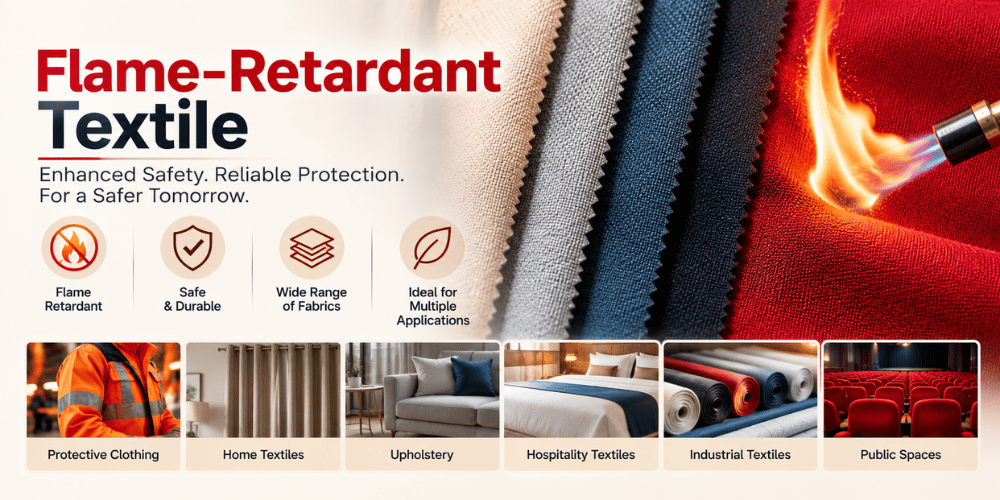
Textiles are used in curtains, upholstery, stage drapes, partitions, protective clothing, acoustic panels, industrial covers, and many other applications. Depending on the material and its intended use, a textile may need to meet specific fire-performance criteria. Choosing the right fabric or treatment requires an understanding of the fibre composition, construction, intended environment, and applicable testing standards.
Fire-resistant and flame-retardant textiles are not necessarily completely fireproof. Their performance depends on the fabric, treatment, test method, and conditions of exposure. Some fibres have inherent flame-resistant properties, while other fabrics require a compatible treatment to improve particular fire-related characteristics.
Understanding these differences helps purchasers, architects, facility managers, manufacturers, and contractors make informed decisions about textile fire safety.
1. What Is Fire Resistant Fabric?
Fire resistant fabric is a textile designed or treated to provide a defined level of performance when exposed to heat or flame. Depending on the fibre and product design, it may resist ignition, limit flame propagation, self-extinguish under specified conditions, or help protect a wearer from particular thermal hazards.
The phrase covers a broad range of textile technologies. It does not indicate that every fabric has the same performance or that a material will withstand unlimited exposure to fire.
There are two broad approaches to textile fire protection.
Inherently flame-resistant fabrics: These are made using fibres whose properties provide flame resistance as part of the fibre itself. Their performance depends on the fibre type, textile construction, and the specific product.
Treated fabrics: These are textiles that receive a chemical or other treatment intended to improve particular fire-related characteristics. The effectiveness of a treatment depends on compatibility with the fabric, application conditions, and the applicable test requirements.
The appropriate option depends on the intended application. A curtain fabric for a public venue may have different requirements from protective clothing for an industrial worker.
Before purchasing a textile, buyers should identify the required performance and request documentation that applies to the exact fabric or treated product.
2. Why Textile Fire Protection Matters
Textiles can contribute to fire growth depending on their composition, construction, quantity, and location. Curtains, upholstered furniture, decorative materials, and other fabrics can be present in spaces where many people gather.
Textile fire protection is therefore an important part of risk management in suitable applications.
Commercial buildings
Offices, hotels, conference centres, and shopping facilities often use fabrics for window coverings, partitions, seating, and interior decoration. The required textile performance depends on the building’s use, applicable regulations, and project specification.
Hospitals and healthcare facilities
Healthcare environments may contain curtains, upholstery, privacy screens, bedding, and other textile products. Product selection should consider the fire-performance requirement alongside cleaning, hygiene, durability, and suitability for the environment.
Educational institutions
Schools, colleges, training centres, and auditoriums may use curtains, seating fabrics, stage materials, and decorative textiles. Facility managers should confirm whether particular products must meet specified fire-test criteria.
Theatres and event venues
Stage curtains, backdrops, temporary decorations, and exhibition fabrics can occupy large areas. The selection of suitable textiles is especially important where project specifications or venue rules require defined fire performance.
Industrial workplaces
Factories and workshops may use protective garments, covers, screens, and specialist textiles. Requirements depend on the hazards involved, including radiant heat, sparks, molten material, or other thermal exposures.
The right textile solution should be selected for the actual risk rather than chosen solely because the product is advertised as fire resistant.
3. Fire Resistant Fabric vs. Flame-Retardant Fabric
The terms fire resistant, flame resistant, and flame retardant are frequently used in textile descriptions. However, they may refer to different properties and applications.
Fire resistant fabric is a broad phrase that can refer to a textile designed to resist or withstand certain fire-related conditions.
Flame-resistant fabric generally describes a textile designed to resist ignition or limit flame propagation under specified conditions. In protective clothing, it may refer to a garment material evaluated against particular thermal hazards.
Flame-retardant fabric often refers to material that has been treated or manufactured to slow flame spread or improve its reaction to fire.
The precise meaning depends on the product and applicable standard. Marketing terminology alone is not enough to establish performance.
A fabric that passes one flame-spread test may not be suitable for protective clothing. Similarly, a textile used for stage curtains may not provide the thermal protection required for an industrial worker.
Buyers should verify the relevant test method, performance criteria, and intended application before making a purchasing decision.
4. How Fire-Resistant Textile Technology Works
Textile fire performance depends on the chemical and physical behaviour of the fibres, yarns, fabric structure, and any applied treatment.
Different technologies can influence how a textile responds to heat and flame. Some fibres naturally resist sustained burning under particular conditions. Other materials are treated with formulations intended to modify their combustion behaviour.
Depending on the textile and treatment, the intended effect may include:
- Reducing the likelihood of sustained flame propagation.
- Encouraging the fabric to self-extinguish after removal of the ignition source under specified conditions.
- Limiting particular aspects of burning or surface flame spread.
- Helping protective garments meet defined thermal-performance requirements.
- Improving the fire-related performance of certain interior fabrics.
These outcomes are not universal. Performance depends on the formulation, fabric construction, test procedure, and exposure conditions.
A treatment designed for one fibre type may not perform equally well on another. For example, cotton, polyester, and blended fabrics have different chemical and thermal characteristics. A suitable product must be selected for the actual textile.
5. Types of Fire-Resistant Fabrics
Textile fire protection includes several different categories. Understanding them helps buyers select products suited to their intended use.
Inherently flame-resistant fabrics
Inherently flame-resistant textiles use fibres designed to provide flame-resistant properties. The performance is associated with the fibre chemistry and construction rather than relying solely on an applied surface treatment.
Such textiles may be used in specialist protective garments and other applications where a defined level of thermal performance is required.
However, inherent flame resistance does not mean a fabric is indestructible or suitable for every hazard. Garment design, seams, closures, fabric weight, and other components can affect overall performance.
Chemically treated fabrics
Treated fabrics receive a compatible formulation intended to improve particular fire-related characteristics. Treatment methods can include processes applied during textile manufacturing or treatments used on finished fabrics.
The result depends on the chemistry, fabric composition, application quantity, and processing conditions. Some treatments may have limitations relating to washing, cleaning, moisture, or environmental exposure.
Blended textile fabrics
Blended fabrics combine two or more fibre types. They may be selected for characteristics such as comfort, strength, appearance, cost, or durability.
Their fire performance depends on the fibres and the structure of the blend. A treatment suitable for one component may not be appropriate for the whole fabric, so compatibility should be verified.
Specialist protective textiles
Protective textiles are designed for particular workplace hazards. Some are intended to provide protection against defined thermal exposures, while others may address multiple hazards.
Their selection requires careful review of the relevant performance standards, garment design, care instructions, and limitations.
6. Fire Resistant Fabric for Cotton Textiles
Cotton is a cellulose-based natural fibre widely used in clothing, curtains, upholstery, and other textile applications. Untreated cotton can ignite and burn under suitable conditions, so particular applications may require a compatible fire-retardant treatment.
A treatment for cotton may be designed to alter the fabric’s combustion behaviour or improve its performance under a specified test method.
The outcome depends on several factors, including the cotton fabric’s construction, weight, finish, moisture content, and treatment process.
Before applying a treatment, check whether it is intended for the exact cotton textile. A product designed for one fabric construction may not produce the same results on another.
Other considerations include:
- Whether the fabric is dyed or printed.
- Whether an existing finish is present.
- Whether the treated fabric will be washed or dry-cleaned.
- Whether the treatment affects softness, colour, or texture.
- Whether the fabric will be exposed to sunlight or moisture.
- Whether the application requires a specific fire-test classification.
For commercial projects, buyers should request product documentation and confirm any limitations relating to cleaning, maintenance, or re-treatment.
7. Fire Resistant Fabric for Polyester Textiles
Polyester is a synthetic fibre used in curtains, upholstery, clothing, exhibition materials, and many decorative textiles. Its behaviour under heat differs from that of cotton and other natural fibres.
Certain treatments are designed for compatible polyester textiles, but not every textile treatment works with every synthetic fibre. The formulation must be suitable for the material and the intended use.
Polyester fabrics may vary in construction, density, coatings, dyes, and finishes. These factors can influence treatment compatibility and the performance of the finished textile.
When evaluating a treatment for polyester, confirm:
- Whether the product is suitable for the exact polyester fabric.
- Whether the treatment changes the fabric’s appearance or handle.
- Whether the treated textile meets the relevant fire-test requirement.
- Whether cleaning or washing affects its performance.
- Whether the product is suitable for the intended environment.
- Whether any additional finish affects the test results.
Never assume that a product tested on cotton will provide equivalent performance on polyester.
8. Fire Resistant Fabric for Blended Textiles
Blended textiles combine fibres to achieve particular characteristics. A fabric may contain cotton and polyester, or other combinations selected for durability, comfort, cost, and appearance.
Because the fibres have different properties, the behaviour of a blended fabric can differ from that of either fibre on its own. A treatment must therefore be evaluated for the actual blend and construction.
The fabric’s weight, weave or knit, finish, and manufacturing process may influence how a treatment is absorbed or retained.
For commercial use, ask the textile or treatment supplier to confirm the exact blend for which the product is intended. If a particular fire classification is required, the test evidence should apply to the proposed fabric rather than merely to one of its constituent fibres.
This approach helps prevent unsuitable substitutions during purchasing and production.
9. Common Applications of Fire-Resistant Fabrics
Textiles are used in many environments, but fire-performance requirements vary by application.
Curtains and drapes
Curtains and drapes are common in hotels, offices, conference halls, schools, and public venues. Some projects require textiles to meet particular flame-spread or other reaction-to-fire criteria.
The relevant requirements depend on the jurisdiction, building use, and specification. Buyers should confirm the required test and whether the evidence applies to the complete curtain fabric and finish.
Stage curtains and theatrical textiles
Theatres, auditoriums, and event venues may use large stage curtains, backdrops, and decorative fabrics. These materials should be selected according to the venue’s fire-safety requirements and any applicable rules for temporary event installations.
Where a treatment is used, its suitability for the fabric and the maintenance requirements should be documented.
Upholstery fabrics
Upholstered chairs, sofas, panels, and commercial seating may be subject to specific fire-performance requirements. Upholstery performance can depend on the combination of the outer fabric, filling, backing, and other components.
A treated face fabric alone may not demonstrate that the complete upholstered product meets a particular standard.
Exhibition and event fabrics
Exhibition booths, temporary partitions, banners, and display textiles can be installed in crowded indoor environments. Organisers may require documentation for the materials used.
Temporary use does not remove the need to verify compliance with the venue’s requirements.
Protective clothing
Protective clothing is a separate specialist category. A fabric used for decorative curtains should not be assumed suitable for protective garments. Clothing must be selected for the relevant hazards and evaluated using the appropriate performance standards.
10. How to Choose a Fire-Resistant Fabric
Choosing a textile should begin with the intended use and required fire performance.
For a curtain, the relevant requirements may concern flame spread or other reaction-to-fire characteristics. For protective clothing, the selection may depend on exposure to heat, flame, sparks, or other workplace hazards.
The purchasing process should establish the following:
Application: Identify where and how the textile will be used.
Fibre composition: Confirm the exact fibre types and fabric construction.
Required performance: Identify the relevant standard, test method, or classification.
Documentation: Obtain test reports or certificates that cover the actual textile.
Maintenance: Review washing, cleaning, inspection, and re-treatment requirements.
Environmental conditions: Consider moisture, humidity, UV exposure, abrasion, and temperature.
Compatibility: Confirm that any applied treatment is suitable for the textile and existing finishes.
Appearance and comfort: Where relevant, evaluate colour, texture, drape, breathability, and durability.
A well-informed decision balances fire performance with the practical needs of the application. No single fabric should be assumed suitable for every setting.
11. Surface-Applied Fire-Retardant Treatments
Surface-applied treatments are used to modify the fire-related characteristics of compatible fabrics. Depending on the product, the treatment may be applied by spraying, dipping, padding, or another process specified by the manufacturer.
The application method should match the fabric’s construction and the treatment’s intended use. An uneven application can create inconsistent results, while an unsuitable formulation may affect the fabric’s appearance, softness, colour, or durability.
Before treating a textile, assess its condition and identify any existing finishes, coatings, dyes, or contaminants. The treatment manufacturer should confirm compatibility with the intended material.
The application instructions may specify the quantity of treatment, dilution requirements, drying conditions, ventilation, and any additional processing steps. These requirements should be followed carefully.
A surface treatment should not be considered successful simply because the fabric appears unchanged or feels dry. Where fire performance is important, the treated textile should be evaluated using the applicable test method.
12. Fabric Preparation Before Treatment
Proper preparation helps achieve a consistent result. Dust, oil, residues, existing finishes, and other contaminants can affect the interaction between a fabric and its treatment.
The preparation procedure depends on the textile and product. Some fabrics may require cleaning before application, while others may be unsuitable for treatment because of an existing finish.
Before beginning, check the following:
- Identify the fibre composition and fabric construction.
- Inspect the textile for damage, contamination, or previous treatments.
- Check whether cleaning is required.
- Confirm that the fabric is compatible with the selected product.
- Follow the specified moisture and preparation requirements.
- Test a small representative sample when recommended.
- Record the product and application details.
For large projects, sample testing can help identify potential issues before treatment is applied to the entire textile quantity.
Preparation must also account for the final use. For example, fabric that will be washed regularly may require a treatment specifically intended for that maintenance cycle.
13. Application Methods for Textile Treatments
The application method influences how evenly a treatment is distributed and how much material remains on the fabric.
Spray application
Spraying can be convenient for certain finished textiles and installed materials. However, the result depends on the spray equipment, application technique, coverage, and product instructions.
Spraying should be performed under suitable ventilation and workplace safety controls. The applicator should avoid treating only the most visible surface if the product instructions require more complete coverage.
Dipping
Dipping involves immersing compatible fabric in a treatment solution. This process can help distribute a formulation throughout the material, but the result depends on the treatment chemistry, immersion conditions, fabric construction, and processing instructions.
Padding or controlled textile processing
Industrial textile facilities may use controlled processes to apply treatment consistently across fabric lengths. Such processes can provide better control over application conditions when properly managed.
Professional treatment
For larger commercial projects, professional textile processors may be able to document the fabric, treatment, application conditions, and relevant test results. This can be particularly useful when a project requires traceability or formal compliance evidence.
The chosen method should always be appropriate for the specific product and textile.
14. Why Application Quantity Matters
The amount of treatment applied to a fabric can influence its fire-related performance. Too little treatment may fail to achieve the intended result, while excessive application may affect appearance, feel, drying, or other material properties.
Manufacturers may specify application quantity through a coverage rate, concentration, or other processing parameter. These instructions should not be replaced by guesswork.
For textile processors, recording the quantity used and the fabric area treated can support quality control. It can also help identify differences between production batches.
Application quantity alone does not prove compliance. The treated textile must meet the relevant performance criteria, and the evidence should cover the fabric and process being used.
If the fabric construction, treatment formulation, or processing method changes, the previous performance results may no longer apply. Confirm with the manufacturer whether additional testing is necessary.
15. Drying and Curing Treated Fabrics
After treatment, a fabric may need a specified drying or curing process. The exact requirements depend on the treatment formulation and the textile.
Temperature, humidity, airflow, fabric thickness, and application quantity can influence drying. Insufficient drying may affect handling or performance, while unsuitable heating conditions may damage the fabric or create workplace hazards.
Always follow the manufacturer’s instructions for drying time, temperature, ventilation, and handling. Do not assume that a fabric is ready for use merely because its surface feels dry.
For industrial processing, keeping records of the drying conditions can help maintain consistency between batches. For on-site applications, ensure that the treated textile is not installed or used before the specified process is complete.
Where the product requires laboratory verification, retain the relevant sample and documentation according to the manufacturer’s or project’s procedures.
16. Fire Testing and Performance Verification
Fire testing provides evidence of how a particular textile performs under defined conditions. The appropriate test depends on the textile’s intended use and the requirement being evaluated.
Different tests may measure flame spread, ignition behaviour, afterflame time, afterglow, heat transfer, or other characteristics. Not every test evaluates all these properties, and a result from one test should not be assumed to establish performance under another.
When reviewing a test report, check:
- The exact fabric name and composition.
- The fabric weight and construction, where specified.
- Whether the sample was treated or untreated.
- The treatment product and processing details, if applicable.
- The test method and report date.
- The measured results and classification.
- Any conditions, limitations, or exclusions.
- Whether the report applies to the proposed end use.
A report covering one fabric does not automatically apply to every fabric produced by the same supplier. Differences in fibre composition, weight, finish, and treatment can influence performance.
17. Cleaning, Washing and Maintenance
Cleaning can affect the performance of some treated textiles. The effect depends on the treatment chemistry, fabric, cleaning process, and number of cleaning cycles.
Some treatments are intended for specific laundering conditions, while others may have restrictions on washing, dry cleaning, or exposure to moisture. The manufacturer’s care instructions should be followed.
Before choosing a textile for a commercial setting, establish how it will be maintained. Hotel curtains, healthcare textiles, and protective garments may require different cleaning schedules and methods.
Maintenance planning should include:
- Reviewing the manufacturer’s cleaning instructions.
- Recording washing or treatment history where appropriate.
- Inspecting the textile for wear, damage, and changes in condition.
- Confirming whether the treatment’s performance may be affected by cleaning.
- Re-treating or replacing the material when required by the applicable instructions or assessment.
Do not assume that a treated textile will retain its original performance indefinitely. Where a specific fire classification is required, the maintenance process should be consistent with the supporting evidence.
18. Common Mistakes When Selecting Fire-Resistant Textiles
A common mistake is choosing fabric solely because a product description includes the words fire resistant or flame retardant. These descriptions do not establish the exact level of protection.
Other mistakes include using a treatment on an incompatible fibre, overlooking cleaning limitations, assuming a curtain treatment is suitable for protective clothing, and relying on a test report for a different fabric.
Another frequent issue is ignoring the complete product construction. In upholstery, for example, the outer fabric is only one component. Filling materials, backing, seams, and other components may influence the performance of the complete product.
Buyers should also avoid assuming that a treatment remains effective after any type of washing or exposure to weather.
The best approach is to define the required performance first, identify the exact textile, request relevant documentation, and follow the product’s application and maintenance instructions.
Part 2: Fire Resistant Fabric Selection, Testing, Compliance and Buying Guide
19. How to Evaluate Fire Resistant Fabric for Commercial Projects
Commercial textile projects often involve large quantities of material, multiple suppliers, installation deadlines, and specific fire-safety requirements. The purchasing process should therefore begin with a clear specification.
Identify the location where the textile will be installed, the people who will use the space, and the performance requirements established by the relevant authority or project team.
For example, a hotel may require particular performance documentation for curtains and upholstered seating. A theatre may have separate requirements for stage drapes and decorative backdrops. An industrial facility may require specialist protective clothing designed for a particular workplace hazard.
The fabric should be evaluated against the intended use rather than a generic claim.
A practical procurement process includes the following steps:
- Define the application and the required fire performance.
- Identify the fibre composition, fabric weight, and construction.
- Request technical data sheets and relevant test documentation.
- Confirm that the documentation covers the exact textile.
- Review cleaning, durability, and environmental limitations.
- Obtain samples where appearance or performance needs to be assessed.
- Record the approved product and any substitution restrictions.
- Establish installation, inspection, and maintenance responsibilities.
This process helps reduce the risk of purchasing textiles that do not meet the project specification.
20. Fire-Resistant Curtains for Hotels and Offices
Curtains are widely used in hotels, offices, conference facilities, healthcare buildings, and other commercial interiors. Because curtains can cover substantial surface areas, their selection may be subject to project-specific fire-safety requirements.
The required performance depends on the location, building use, local regulations, and the applicable specification. A fabric suitable for one installation should not automatically be assumed suitable for another.
When purchasing curtains, consider the fabric composition, lining, backing, decorative finish, and any treatment applied during manufacturing or installation. Changes to the original fabric or finish may affect the relevance of existing test documentation.
For a Fire Resistant Fabric curtain project, request evidence that identifies the actual textile and the performance standard used. Ask whether the evidence covers the complete curtain construction or only the base fabric.
Maintenance is equally important. Establish whether the curtains can be washed or dry-cleaned, whether cleaning affects their performance, and whether re-treatment is permitted or required.
A clear maintenance plan helps building managers preserve the intended performance throughout the service life of the installation.
21. Fire-Resistant Stage Curtains and Theatrical Fabrics
Theatres, auditoriums, studios, and event venues use stage curtains, backdrops, scenery fabrics, and temporary decorative materials. Some venues require these textiles to meet specified fire-performance criteria before they can be installed.
Theatre environments present particular challenges because textiles may be large, suspended, folded, moved, stored, or reused between events. The fabric may also be exposed to lighting equipment, dust, mechanical wear, and frequent handling.
When specifying stage materials, consider the following:
- The venue’s fire-safety requirements.
- The exact fabric and its construction.
- Whether a lining or backing is included.
- The treatment and application method, if applicable.
- The required test report or classification.
- Storage and cleaning conditions.
- Procedures for inspecting materials before reuse.
Temporary stage decorations should not be assumed exempt from safety requirements simply because they are used for a short period.
Event organisers and venue managers should maintain records of textile documentation and confirm that replacement materials meet the same requirements as the originally approved products.
22. Fire-Resistant Upholstery and Furniture Textiles
Upholstery fabrics are used in office chairs, sofas, hotel furniture, public seating, waiting areas, and healthcare environments. The fire performance of upholstered furniture can depend on the complete construction, including the outer fabric, filling, backing, seams, and other components.
A fabric-level test may provide useful information, but it does not necessarily establish that the completed furniture item meets a particular fire-safety requirement.
When selecting upholstery, confirm which standard applies to the complete product and whether the available documentation covers the proposed combination of materials.
Other considerations include abrasion resistance, colourfastness, comfort, cleaning requirements, and long-term durability. A textile must meet the practical demands of its environment as well as the relevant fire-performance requirements.
For large furniture orders, maintain a record of the approved textile specification and any permitted alternatives. Substituting a different fabric, filling, or backing can change the construction and may require additional assessment.
23. Fire Safety for Exhibition and Event Textiles
Exhibition stands, promotional displays, banners, temporary partitions, and event decorations often use lightweight fabrics. These materials can be assembled and dismantled frequently, so traceability and storage practices are important.
Before installation, confirm the venue’s requirements for textile fire performance and supporting documentation. Requirements may differ between indoor exhibitions, outdoor events, temporary structures, and permanent installations.
A supplier should identify the exact fabric and provide documentation that supports its intended use. If a treatment is applied after manufacturing, the documentation should make clear which treated material was evaluated.
Organisers should also consider the complete installation. Fabrics may be placed near lighting, electrical equipment, or other heat sources, so appropriate separation and safe installation practices remain important.
The use of a treated fabric does not replace venue fire-safety procedures, appropriate emergency exits, or other required controls.
24. Fire Resistant Fabric for Protective Clothing
Protective clothing is a specialist application that requires careful attention to the hazards workers may encounter. Clothing intended for industrial use may need to address flame exposure, radiant heat, convective heat, molten material, or other workplace risks.
A textile used for decorative interiors should not be assumed suitable for personal protective equipment. The fabric and garment must be evaluated for the relevant hazards and applicable standards.
When selecting protective clothing, assess the workplace risk, required performance, garment design, fit, seams, closures, and accessories. The complete garment’s construction can influence protection, so fabric data alone may not be sufficient.
Employers should follow the garment manufacturer’s care instructions and inspect clothing for damage, contamination, or deterioration. Cleaning, repairs, and replacement should follow the applicable maintenance guidance.
Workers should also receive appropriate training on the limitations of their protective clothing. Flame-resistant garments are not a substitute for controlling hazards at their source or using other required protective equipment.
25. Understanding Textile Fire-Test Standards
There is no single test that establishes every aspect of textile fire performance. The appropriate method depends on the textile’s application and the performance being assessed.
Some methods focus on surface flame spread or ignition behaviour. Others are designed for particular clothing hazards or specific end-use products. A test intended for curtains, for example, should not automatically be treated as proof that a garment is suitable for industrial heat exposure.
When reviewing a standard, check its scope and the type of specimen tested. Confirm whether the method applies to the textile in its intended form and whether the test result is a measurement, classification, or part of a broader certification process.
Also check the edition of the standard and any project-specific requirements. A buyer may need documentation from a particular laboratory or certification body, depending on the project.
For international projects, standards and regulatory requirements may differ between markets. Suppliers should identify which requirements their documentation addresses rather than making broad claims of universal compliance.
26. What Should a Textile Fire-Test Report Include?
A fire-test report provides information about the sample tested and the results obtained under the stated procedure. Its usefulness depends on how closely the tested material matches the product proposed for the project.
Review the report for the following information:
Sample identification: The report should identify the tested textile clearly.
Material composition: Fibre type, construction, and other relevant sample details should be recorded where required.
Condition of the sample: Confirm whether the sample was untreated, treated, washed, aged, or conditioned before testing.
Test method: Check the applicable standard and its edition.
Results: Review the reported measurements, classification, and acceptance criteria.
Limitations: Identify any conditions that restrict the applicability of the results.
Laboratory details: Check the laboratory identity and any accreditation information required by the project.
Traceability: Confirm that the report can be linked to the product and supplier being considered.
A report should not be accepted merely because it contains the phrase fire resistant. It must provide evidence relevant to the intended application.
27. Certification, Compliance and Product Claims
Textile manufacturers and suppliers may describe products as certified, tested, compliant, flame resistant, or fire retardant. Buyers should determine what each claim means and what documentation supports it.
A test report, a certification, a declaration of conformity, and a manufacturer’s technical statement are not necessarily equivalent. Each provides a different type of information and may have different limitations.
If a project requires a certificate, confirm the issuing organisation, the exact product covered, the standard or scheme involved, and any conditions attached to the claim.
Where a supplier advertises a certified treatment, establish whether the certification applies to the chemical product, a treated textile, a particular end-use product, or a complete assembly.
The distinction matters because approval of a treatment formulation does not automatically demonstrate that every fabric treated with it meets the same fire-performance criteria.
Avoid relying on logos or marketing statements without checking the supporting records. Procurement decisions should be based on evidence that matches the actual product and project.
28. Durability, Washing and Re-Treatment
The durability of a treated textile depends on the treatment chemistry, fabric construction, environmental exposure, and maintenance process.
Some treatments are designed for textiles that undergo particular washing or cleaning procedures. Others may have limitations that require special handling or periodic reassessment.
For textiles used in hotels, hospitals, schools, and event venues, cleaning practices should be reviewed before a treatment is selected. The fabric’s cleaning method should be compatible with the product instructions.
Re-treatment should only be carried out when the manufacturer confirms that the product and process are suitable. Applying an additional treatment without checking compatibility can affect the fabric or alter its performance.
A maintenance plan should identify the cleaning procedure, inspection frequency, treatment history, and conditions that require replacement or further testing.
Where the fabric is subject to a specific compliance requirement, any maintenance or re-treatment should follow the relevant specification. Visual appearance alone cannot establish that the original fire performance has been retained.
29. Environmental Factors Affecting Textile Performance
Environmental exposure can affect textile condition and the performance of some applied treatments. Moisture, humidity, sunlight, abrasion, dust, and temperature changes may influence the material depending on its composition and intended use.
For outdoor displays or textiles used near windows, UV exposure and moisture may be relevant. In industrial environments, dust, chemicals, mechanical wear, and frequent handling may require additional consideration.
Before choosing a treatment, review the manufacturer’s environmental limitations. Confirm whether the product is intended for indoor use, outdoor use, or a particular controlled environment.
Where the textile will be cleaned regularly or exposed to changing conditions, establish whether additional testing or maintenance is recommended.
Do not assume that a product suitable for a dry indoor curtain will perform identically on an outdoor fabric or an industrial cover. The intended environment should be part of the original selection process.
30. Storage and Handling of Treated Textiles
Correct storage helps preserve the condition of fabrics before installation. Treated textiles should be stored according to the supplier’s recommendations and protected from contamination, moisture, direct sunlight, and other conditions that could damage them.
Keep the product identification, batch details, care instructions, and relevant test documents with the material. This is especially useful when several textile types are purchased for one project.
During transportation and installation, avoid unnecessary abrasion, contamination, or unapproved chemical treatments. If a fabric becomes wet or damaged, follow the manufacturer’s guidance before installing it.
For event and exhibition textiles that are reused, establish a process for inspection, cleaning, and storage between uses. Document any repairs, re-treatment, or replacement.
These practices support product traceability and help ensure that the installed material remains consistent with the approved specification.
31. Common Procurement Mistakes
Several purchasing mistakes can create problems for commercial textile projects.
One is selecting a fabric based on price alone without confirming the required performance. Another is assuming that a certificate for one fabric automatically covers all fabrics from the same manufacturer.
Buyers may also overlook the effect of linings, backings, decorative finishes, or later cleaning. These changes can affect the applicability of existing test evidence.
Other mistakes include failing to identify the applicable standard, accepting vague certification claims, and neglecting maintenance requirements.
To reduce these risks, create a written textile specification before requesting quotations. Include the intended use, fabric composition, required performance, supporting documents, cleaning requirements, and approval process for substitutions.
Compare quotations against the same specification so that differences in product scope and documentation are visible.
A careful procurement process makes it easier to select textiles that satisfy both the practical and fire-safety requirements of the project.
32. How Gopalfiresafety Can Support Fire-Safety Enquiries
Gopalfiresafety provides an online destination for exploring fire-safety information and product-related enquiries. Businesses considering textile fire protection should identify their application and required performance before selecting a treatment or material.
Visit Gopalfiresafety to explore the website and enquire about relevant fire-safety products and information. When evaluating a textile treatment, request the documentation needed to confirm compatibility, application requirements, and the performance demonstrated by the specific product.
Follow Gopalfiresafety on Instagram for fire-safety awareness and educational updates.
For textile projects, it is important to distinguish between general fire-safety products and specialist textile treatments. A product should only be recommended for a particular fabric when its manufacturer confirms suitability and the relevant documentation supports the intended use.
33. Frequently Asked Questions About Fire Resistant Fabric
What is Fire Resistant Fabric?
Fire Resistant Fabric is a textile designed or treated to provide specified performance when exposed to flame or heat. The exact properties depend on the fibre, fabric construction, treatment, and test method.
Is fire-resistant fabric completely fireproof?
No. Fire resistance does not mean a textile is immune to fire under all conditions. Performance is limited to the conditions and criteria demonstrated by the relevant test or assessment.
What is the difference between flame-resistant and flame-retardant fabric?
Flame-resistant generally describes a textile’s ability to resist ignition or flame propagation under specified conditions. Flame-retardant often refers to a textile or treatment intended to slow flame spread. Usage can vary, so buyers should verify the applicable technical definition and test method.
Can cotton fabric be made flame retardant?
Yes. Certain treatments are designed for compatible cotton textiles. Suitability depends on the treatment formulation, fabric construction, application process, and required performance.
Can polyester fabric receive fire-retardant treatment?
Some treatments are formulated for polyester and other synthetic textiles. The manufacturer should confirm compatibility with the exact fabric and the intended use.
Is fire-resistant fabric suitable for curtains?
Some fabrics and treatments are intended for curtains. The selected textile must meet the applicable requirements for the building or venue, and the supporting documentation should cover the proposed material.
Can treated fabric be washed?
That depends on the treatment. Some products have specific washing or dry-cleaning limitations. Always follow the manufacturer’s care instructions and verify whether cleaning affects the required performance.
How long does textile fire-retardant treatment last?
There is no universal service life. Durability depends on the treatment, fabric, cleaning, wear, and environmental exposure. Follow the manufacturer’s inspection and maintenance recommendations.
Can the same fabric be used for curtains and protective clothing?
Not automatically. Decorative textiles and protective clothing have different performance requirements. Protective garments must be selected and evaluated for the relevant workplace hazards.
How do I verify a textile’s fire performance?
Request a relevant test report or certificate and confirm that it identifies the exact fabric, treatment, test method, and applicable results. Check whether the documentation covers the intended end use.
Does a treated textile need re-treatment?
Some treatments may require re-treatment under specified conditions, while others have different maintenance requirements. Follow the product instructions and verify performance when required by the project.
Where can I find fire-safety information?
Visit Gopalfiresafety to explore fire-safety information and make relevant product enquiries.
Choosing the right Fire Resistant Fabric requires an understanding of the textile, its intended application, and the fire-performance requirements that apply to the project. Inherently flame-resistant fibres and treated fabrics offer different approaches, and neither should be assumed suitable for every environment.
For commercial interiors, curtains, stage drapes, upholstery, exhibitions, and protective clothing, the most important steps are to define the required performance, confirm material compatibility, review relevant test documentation, and follow the manufacturer’s maintenance instructions.
Buyers should also distinguish between a test report, a certification, and a general marketing claim. Evidence must relate to the actual fabric and intended use.
Gopalfiresafety provides a starting point for fire-safety information and product enquiries at gopalfiresafety.com. Follow Gopalfiresafety on Instagram for educational updates and fire-safety awareness.
A well-planned textile fire protection strategy combines suitable materials, verified performance, appropriate installation, and ongoing maintenance. This approach helps businesses and facility managers make more informed decisions about textile safety.
19. How to Evaluate Fire Resistant Fabric for Commercial Projects
Commercial textile projects often involve large quantities of material, multiple suppliers, installation deadlines, and specific fire-safety requirements. The purchasing process should begin with a clear specification.
Identify where the textile will be installed, who will use the space, and what performance requirements have been established by the project team or relevant authority.
For example, a hotel may require particular fire-performance documentation for curtains and upholstered seating. A theatre may have separate requirements for stage drapes and decorative backdrops. An industrial facility may require specialist protective clothing designed for particular workplace hazards.
The fabric should be evaluated against the intended use rather than a generic claim.
A practical procurement process includes the following steps:
- Define the application and required fire performance.
- Identify the fibre composition, fabric weight, and construction.
- Request technical data sheets and relevant test documentation.
- Confirm that the documentation covers the exact textile.
- Review cleaning, durability, and environmental limitations.
- Obtain samples where appearance or performance needs to be assessed.
- Record the approved product and any substitution restrictions.
- Establish installation, inspection, and maintenance responsibilities.
This process helps reduce the risk of purchasing textiles that do not meet the project specification.
20. Fire-Resistant Curtains for Hotels and Offices
Curtains are widely used in hotels, offices, conference facilities, healthcare buildings, and other commercial interiors. Because curtains can cover substantial surface areas, their selection may be subject to project-specific fire-safety requirements.
The required performance depends on the location, building use, local regulations, and applicable specification. A fabric suitable for one installation should not automatically be assumed suitable for another.
When purchasing curtains, consider the fabric composition, lining, backing, decorative finish, and any treatment applied during manufacturing or installation. Changes to the original fabric or finish may affect the relevance of existing test documentation.
For a Fire Resistant Fabric curtain project, request evidence that identifies the actual textile and the performance standard used. Ask whether the evidence covers the complete curtain construction or only the base fabric.
Maintenance is equally important. Establish whether the curtains can be washed or dry-cleaned, whether cleaning affects their performance, and whether re-treatment is permitted or required.
A clear maintenance plan helps building managers preserve the intended performance throughout the service life of the installation.
21. Fire-Resistant Stage Curtains and Theatrical Fabrics
Theatres, auditoriums, studios, and event venues use stage curtains, backdrops, scenery fabrics, and temporary decorative materials. Some venues require these textiles to meet specified fire-performance criteria before installation.
Theatre environments present particular challenges because textiles may be large, suspended, folded, moved, stored, or reused between events. The fabric may also be exposed to lighting equipment, dust, mechanical wear, and frequent handling.
When specifying stage materials, consider the following:
- The venue’s fire-safety requirements.
- The exact fabric and its construction.
- Whether a lining or backing is included.
- The treatment and application method, if applicable.
- The required test report or classification.
- Storage and cleaning conditions.
- Procedures for inspecting materials before reuse.
Temporary stage decorations should not be assumed exempt from safety requirements simply because they are used for a short period.
Event organisers and venue managers should maintain records of textile documentation and confirm that replacement materials meet the same requirements as the originally approved products.
22. Fire-Resistant Upholstery and Furniture Textiles
Upholstery fabrics are used in office chairs, sofas, hotel furniture, public seating, waiting areas, and healthcare environments. The fire performance of upholstered furniture can depend on the complete construction, including the outer fabric, filling, backing, seams, and other components.
A fabric-level test may provide useful information, but it does not necessarily establish that the completed furniture item meets a particular fire-safety requirement.
When selecting upholstery, confirm which standard applies to the complete product and whether the available documentation covers the proposed combination of materials.
Other considerations include abrasion resistance, colourfastness, comfort, cleaning requirements, and long-term durability. A textile must meet the practical demands of its environment as well as the relevant fire-performance requirements.
For large furniture orders, maintain a record of the approved textile specification and any permitted alternatives. Substituting a different fabric, filling, or backing can change the construction and may require additional assessment.
23. Fire Safety for Exhibition and Event Textiles
Exhibition stands, promotional displays, banners, temporary partitions, and event decorations often use lightweight fabrics. These materials can be assembled and dismantled frequently, so traceability and storage practices are important.
Before installation, confirm the venue’s requirements for textile fire performance and supporting documentation. Requirements may differ between indoor exhibitions, outdoor events, temporary structures, and permanent installations.
A supplier should identify the exact fabric and provide documentation that supports its intended use. If a treatment is applied after manufacturing, the documentation should make clear which treated material was evaluated.
Organisers should also consider the complete installation. Fabrics may be placed near lighting, electrical equipment, or other heat sources, so appropriate separation and safe installation practices remain important.
The use of treated fabric does not replace venue fire-safety procedures, appropriate emergency exits, or other required controls.
24. Fire Resistant Fabric for Protective Clothing
Protective clothing is a specialist application that requires careful attention to the hazards workers may encounter. Clothing intended for industrial use may need to address flame exposure, radiant heat, convective heat, molten material, or other workplace risks.
A textile used for decorative interiors should not be assumed suitable for personal protective equipment. The fabric and garment must be evaluated for the relevant hazards and applicable standards.
When selecting protective clothing, assess the workplace risk, required performance, garment design, fit, seams, closures, and accessories. The complete garment’s construction can influence protection, so fabric data alone may not be sufficient.
Employers should follow the garment manufacturer’s care instructions and inspect clothing for damage, contamination, or deterioration. Cleaning, repairs, and replacement should follow the applicable maintenance guidance.
Workers should also receive appropriate training on the limitations of their protective clothing. Flame-resistant garments are not a substitute for controlling hazards at their source or using other required protective equipment.
25. Understanding Textile Fire-Test Standards
There is no single test that establishes every aspect of textile fire performance. The appropriate method depends on the textile’s application and the performance being assessed.
Some methods focus on surface flame spread or ignition behaviour. Others are designed for particular clothing hazards or specific end-use products. A test intended for curtains, for example, should not automatically be treated as proof that a garment is suitable for industrial heat exposure.
When reviewing a standard, check its scope and the type of specimen tested. Confirm whether the method applies to the textile in its intended form and whether the test result is a measurement, classification, or part of a broader certification process.
Also check the edition of the standard and any project-specific requirements. A buyer may need documentation from a particular laboratory or certification body, depending on the project.
For international projects, standards and regulatory requirements may differ between markets. Suppliers should identify which requirements their documentation addresses rather than making broad claims of universal compliance.
26. What Should a Textile Fire-Test Report Include?
A fire-test report provides information about the sample tested and the results obtained under the stated procedure. Its usefulness depends on how closely the tested material matches the product proposed for the project.
Review the report for the following information:
- Sample identification: The report should identify the tested textile clearly.
- Material composition: Fibre type, construction, and other relevant sample details should be recorded where required.
- Sample condition: Confirm whether the sample was untreated, treated, washed, aged, or conditioned before testing.
- Test method: Check the applicable standard and its edition.
- Results: Review the reported measurements, classification, and acceptance criteria.
- Limitations: Identify any conditions that restrict the applicability of the results.
- Laboratory details: Check the laboratory identity and any accreditation information required by the project.
- Traceability: Confirm that the report can be linked to the product and supplier being considered.
A report should not be accepted merely because it contains the phrase fire resistant. It must provide evidence relevant to the intended application.
27. Certification, Compliance and Product Claims
Textile manufacturers and suppliers may describe products as certified, tested, compliant, flame resistant, or fire retardant. Buyers should determine what each claim means and what documentation supports it.
A test report, certification, declaration of conformity, and manufacturer’s technical statement are not necessarily equivalent. Each provides a different type of information and may have different limitations.
If a project requires a certificate, confirm the issuing organisation, the exact product covered, the standard or scheme involved, and any conditions attached to the claim.
Where a supplier advertises a certified treatment, establish whether the certification applies to the chemical product, a treated textile, a particular end-use product, or a complete assembly.
The distinction matters because approval of a treatment formulation does not automatically demonstrate that every fabric treated with it meets the same fire-performance criteria.
Avoid relying on logos or marketing statements without checking the supporting records. Procurement decisions should be based on evidence that matches the actual product and project.
28. Durability, Washing and Re-Treatment
The durability of a treated textile depends on the treatment chemistry, fabric construction, environmental exposure, and maintenance process.
Some treatments are designed for textiles that undergo particular washing or cleaning procedures. Others may have limitations that require special handling or periodic reassessment.
For textiles used in hotels, hospitals, schools, and event venues, cleaning practices should be reviewed before a treatment is selected. The fabric’s cleaning method should be compatible with the product instructions.
Re-treatment should only be carried out when the manufacturer confirms that the product and process are suitable. Applying an additional treatment without checking compatibility can affect the fabric or alter its performance.
A maintenance plan should identify the cleaning procedure, inspection frequency, treatment history, and conditions that require replacement or further testing.
Where the fabric is subject to a specific compliance requirement, any maintenance or re-treatment should follow the relevant specification. Visual appearance alone cannot establish that the original fire performance has been retained.
29. Environmental Factors Affecting Textile Performance
Environmental exposure can affect textile condition and the performance of some applied treatments. Moisture, humidity, sunlight, abrasion, dust, and temperature changes may influence the material depending on its composition and intended use.
For outdoor displays or textiles used near windows, UV exposure and moisture may be relevant. In industrial environments, dust, chemicals, mechanical wear, and frequent handling may require additional consideration.
Before choosing a treatment, review the manufacturer’s environmental limitations. Confirm whether the product is intended for indoor use, outdoor use, or a particular controlled environment.
Where the textile will be cleaned regularly or exposed to changing conditions, establish whether additional testing or maintenance is recommended.
Do not assume that a product suitable for a dry indoor curtain will perform identically on an outdoor fabric or an industrial cover. The intended environment should be part of the original selection process.
30. Storage and Handling of Treated Textiles
Correct storage helps preserve the condition of fabrics before installation. Treated textiles should be stored according to the supplier’s recommendations and protected from contamination, moisture, direct sunlight, and other conditions that could damage them.
Keep the product identification, batch details, care instructions, and relevant test documents with the material. This is especially useful when several textile types are purchased for one project.
During transportation and installation, avoid unnecessary abrasion, contamination, or unapproved chemical treatments. If a fabric becomes wet or damaged, follow the manufacturer’s guidance before installing it.
For event and exhibition textiles that are reused, establish a process for inspection, cleaning, and storage between uses. Document any repairs, re-treatment, or replacement.
These practices support product traceability and help ensure that the installed material remains consistent with the approved specification.
31. Common Procurement Mistakes
Several purchasing mistakes can create problems for commercial textile projects.
One is selecting a fabric based on price alone without confirming the required performance. Another is assuming that a certificate for one fabric automatically covers all fabrics from the same manufacturer.
Buyers may also overlook the effect of linings, backings, decorative finishes, or later cleaning. These changes can affect the applicability of existing test evidence.
Other mistakes include failing to identify the applicable standard, accepting vague certification claims, and neglecting maintenance requirements.
To reduce these risks, create a written textile specification before requesting quotations. Include the intended use, fabric composition, required performance, supporting documents, cleaning requirements, and approval process for substitutions.
Compare quotations against the same specification so that differences in product scope and documentation are visible.
A careful procurement process makes it easier to select textiles that satisfy both the practical and fire-safety requirements of the project.
32. How Gopalfiresafety Can Support Fire-Safety Enquiries
Gopalfiresafety provides an online destination for exploring fire-safety information and product-related enquiries. Businesses considering textile fire protection should identify their application and required performance before selecting a treatment or material.
Visit Gopalfiresafety to explore the website and enquire about relevant fire-safety products and information. When evaluating a textile treatment, request the documentation needed to confirm compatibility, application requirements, and the performance demonstrated by the specific product.
Follow Gopalfiresafety on Instagram for fire-safety awareness and educational updates.
For textile projects, it is important to distinguish between general fire-safety products and specialist textile treatments. A product should only be recommended for a particular fabric when its manufacturer confirms suitability and the relevant documentation supports the intended use.
33. Frequently Asked Questions About Fire Resistant Fabric
What is Fire Resistant Fabric?
Fire Resistant Fabric is a textile designed or treated to provide specified performance when exposed to flame or heat. The exact properties depend on the fibre, fabric construction, treatment, and test method.
Is fire-resistant fabric completely fireproof?
No. Fire resistance does not mean a textile is immune to fire under all conditions. Performance is limited to the conditions and criteria demonstrated by the relevant test or assessment.
What is the difference between flame-resistant and flame-retardant fabric?
Flame-resistant generally describes a textile’s ability to resist ignition or flame propagation under specified conditions. Flame-retardant often refers to a textile or treatment intended to slow flame spread. Usage can vary, so buyers should verify the applicable technical definition and test method.
Can cotton fabric be made flame retardant?
Yes. Certain treatments are designed for compatible cotton textiles. Suitability depends on the treatment formulation, fabric construction, application process, and required performance.
Can polyester fabric receive fire-retardant treatment?
Some treatments are formulated for polyester and other synthetic textiles. The manufacturer should confirm compatibility with the exact fabric and the intended use.
Is fire-resistant fabric suitable for curtains?
Some fabrics and treatments are intended for curtains. The selected textile must meet the applicable requirements for the building or venue, and the supporting documentation should cover the proposed material.
Can treated fabric be washed?
That depends on the treatment. Some products have specific washing or dry-cleaning limitations. Always follow the manufacturer’s care instructions and verify whether cleaning affects the required performance.
How long does textile fire-retardant treatment last?
There is no universal service life. Durability depends on the treatment, fabric, cleaning, wear, and environmental exposure. Follow the manufacturer’s inspection and maintenance recommendations.
Can the same fabric be used for curtains and protective clothing?
Not automatically. Decorative textiles and protective clothing have different performance requirements. Protective garments must be selected and evaluated for the relevant workplace hazards.
How do I verify a textile’s fire performance?
Request a relevant test report or certificate and confirm that it identifies the exact fabric, treatment, test method, and applicable results. Check whether the documentation covers the intended end use.
Does a treated textile need re-treatment?
Some treatments may require re-treatment under specified conditions, while others have different maintenance requirements. Follow the product instructions and verify performance when required by the project.
Where can I find fire-safety information?
Visit Gopalfiresafety to explore fire-safety information and make relevant product enquiries.
34. Conclusion
Choosing the right Fire Resistant Fabric requires an understanding of the textile, its intended application, and the fire-performance requirements that apply to the project. Inherently flame-resistant fibres and treated fabrics offer different approaches, and neither should be assumed suitable for every environment.
For commercial interiors, curtains, stage drapes, upholstery, exhibitions, and protective clothing, the most important steps are to define the required performance, confirm material compatibility, review relevant test documentation, and follow the manufacturer’s maintenance instructions.
Buyers should also distinguish between a test report, a certification, and a general marketing claim. Evidence must relate to the actual fabric and intended use.
Gopalfiresafety provides a starting point for fire-safety information and product enquiries at gopalfiresafety.com. Follow Gopalfiresafety on Instagram for educational updates and fire-safety awareness.
A well-planned textile fire protection strategy combines suitable materials, verified performance, appropriate installation, and ongoing maintenance. This approach helps businesses and facility managers make more informed decisions about textile safety.