Intumescent Paint for Wooden Doors: Complete Guide to Fire Protection, Application and Door Safety
For buildings that use timber doors, selecting the right intumescent paint for wooden doors requires more than choosing a coating described as fire resistant. Gopalfiresafety provides fire safety products and solutions for industrial and commercial applications, and you can explore the company through Gopalfiresafety. Gopalfiresafety also shares fire safety information and product updates through Instagram. When an intumescent coating is intended to contribute to the fire performance of a wooden doorset, the complete door construction, coating system, seals, hardware, application method, and supporting test evidence need to be considered together.
What Is Intumescent Paint for Wooden Doors?
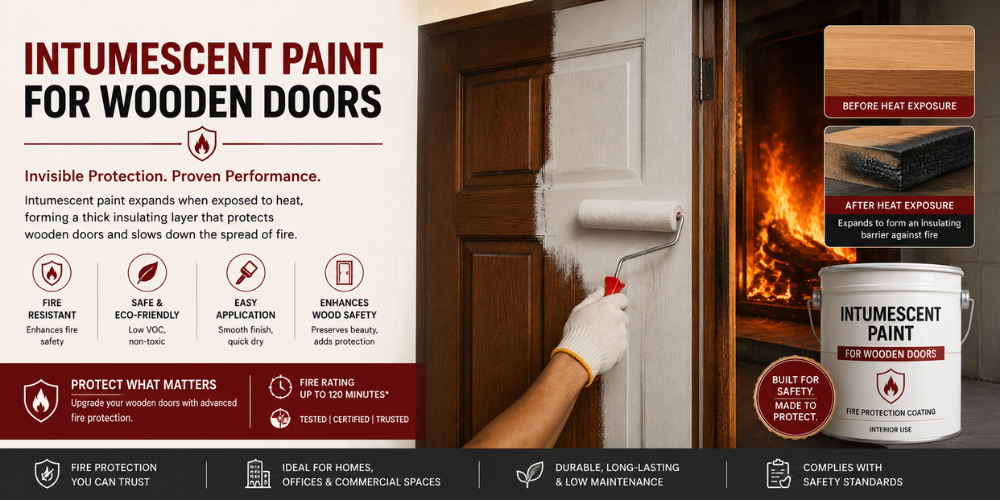
Intumescent paint for wooden doors is a specialized coating designed to react when exposed to elevated temperatures. Depending on the formulation, the coating can expand and form a protective char layer.
This char can help:
- Reduce heat transfer
- Protect the underlying timber
- Delay thermal degradation
- Reduce flame exposure
- Support defined fire-performance characteristics
However, intumescent paint does not automatically make every wooden door a fire-rated door.
Fire-door performance depends on the complete doorset and its tested or assessed configuration. The British Woodworking Federation’s Fire Door Alliance explains that fire doors are tested as complete assemblies, including the door leaf, frame, essential hardware, and intumescent seals.
That distinction is extremely important when specifying an intumescent coating.
How Intumescent Paint Works
Under normal conditions, an intumescent coating forms a relatively thin protective film.
When exposed to high temperatures, chemical reactions within the coating can cause it to expand.
The expanded coating forms a carbonaceous char that acts as an insulating barrier.
The protective layer can help slow the movement of heat from the fire toward the timber substrate.
The effectiveness of this process depends on:
- Coating formulation
- Applied thickness
- Wood substrate
- Surface preparation
- Number of coats
- Curing
- Fire exposure
- Tested door configuration
Therefore, the coating must be applied according to the manufacturer’s documented system.
Why Wooden Doors Need Fire Protection
Timber doors can provide excellent architectural and functional properties, but wood is combustible.
In a fire, an untreated wooden door can contribute combustible material to the fire environment.
Fire-resisting timber doors are designed to limit the passage of fire and, where applicable, smoke for a defined period.
A properly specified coating system may contribute to the fire performance of a suitable timber door, but it should not be treated as a standalone solution.
The door construction itself remains critical.
Intumescent Paint vs Intumescent Door Seals
These are two different applications of intumescent technology.
Intumescent paint is a surface coating.
Intumescent seals are generally installed within or around the operating gaps of a fire doorset.
Intumescent seals expand when heated and can close gaps through which flames and hot gases could otherwise pass. The Architectural and Specialist Door Manufacturers Association explains that intumescent materials are used around operating gaps in timber fire doors to help maintain integrity during fire testing.
The two systems should not be confused.
Why Intumescent Seals Matter
A fire door has to move during normal operation, which means there are operating gaps around the door leaf.
During a fire, those gaps can become pathways for:
- Flames
- Hot gases
- Smoke
Intumescent seals can expand when heated and help close those gaps.
Guidance from ASDMA emphasizes following the door manufacturer’s specified seal type, dimensions, and location because changes can affect the fire performance of the doorset.
Complete Door Assembly
A fire door is not simply a slab of wood covered with fire-resistant paint.
A complete doorset can include:
- Door leaf
- Door frame
- Hinges
- Latches
- Locks
- Door closer
- Intumescent seals
- Glazing
- Smoke seals
- Fixings
- Supporting construction
Fire testing evaluates these elements in a defined configuration.
The BWF Fire Door Alliance states that fire-resisting doors are tested as complete installed assemblies and that changes to the construction can require additional testing.
Fire Door Testing
Fire doors may be tested under standards such as:
- BS 476 Part 22
- BS EN 1634-1
The appropriate standard depends on the project and jurisdiction.
BS EN 1634-1 covers fire-resistance testing for door and shutter assemblies.
Testing can evaluate the ability of the complete assembly to maintain defined fire performance.
Why Test Evidence Is Important
When purchasing intumescent paint for wooden doors, buyers should request documentation showing:
- Exact product
- Manufacturer
- Tested substrate
- Application thickness
- Number of coats
- Primer requirements
- Topcoat requirements
- Door construction
- Test standard
- Fire-performance result
- Application limitations
A generic statement that a coating is “fire resistant” is not enough to establish that a particular door will achieve a particular fire rating.
Intumescent Coating for Existing Wooden Doors
One potential application is upgrading existing timber doors.
However, this is an area where caution is essential.
An existing door may have:
- Unknown timber density
- Unknown core construction
- Existing paint
- Veneer
- Glazing
- Different dimensions
- Modified hardware
- Damaged components
Applying an intumescent coating does not automatically turn such a door into a certified fire door.
The existing construction must be suitable for the tested or assessed upgrade method.
Door Thickness
Door thickness can influence fire performance.
A particular tested coating system may specify:
- Minimum door thickness
- Maximum door thickness
- Specific timber components
- Specific panel construction
- Specific core material
The actual door should be compared with the tested configuration.
Wooden Door Types
Wooden doors can be constructed in many ways.
Examples include:
- Solid timber doors
- Timber-core doors
- Veneered doors
- Panel doors
- Flush doors
- Engineered timber doors
- Glazed timber doors
A coating tested on one construction should not automatically be assumed to work on another.
Panelled Wooden Doors
Panelled doors have rails, stiles, mullions, and panels.
These components can have different thicknesses and construction details.
Fire-performance evidence may specify particular dimensions and panel arrangements.
The BWF technical guidance emphasizes that material type, density, thickness, and panel construction can form part of the permitted door configuration.
Veneered Wooden Doors
Veneer is often used to create a natural timber appearance.
If a fire-protection coating is applied over veneer, the coating system should be specifically compatible with the veneer and underlying door construction.
Existing finishes may also affect adhesion.
Glazed Wooden Doors
Glazed timber doors require additional consideration.
The glass, glazing system, beads, seals, and surrounding timber construction can all influence fire performance.
Intumescent glazing materials may be part of the tested system.
Guidance from the Intumescent Fire Seals Association specifically addresses the role of intumescent glazing seals in timber doors and screens.
Clear Intumescent Coating
A clear coating can be useful where the natural appearance of timber needs to remain visible.
Potential applications include:
- Architectural timber doors
- Hotel interiors
- Office interiors
- Restaurant doors
- Decorative timber doors
- Heritage-style interiors
However, the coating’s clear appearance does not determine its fire performance.
The product must have appropriate evidence for the intended application.
Coloured Intumescent Coating
Pigmented coatings can provide both fire protection and a decorative finish.
Available finishes depend on the product and may include:
- White
- Black
- Grey
- Custom colours
- Matt finishes
- Satin finishes
Compatibility between the intumescent basecoat and decorative topcoat must be confirmed.
Topcoats
Some intumescent systems require a compatible topcoat.
The topcoat can provide:
- Colour
- Appearance
- Surface protection
- Additional durability
However, not every decorative paint is automatically compatible.
If the intumescent layer contributes to fire performance, changing the finish without approval can affect the tested system.
The BWF’s technical guidance notes that where an intumescent paint contributes to fire resistance, the tested paint system should not simply be changed.
Primer Requirements
Some wooden doors may require a primer before the intumescent coating.
Primer selection can influence:
- Adhesion
- Surface uniformity
- Compatibility
- Appearance
- System performance
The manufacturer’s complete coating system should be followed.
Surface Preparation
Before applying intumescent paint for wooden doors, the surface should be prepared according to the product instructions.
Preparation may include:
- Cleaning
- Light sanding
- Removing loose paint
- Removing dust
- Repairing damaged areas
- Checking moisture
- Confirming substrate compatibility
Existing coatings should not be assumed to be compatible.
Moisture in Timber
Wood moisture can influence coating application.
Excessively damp timber may cause:
- Poor adhesion
- Slow drying
- Uneven finish
- Curing problems
The coating manufacturer may specify an acceptable moisture range.
Coating Thickness
The required coating thickness is a critical parameter.
The manufacturer may specify dry film thickness based on the required performance.
If insufficient material is applied, the coating may not reproduce the tested system.
Too much coating can also cause:
- Cracking
- Poor curing
- Surface defects
- Extended drying
- Adhesion issues
Professional projects should use appropriate thickness-control procedures.
Number of Coats
The system may require several coats.
For example, a specification could involve:
- Primer
- Intumescent basecoat
- Additional intumescent coat
- Compatible topcoat
The exact system varies by product.
Installers should never reduce the number of coats simply to reduce material consumption.
Drying Time
Each coat may require a specified drying period.
Drying can be influenced by:
- Temperature
- Humidity
- Ventilation
- Coating thickness
- Application method
The manufacturer’s technical data should be followed.
Recoating
The interval between coats is also important.
Applying the next coat too soon can interfere with drying.
Waiting too long may require additional preparation.
The product instructions should define the correct recoat procedure.
Application Methods
Depending on the product, intumescent paint for wooden doors may be applied by:
- Brush
- Roller
- Spray
Brush application can be useful for:
- Door edges
- Profiles
- Beads
- Detailed timberwork
Spray application can provide an even finish over larger areas when properly controlled.
Professional Application
For fire-door applications, professional installation is strongly preferable.
Installers should understand:
- Product requirements
- Door construction
- Application thickness
- Seal requirements
- Hardware limitations
- Drying conditions
- Inspection procedures
The goal is to reproduce the tested or approved configuration as closely as required.
Fire-Rated Door vs Fire-Retardant Paint
These terms should not be treated as interchangeable.
A fire-rated doorset has been tested or assessed to achieve a defined performance.
A fire-retardant coating is a material used to improve the fire performance of a substrate under defined conditions.
Applying a coating to an ordinary door does not automatically create a certified fire-rated doorset.
30-Minute Fire Doors
Some timber fire doors are designed to provide approximately 30 minutes of fire resistance under applicable test conditions.
The actual rating depends on the complete doorset and relevant classification.
Indian Standard IS 3614:2021 guidance, for example, includes specific provisions concerning intumescent paints and timber-based fire-resisting doorsets, including limitations on their use and the importance of appropriate full-scale test data.
60-Minute Fire Doors
A 60-minute fire door requires a suitable tested or assessed doorset.
It should not be assumed that simply doubling coating thickness will turn a 30-minute system into a 60-minute system.
The entire construction must support the required performance.
90- and 120-Minute Doors
Higher fire-resistance requirements can require substantially different door construction.
Intumescent paint alone should not be assumed to provide a 90- or 120-minute rating.
Project teams should use a doorset with appropriate supporting evidence.
Smoke Protection
Fire doors may also need to limit smoke spread.
Smoke control is a separate performance consideration from fire resistance.
The UK government guidance on fire-resisting doors explains that intumescent strips help protect the gap against fire, while smoke seals address smoke movement at ambient temperatures.
Door Hardware
Hardware can affect fire-door performance.
Relevant components include:
- Hinges
- Locks
- Latches
- Door closers
- Panic devices
- Handles
- Exit hardware
These components should be suitable for the tested doorset.
Changing hardware without checking compatibility can compromise the certification or assessment.
Door Frame Protection
The frame is an important part of the doorset.
A coating applied only to the door leaf does not automatically protect an unsuitable frame.
The frame material, dimensions, seals, fixings, and surrounding construction may all be part of the tested system.
Door Gaps
Operating gaps around the door leaf are important.
Fire-door guidance emphasizes maintaining appropriate gaps and using the specified intumescent seals.
The ASDMA guidance states that the supporting evidence should be followed for the gap between the door leaf and frame and for seal type and placement.
Installation Inspection
After application, inspection should verify:
- Correct product
- Correct batch
- Correct primer
- Correct coating thickness
- Uniform coverage
- Correct topcoat
- Proper drying
- No cracking
- No peeling
- Correct seals
- Correct hardware
Documentation should be maintained for future inspection.
Maintenance
A fire door requires ongoing maintenance.
Inspection can identify:
- Damaged coating
- Peeling
- Cracks
- Worn seals
- Damaged hinges
- Loose hardware
- Excessive gaps
- Door closer problems
Maintenance should follow the door manufacturer’s and certification holder’s instructions.
Common Mistakes
Painting Over Intumescent Seals
Additional paint can affect seal performance depending on the product and application. IFSA maintains specific guidance on overpainting intumescent seals, showing that this should be treated as a technical issue rather than a cosmetic one.
Changing the Door Hardware
Unapproved hardware changes can affect the tested configuration.
Using an Unapproved Topcoat
The topcoat should be compatible with the intumescent system.
Applying the Wrong Thickness
The specified coating thickness should be measured.
Treating Every Wooden Door the Same
Door construction varies considerably.
Why Gopalfiresafety?
Gopalfiresafety provides fire safety products and solutions for industrial and commercial requirements. Buyers researching intumescent paint for wooden doors can visit Gopalfiresafety for information about the company’s fire protection offerings.
Before selecting a coating for a fire-door application, project teams should verify the exact product documentation, test evidence, application procedure, door construction, and applicable local requirements.
Choosing the right intumescent paint for wooden doors requires careful attention to the complete doorset, applicable fire standards, coating specifications, application quality, and long-term maintenance. An intumescent coating can provide valuable protection to suitable timber surfaces, but its performance depends on the exact product and tested configuration. For fire safety products and solutions, you can explore Gopalfiresafety. Gopalfiresafety also shares fire safety information and product updates through Instagram.
Choosing the Right Intumescent Paint
Before purchasing an intumescent coating, identify the exact application.
Consider:
- Door construction
- Timber species
- Door thickness
- Existing finish
- Required fire rating
- Interior or exterior location
- Required coating thickness
- Primer requirements
- Topcoat requirements
- Intumescent seal requirements
- Hardware configuration
- Applicable test standard
A product that works for one timber doorset should not automatically be assumed to work for another.
Fire Door Certification
A fire door is a tested system rather than simply a piece of timber coated with fire-resistant material.
The complete system may include:
- Door leaf
- Frame
- Hinges
- Latch
- Lock
- Door closer
- Intumescent seals
- Glazing
- Fixings
- Coating system
Changing any of these components can potentially affect the tested configuration.
This is why the manufacturer’s installation instructions and certification documents should be followed closely.
Selecting Paint for New Wooden Doors
New doors provide an opportunity to specify the complete fire-protection system from the beginning.
Before manufacturing or finishing the door, the project team should confirm:
- Door construction
- Required fire rating
- Coating system
- Approved primer
- Required film thickness
- Compatible topcoat
- Hardware
- Intumescent seals
This approach is generally preferable to attempting to upgrade an unsuitable door after installation.
Existing Wooden Doors
Existing doors require additional investigation.
Before applying an intumescent system, check:
- Door construction
- Timber condition
- Existing coating
- Door thickness
- Frame
- Hardware
- Seals
- Glazing
- Previous modifications
If the door’s construction cannot be verified, its fire performance should not be assumed based only on the application of a coating.
Can Intumescent Paint Upgrade an Existing Door?
Sometimes a tested or assessed coating system may be permitted for a particular existing door construction.
However, this depends entirely on the available evidence.
A general-purpose intumescent coating should not be assumed to upgrade an ordinary wooden door to a particular fire rating.
The product manufacturer or certification body should provide evidence for the intended upgrade.
Fire Rating Selection
Fire ratings are expressed according to the applicable test and classification system.
Common project requirements can include:
- 30 minutes
- 60 minutes
- 90 minutes
- 120 minutes
The required rating should be established by the building’s fire strategy and applicable regulations.
Increasing coating thickness alone does not automatically increase the fire rating.
Fire Door Frame
The frame is part of the doorset.
Important considerations include:
- Frame material
- Frame dimensions
- Fixing method
- Frame-to-wall connection
- Intumescent seals
- Gap between leaf and frame
A correctly coated door leaf installed into an unsuitable frame may not provide the required fire performance.
Intumescent Seals
Intumescent seals are usually installed around the door’s operating gaps.
When exposed to heat, they expand and help close the gaps between the door and frame.
The seal specification can include:
- Width
- Thickness
- Location
- Product type
- Number of seals
The specified seal should be used rather than an unapproved substitute.
Smoke Seals
Where smoke control is required, smoke seals may also form part of the doorset.
Smoke seals and intumescent seals perform different functions.
Smoke seals can help restrict smoke movement, while intumescent materials expand under heat to help close fire-exposed gaps.
Door Hardware
Hardware should be compatible with the fire-door system.
Examples include:
- Hinges
- Locks
- Latches
- Closers
- Panic devices
- Exit devices
- Handles
Hardware changes should be checked against the door’s certification or approved specification.
Door Glazing
Glazed fire doors require particular care.
The complete glazing system can include:
- Fire-resistant glass
- Glazing beads
- Intumescent glazing materials
- Setting blocks
- Sealants
- Fixings
Ordinary glass should not be substituted for fire-rated glazing in a certified fire doorset.
Application Conditions
The coating manufacturer may specify application conditions such as:
- Minimum temperature
- Maximum humidity
- Wood moisture
- Ventilation
- Drying conditions
These requirements should be checked before starting the application.
Surface Cleaning
Before coating, the wooden surface should be clean.
Remove:
- Dust
- Dirt
- Grease
- Oil
- Loose paint
- Contaminants
A clean surface improves the opportunity for proper adhesion.
Sanding
Sanding may be required to create a suitable surface.
The exact sanding procedure depends on:
- Existing coating
- Timber type
- Product requirements
- Surface condition
Excessive sanding can alter the substrate and should be avoided where it affects the approved door construction.
Primer Application
If a primer is specified, use the manufacturer’s compatible primer.
An incompatible primer can affect:
- Adhesion
- Drying
- Appearance
- Coating performance
The complete coating system should be treated as a system rather than selecting individual products independently.
Intumescent Basecoat
The basecoat provides the primary intumescent function.
Application should follow the specified:
- Film thickness
- Number of coats
- Recoat interval
- Application method
Each coat should be allowed to dry properly before the next coat is applied.
Topcoat Application
A compatible topcoat may be required to provide:
- Colour
- Appearance
- Surface protection
- Additional durability
Not every decorative paint is suitable over an intumescent basecoat.
Only the specified compatible topcoat should be used where the coating system relies on a particular combination.
Measuring Coating Thickness
Thickness should be controlled throughout application.
Depending on the product, measurement can involve wet film thickness or dry film thickness.
Inspection should confirm that the required thickness has been achieved consistently.
This is especially important where the coating contributes to the tested fire performance.
Avoiding Excessive Coating
More coating is not automatically better.
Excessive material can create:
- Cracking
- Poor drying
- Uneven finish
- Adhesion problems
- Longer curing periods
The specified coating thickness should be followed.
Drying and Curing
The coating needs adequate time to dry and cure.
Factors include:
- Temperature
- Humidity
- Ventilation
- Film thickness
- Application method
The door should not be placed into demanding service before the coating system has properly cured.
Application by Brush
Brush application can be useful for smaller doors and detailed areas.
Advantages can include:
- Good control
- Easy access to edges
- Suitable for small-scale work
However, brush marks or uneven film thickness may occur if the application is poorly controlled.
Application by Roller
Rollers can provide efficient coverage on larger flat surfaces.
The correct roller type should be selected according to the coating manufacturer’s instructions.
Spray Application
Spray application can provide a consistent finish when performed correctly.
It may be suitable for:
- Large production facilities
- Door manufacturing
- Multiple-door projects
- Controlled finishing environments
Operators need suitable equipment and training.
Quality Inspection
After application, inspect the door for:
- Uniform coverage
- Correct thickness
- Smooth finish
- Cracking
- Pinholes
- Peeling
- Damage
- Correct seals
- Correct hardware
Documentation should be maintained for project records.
Fire Door Installation
Correct installation is just as important as the coating.
The installer should ensure:
- Correct frame
- Correct fixing
- Correct gaps
- Correct seals
- Correct hinges
- Correct hardware
- Correct closer
- Correct wall construction
A properly coated door can still fail to provide the intended performance if it is incorrectly installed.
Door Gaps
Excessive gaps can compromise the effectiveness of the fire doorset.
Gaps should be checked against the manufacturer’s installation requirements or supporting certification.
The correct gap can vary depending on the door system.
Door Closer
The door closer should ensure that the door closes correctly.
A fire door that remains open cannot perform its intended compartmentation function.
The closer should be suitable for the door weight, size, and certified configuration.
Maintenance Inspection
Fire doors should be inspected regularly.
Check for:
- Damaged door leaf
- Cracked coating
- Peeling
- Damaged seals
- Missing hardware
- Loose hinges
- Damaged closer
- Excessive gaps
- Damaged frame
The inspection frequency should be determined by the building’s fire safety management system.
Repairing Coating Damage
Damage may occur due to:
- Impact
- Cleaning
- Renovation
- Furniture movement
- Hardware replacement
- General wear
Repairs should follow the manufacturer’s approved procedure.
A simple application of ordinary paint over a damaged intumescent layer may not restore the tested system.
Repainting Fire Doors
Repainting should be approached carefully.
A new decorative layer may affect the intumescent system.
Before repainting, confirm:
- Compatible product
- Maximum coating thickness
- Primer requirements
- Topcoat requirements
- Certification limitations
Cleaning
Cleaning products can affect some coating systems.
Avoid aggressive chemicals unless they are confirmed as compatible.
Use the manufacturer’s recommended cleaning procedure.
Environmental Exposure
The intended environment should be considered throughout the door’s service life.
Potential factors include:
- Humidity
- Temperature
- UV exposure
- Water
- Cleaning chemicals
- Abrasion
Interior and exterior products may have very different durability characteristics.
Exterior Timber Doors
Exterior wooden doors face weather exposure.
Rain and UV radiation can affect coatings over time.
If an exterior application is required, the product should have documented exterior suitability and durability information.
Interior Timber Doors
Interior doors generally experience less severe weather exposure but may experience:
- Frequent cleaning
- Physical contact
- Temperature changes
- Humidity
- Abrasion
The coating system should match the expected service environment.
Heritage Wooden Doors
Historic timber doors require special attention.
Potential concerns include:
- Preserving original materials
- Maintaining appearance
- Avoiding irreversible damage
- Maintaining historic details
- Achieving appropriate fire performance
Specialist conservation and fire professionals should be consulted where required.
Commercial Wooden Doors
Commercial facilities may contain large numbers of timber doors.
Examples include:
- Hotels
- Offices
- Schools
- Hospitals
- Retail buildings
- Restaurants
A consistent specification can simplify procurement and maintenance.
Industrial Wooden Doors
Industrial facilities may have timber doors in:
- Offices
- Control rooms
- Storage areas
- Administration buildings
- Service areas
Environmental conditions should be evaluated before selecting the coating.
Documentation and Traceability
For large projects, retain records of:
- Product name
- Batch number
- Door identification
- Application date
- Coating thickness
- Installer
- Inspection results
- Repair history
This can make future maintenance easier.
Choosing a Supplier
A reliable supplier should be able to provide technical information rather than relying only on marketing claims.
Ask for:
- Technical data sheet
- Safety data sheet
- Fire test evidence
- Application instructions
- Compatible primer
- Compatible topcoat
- Thickness requirements
- Drying times
- Maintenance information
Why Choose Gopalfiresafety?
Gopalfiresafety provides fire safety products and solutions for industrial and commercial applications. Buyers researching intumescent paint for wooden doors can visit Gopalfiresafety to explore the company’s fire protection solutions.
Before selecting any coating for a fire-door application, the exact product specifications, fire-test evidence, door construction, application requirements, and applicable local regulations should be verified.
Gopalfiresafety also shares fire safety information and product updates through Instagram.
Frequently Asked Questions
What is the purpose of intumescent paint on wooden doors?
It is designed to react to heat and form a protective char layer that can help protect the timber surface under defined fire-test conditions.
Can I apply intumescent paint to any wooden door?
No. The coating must be suitable for the specific door construction and application. A coating alone does not automatically make an ordinary door a certified fire door.
Does thicker intumescent paint provide a higher fire rating?
Not necessarily. Fire performance depends on the tested coating system and complete doorset. Simply adding more paint does not automatically create a higher fire rating.
Can I use normal paint over an intumescent coating?
Only if the decorative paint is confirmed as compatible with the intumescent system.
Can I paint over intumescent door seals?
This should only be done according to the seal manufacturer’s or doorset manufacturer’s guidance.
Can an intumescent coating replace intumescent seals?
No. The coating and seals have different functions within a fire-door system.
Can I use the same coating for interior and exterior wooden doors?
Not necessarily. Environmental and durability requirements differ, so product suitability must be confirmed.
How do I know how much coating to apply?
Follow the manufacturer’s specified wet or dry film thickness and application procedure.
Can I upgrade an existing wooden door with intumescent paint?
Only where the product’s supporting evidence permits that specific door construction and upgrade method.
Is intumescent paint a substitute for a complete fire-rated doorset?
No. A fire-rated doorset must be evaluated as a complete assembly.
Final Conclusion
Intumescent paint for wooden doors can provide an important layer of passive fire protection when it is part of a properly specified and tested timber doorset. The coating can react to heat and form an insulating char layer, helping protect the underlying timber under defined fire conditions.
However, the coating should never be considered independently from the complete door assembly. The door leaf, frame, seals, hinges, locks, closer, glazing, fixings, surrounding construction, and coating system can all influence fire performance.
Before selecting a coating, buyers should verify the exact product, test evidence, substrate, coating thickness, primer, topcoat, application method, and environmental suitability. For existing doors, the construction and condition should also be assessed before any upgrade is attempted.
Proper application is equally important. Surface preparation, moisture condition, coating thickness, drying time, curing, and inspection should all follow the manufacturer’s requirements.
Maintenance should continue throughout the door’s service life. Damaged coatings, worn seals, defective hardware, excessive gaps, and other problems should be identified and corrected using approved procedures.
For commercial, industrial, hospitality, institutional, and architectural projects, Gopalfiresafety provides fire safety products and solutions. Visit Gopalfiresafety for further information, and follow Gopalfiresafety on Instagram for fire safety information and product updates.
The key principle is simple: do not select an intumescent coating based only on the word “fire resistant.” Select a documented system that matches the actual wooden door, required fire performance, application conditions, and applicable standards.