Fire Vehicle with Water Pump System | Gopal fire& safety
A Fire Vehicle with Water Pump System is one of the most important assets used in modern firefighting operations. These vehicles are relied upon in industrial facilities, commercial complexes, large buildings, and public infrastructure to deliver fast, controlled, and powerful suppression during emergencies. They carry water, handle pressurization, manage foam-mixing systems, and support rescue operations in areas where fixed firefighting installations may not be sufficient. Gopalfire&safety helps organizations choose, operate, and maintain these vehicles for high-risk environments, and more information is available on https://gopalfireandsafety.com. You can also follow fire safety updates and awareness posts on our Instagram profile for regular insights.
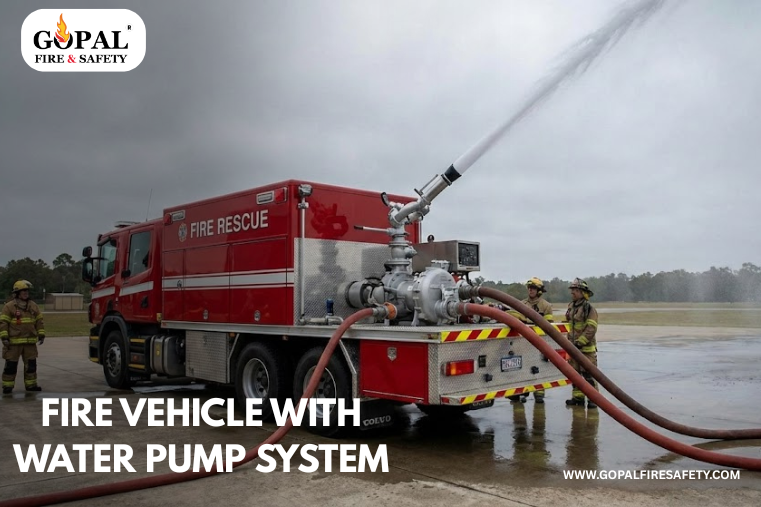
A Fire Vehicle with Water Pump System works by collecting water either from an onboard tank or through suction from external sources such as lakes, hydrants, reservoirs, or underground tanks. Once the pump is activated, water is discharged through hoses, branch pipes, or roof-mounted monitors. This allows firefighters to tackle flames from a safe distance and control high-temperature zones quickly. Because these vehicles can move freely, they play a crucial role in emergencies where fixed hydrant systems are unavailable or damaged.
Industries often depend on a Fire Vehicle with Water Pump System due to its combination of mobility and high-pressure performance. Chemical plants, oil terminals, warehouses, logistics parks, and factories handle flammable materials that require rapid and consistent firefighting response. These vehicles can be configured with foam tanks, allowing them to manage oil-based or chemical-based fire hazards more effectively. Their versatility makes them a core component in industrial fire safety planning.
Different variations exist depending on operational needs. Compact models are used in congested urban spaces where maneuverability is essential. Larger units are built for industrial use and may include multiple hose lines, extended storage compartments, foam systems, and hydraulic tools. Many organizations choose a Fire Vehicle with Water Pump System that doubles as a rescue vehicle by adding breathing apparatus, ladders, ropes, cutters, and first-aid equipment. This makes the vehicle suitable for combined suppression and rescue missions.
Selecting the right model requires evaluating water capacity, pump strength, terrain, and the level of fire load present in the facility. A Fire Vehicle with Water Pump System intended for refineries or storage yards must deliver higher flow rates and maintain pressure for longer durations. Commercial buildings and residential communities require more compact units that can reach tight spaces quickly. Gopalfire&safety conducts on-site safety assessments to help clients determine the most suitable configuration.
The pump is the central component responsible for steady discharge performance. Most units use centrifugal pumps because they provide continuous flow under heavy pressure. Advanced models include digital controls, pressure gauges, remote monitoring features, and automated priming systems. These improvements enhance accuracy, reduce operational errors, and help firefighters maintain stable pressure in high-risk conditions. This makes the Fire Vehicle with Water Pump System more efficient and easier to manage.
Hoses and hydraulic systems connected to the pump allow water or foam to be delivered precisely where needed. Some vehicles are equipped with remote-controlled roof monitors that allow firefighters to release large volumes of water from a safe distance. This capability is especially important in industrial fires where heat and flame intensity make close access dangerous. The durability of these components ensures that the Fire Vehicle with Water Pump System can withstand extreme working conditions.
Water tank size varies greatly among models. Smaller vehicles may carry a few hundred liters, while industrial variants may hold several thousand liters. Foam tanks can also be added for hazardous sites. These tanks are designed using reinforced, corrosion-resistant materials to ensure durability. Gopalfire&safety provides guidance on choosing the right capacity based on building layout and risk levels.
Proper training ensures safe and efficient operation. Firefighters must understand pump control, hose management, nozzle selection, and emergency shutdown techniques. Many emergencies escalate simply because the equipment was not used correctly. Training helps operators handle the Fire Vehicle with Water Pump System confidently and make faster decisions during critical moments.
Routine maintenance is essential to ensure the vehicle performs reliably over time. Inspections cover pumps, hoses, valves, electrical wiring, engines, lubrication points, foam mechanisms, and tank hygiene. Regular servicing helps identify early wear, prevent leaks, and avoid equipment failures during emergencies. Gopalfire&safety provides annual maintenance support to keep each Fire Vehicle with Water Pump System compliant with safety standards.
Different sectors rely on different configurations. Municipal fire departments use multi-purpose fire engines that can respond to a variety of emergency calls. Industrial facilities often require foam tenders or high-capacity water tankers that manage large fires. Airports use rapid intervention vehicles with specialized pumps designed for aviation-grade emergencies. The adaptability of the Fire Vehicle with Water Pump System makes it suitable for nearly any environment.
Technological advancements have improved performance significantly. New models include smart control systems, GPS navigation, automated safety checks, and digital pressure monitoring. These features minimize human error and accelerate decision-making during high-risk operations. Gopalfire&safety supplies upgraded versions of the Fire Vehicle with Water Pump System that meet international firefighting standards.
Another important benefit is the ability to draw water from natural bodies when tank reserves run low. This capability ensures continuous firefighting even in remote areas. It is especially useful for rural zones, forest fires, and industrial surroundings without reliable hydrant access.
Many industries use foam-supported units to suppress oil, fuel, or chemical fires. Foam helps cool surfaces, stop vapor release, and prevent re-ignition. For businesses handling hazardous substances, a foam-compatible Fire Vehicle with Water Pump System is essential for controlling high-risk incidents.
Structural design plays a major role in vehicle durability. The chassis is strengthened to handle weight and movement, while the cabin provides clear visibility and ergonomic control. Storage compartments organize hoses, tools, and protective gear efficiently. Engines with high torque allow rapid acceleration during emergencies, helping the vehicle reach the fire scene without delay.
A Fire Vehicle with Water Pump System is also critical for rescue operations. Many units come equipped with lifesaving gear used in traffic accidents, confined space rescues, or building evacuations. Smoke ventilation fans, lighting tools, medical kits, and cutting equipment help responders manage multiple types of emergencies.
Environmental durability ensures that the vehicle functions under extreme heat, heavy dust, moisture, and chemical exposure. Manufacturers use corrosion-resistant metal, sealed wiring, and protected components to maintain reliability. Modern designs also reduce water wastage, optimize foam usage, and improve fuel efficiency.
Communication tools are essential. Many vehicles include radios, PA systems, and digital transmitters to coordinate firefighting plans. These tools help maintain order, direct evacuation, and support teamwork during large-scale emergencies.
Newer technologies include AI-based sensors and cloud-connected diagnostics that detect performance issues early. This ensures that the Fire Vehicle with Water Pump System remains in peak condition and ready for deployment at any moment.
Industrial facilities often maintain their own vehicles to avoid delays during critical incidents. Having an on-site Fire Vehicle with Water Pump System reduces risk, improves response time, and minimizes potential losses. Many businesses integrate these units into their emergency preparedness strategies.
Certification is necessary for compliance. Gopalfire&safety supplies fully certified models that meet national and international guidelines, ensuring the Fire Vehicle with Water Pump System is tested and approved for real-world emergencies.
As buildings grow taller and industries expand, this equipment becomes even more essential. The presence of a Fire Vehicle with Water Pump System builds confidence among workers and residents, knowing a strong response mechanism is available.
Organizations investing in these vehicles demonstrate strong commitment to fire safety and long-term risk control. For complete details, model options, and maintenance plans, visit https://gopalfireandsafety.com.