Understanding Stanvac Fire Protection Solutions and Industrial Applications
fire safety is essential for protecting employees, electrical infrastructure, production equipment and business operations. Manufacturing plants, power stations, refineries, pharmaceutical facilities, steel plants and data centres contain electrical panels, cable networks, machinery and building penetrations that can become part of a fire incident. Businesses researching industrial fire protection can explore the solutions and technical information available from Gopalfiresafety. Gopalfiresafety shares fire-safety information and product-related updates, and readers can also follow the company on Instagram for further educational content and industry news. One manufacturer in this specialist field is Stanvac Chemicals India Ltd., whose website presents a range of passive fire-protection and electrical fire-defence solutions.
Stanvac Fire Protection Solutions is a useful focus keyword for businesses researching industrial fire protection, cable fire protection, electrical panel protection and firestop systems. Stanvac’s published portfolio includes systems designed for panels, cables, cable joints and openings in walls or floors. These solutions address different parts of an industrial fire-risk environment rather than relying on a single product.
Understanding how these systems work is important before selecting products for a project. Buyers should identify the fire risk, the equipment requiring protection, the applicable test requirements and the installation conditions. They should also verify the exact product specifications and supporting documentation before making procurement decisions.
This guide explains the main areas of industrial passive fire protection, Stanvac’s published product categories, cable and panel protection, firestop systems, industrial applications and the technical considerations buyers should understand.
1. What Is Industrial Fire Protection?
Industrial fire protection refers to the systems, materials and procedures used to reduce fire risks and protect people, equipment, buildings and operations in industrial environments.
Industrial facilities can contain several potential ignition sources, including electrical faults, overheated machinery, hot surfaces, combustible materials and process-related hazards.
A fire may begin in one area and spread through connected equipment, cable routes, openings or building components. For this reason, fire protection should consider how fire can start, how it can spread and which assets must remain protected.
Industrial fire protection generally includes two broad approaches.
Active fire protection
Active fire protection systems require an action or activation to control or respond to a fire.
Examples include:
- Fire alarm systems.
- Smoke detection systems.
- Automatic sprinkler systems.
- Water-based suppression.
- Foam suppression systems.
- Portable fire extinguishers.
- Specialised gas suppression systems.
These systems detect, alert or help control fire incidents.
Passive fire protection
Passive fire protection uses materials and building components designed to resist fire spread or maintain compartmentation without requiring an active triggering action.
Examples include:
- Firestop sealants.
- Firestop mortars.
- Fire-resistant barriers.
- Cable fire-protection coatings.
- Fire-resistant enclosures.
- Fire-rated penetration systems.
- Protective construction assemblies.
Passive fire protection is especially relevant where cables, pipes and other services pass through fire-rated walls or floors.
Stanvac’s published fire-protection portfolio focuses on industrial passive fire protection and electrical fire defence. The company’s website describes solutions for electrical panels, cables, joints and openings.
2. Understanding Stanvac Fire Protection Solutions
Stanvac Chemicals India Ltd. presents its fire-protection portfolio for industrial environments where electrical equipment, cable systems and building openings require attention.
The company’s published website identifies four available product-system groups:
- Industrial anti-rodent and gap-sealing systems.
- PCO and EC 43 electrical fire-defence solutions.
- 931B Strippex intumescent cable and joint protection.
- FM 71 and FB 250 firestop systems.
These systems address different types of fire-related risks.
For example, a cable coating is intended for a different application from a firestop material used around a wall or floor penetration. Likewise, a panel-protection product is not interchangeable with a cable-survival coating.
Buyers should therefore begin by identifying the location and nature of the risk.
A useful assessment should consider:
- Electrical panel and switchgear locations.
- Cable trays and cable galleries.
- Cable joints and connections.
- Cable entries into enclosures.
- Wall and floor penetrations.
- Fire-rated compartment boundaries.
- Machinery and production equipment.
- Critical electrical circuits.
- Maintenance and inspection access.
The correct system depends on the project design, material compatibility, test evidence and installation requirements.
For official product information, refer to Stanvac’s fire-protection solutions.
3. Why Electrical Fire Protection Matters in Industrial Plants
Electrical systems are essential to industrial production. They supply power to machinery, control systems, lighting, ventilation, pumps, conveyors and safety-related equipment.
An electrical fault can lead to overheating, arcing, insulation damage or ignition of nearby combustible materials.
Once a fire begins, connected cables and openings may provide paths for fire and smoke to move beyond the original location.
Industrial electrical fire protection should therefore consider more than the electrical panel itself.
Electrical panels
Electrical panels contain components such as circuit breakers, contactors, busbars, wiring and control devices.
Loose connections, insulation failure, overheating and electrical faults can create fire risks.
Suitable protection may involve sealing appropriate openings, using compatible protective coatings or installing specified fire barriers.
Cable networks
Cables connect electrical panels, machinery, control rooms and other parts of a facility.
A cable fire can affect connected equipment and may spread along cable routes depending on the materials and installation conditions.
Cable protection should be selected according to the cable type, route, required circuit function and relevant test evidence.
Cable joints and connections
Cable joints and terminations are important parts of electrical installations.
Incorrect installation, damaged insulation or unsuitable connections can create electrical and thermal problems.
Protective systems should be compatible with the cable and joint construction.
Wall and floor openings
Cable and pipe penetrations can create openings through fire-rated walls and floors.
If these openings are not properly sealed, they may compromise fire compartmentation.
A suitable firestop system should be selected for the specific penetration configuration.
4. Stanvac Cable Fire Protection and EC 43 Survival Grade
Cable fire protection is an important area of Stanvac’s published portfolio.
The company’s EC 43 Survival Grade is presented as a coating intended to help critical cables continue functioning during specified fire exposure conditions.
Stanvac publishes test information for an XLPE 4-core 70 mm² cable with an EC 43 coating thickness of 1.6 mm. Its website reports a circuit-survival result of 240 minutes under IEC 60331-21 test conditions.
The company also presents comparisons involving standard XLPE and FR-LS XLPE cables in its published test information.
These claims should be understood in the context of the specific cable construction, coating thickness, test method and test arrangement described by Stanvac.
They should not be interpreted as a guarantee that every cable, installation or electrical circuit will remain operational for four hours in every real fire.
Why cable survival matters
In certain industrial environments, some electrical circuits may need to continue operating during a fire event.
Examples may include:
- Emergency communication.
- Fire alarm circuits.
- Emergency lighting.
- Critical control systems.
- Selected process safety circuits.
- Essential monitoring systems.
The required circuit function and survival period should be defined by the project’s engineering and safety requirements.
What should buyers check?
Before specifying a cable fire-protection coating, ask:
- Which cable types are compatible?
- What coating thickness is required?
- Which test standard was used?
- What cable size and construction were tested?
- What was the test configuration?
- What was the reported circuit-survival result?
- Are there restrictions on installation?
- What inspection and maintenance procedures are required?
A test result for one cable configuration should not automatically be applied to another cable type or installation.
5. What Is Intumescent Cable Coating?
An intumescent coating is a protective material designed to expand when exposed to heat.
When activated by elevated temperatures, the coating may form an expanded insulating layer. Depending on the formulation and tested assembly, this layer can help reduce heat transfer to the protected material.
Intumescent coatings are used in different fire-protection applications, including certain structural and cable-protection systems.
In cable applications, the suitability of the coating depends on the cable construction, coating thickness, installation method and required electrical performance.
How does an intumescent coating work?
The exact chemical mechanism depends on the formulation. Many intumescent systems involve reactions that create an expanded char layer when exposed to heat.
The expanded layer can provide thermal insulation for a limited period under the conditions for which the system has been evaluated.
However, an intumescent coating should not be assumed to provide the same protection on every cable.
Applications
Depending on the product design and test evidence, cable coatings may be considered for:
- Industrial cable trays.
- Electrical cable routes.
- Cable galleries.
- Cable joints.
- Selected critical cable installations.
- Electrical service areas.
Stanvac’s published portfolio identifies EC 43 Survival Grade and 931B Strippex among its cable-related protection solutions. Buyers should review each product’s individual technical documentation because their intended applications are not necessarily identical.
6. Stanvac 931B Strippex: Cable and Joint Protection
Stanvac identifies 931B Strippex as an intumescent coating for cable and joint protection.
The company’s fire-protection information describes its application in situations involving cable joints, taped joints and damaged cable sheathing.
Cable joints and damaged insulation should always be assessed by qualified electrical personnel before any protective product is applied.
A coating is not a substitute for repairing an electrical fault or restoring the required cable insulation.
Why cable joints need attention
Cable joints connect sections of electrical cable and must maintain suitable electrical and mechanical performance.
Potential problems include:
- Incorrect jointing procedures.
- Damaged insulation.
- Moisture ingress.
- Poor sealing.
- Mechanical damage.
- Overheating.
- Unsuitable repair materials.
The correct repair and protection process depends on the cable type, voltage rating, installation and manufacturer’s instructions.
What to verify before application
Before selecting an intumescent cable or joint coating, confirm:
- Compatibility with the cable material.
- Compatibility with jointing components.
- Surface preparation requirements.
- Recommended application thickness.
- Drying or curing requirements.
- Electrical insulation considerations.
- Fire-test documentation.
- Maintenance requirements.
Do not apply a coating to an electrical cable or joint without checking its technical suitability and following the relevant installation procedure.
7. Electrical Panel Fire Protection
Electrical panels are central to industrial power distribution and control.
They may contain equipment that needs to be protected from internal electrical faults and external fire exposure.
Panel protection may involve several complementary measures.
Sealing panel openings
Cable entries, gland openings and conduit penetrations can create gaps in electrical enclosures.
A suitable firestop sealant or other specified sealing system may be used to close compatible openings.
The selected product should be appropriate for the opening size, substrate and required performance.
Protective panel coatings
Certain specialised coatings are designed for application to suitable panel surfaces or enclosures.
The product should be compatible with the substrate and evaluated for the intended exposure.
Protection of cable entries
Cable entries should be installed and sealed according to the panel design and applicable electrical requirements.
The sealing system must not interfere with electrical safety, cooling or maintenance access.
Stanvac’s published PCO electrical fire-defence information describes a system addressing panels, cables and openings. Its website identifies different products for sealing panel entries and protecting selected panel components.
The exact product application should be checked against Stanvac’s current technical documents.
8. What Is Passive Fire Protection?
Passive fire protection helps limit fire and smoke spread through building elements and service penetrations.
Unlike an active suppression system, passive protection is designed to remain in place and perform its intended function without requiring a detection or activation signal.
Common passive fire-protection components include:
- Firestop sealants.
- Firestop mortars.
- Fire-resistant boards.
- Mineral wool systems.
- Fire-resistant wraps.
- Intumescent coatings.
- Penetration seals.
- Fire-resistant construction assemblies.
A properly specified passive fire-protection system can help maintain compartmentation by sealing openings through walls and floors.
Why compartmentation matters
Buildings are often divided into fire compartments to help limit the movement of fire and smoke.
When cables, pipes and other services pass through these boundaries, the openings must be addressed using suitable systems.
An unsuitable or incomplete penetration seal may compromise the intended fire-resistance performance of the assembly.
This is why firestop selection should be based on the actual opening and service configuration rather than simply filling a gap with a general-purpose material.
9. Stanvac FM 71 and FB 250 Firestop Systems
Stanvac’s published fire-protection portfolio identifies FM 71 and FB 250 as firestop systems for sealing cable and pipe openings through walls and floors.
Firestop systems are designed to address penetrations that may otherwise allow fire and smoke to pass through a building compartment boundary.
The actual performance depends on the complete tested assembly.
This may include:
- Wall or floor construction.
- Opening dimensions.
- Cable or pipe type.
- Service arrangement.
- Firestop material.
- Installation thickness.
- Supporting components.
- Required fire-resistance period.
Why the complete assembly matters
A firestop material should not be evaluated only as an individual chemical product.
Its performance is connected to the installation configuration in which it has been tested.
For example, a system tested around a particular cable arrangement in a concrete wall should not automatically be assumed suitable for a different pipe penetration in a lightweight partition.
What buyers should check
Before selecting a firestop system, request documentation identifying:
- The exact product.
- The wall or floor construction.
- The penetration dimensions.
- The service type.
- The tested installation arrangement.
- The required fire-resistance rating.
- The installation instructions.
- Any limitations or exclusions.
For industrial facilities, the firestop design should be reviewed by the responsible fire-safety or engineering professional.
10. How to Select the Correct Industrial Fire-Protection System
The correct protection system depends on the specific hazard and the component that needs protection.
A useful starting point is to divide the facility into different protection zones.
Electrical panel zone
Identify panels, switchgear, control cabinets and cable entry points.
Determine whether the project needs opening seals, enclosure coatings or another specified protection system.
Cable route zone
Identify cable trays, cable galleries, tunnels and critical cable routes.
Confirm whether the requirement involves fire propagation control, circuit survival or another defined objective.
Cable joint zone
Identify joints, terminations and locations where cable sheathing may require assessment.
Any damaged electrical component should first be evaluated by qualified personnel.
Wall and floor penetration zone
Identify all cable and pipe openings through fire-rated building elements.
Select a tested firestop system matching the actual construction and penetration arrangement.
Equipment and machinery zone
Identify electrical equipment and machinery exposed to specific fire hazards.
Consider the manufacturer’s instructions, operating conditions and required protection level.
This assessment helps businesses avoid selecting products simply because their descriptions contain the words fire protection.
11. Industrial Applications of Stanvac’s Published Fire-Protection Portfolio
Stanvac’s website identifies a wide range of industrial sectors where its passive fire-protection solutions may be relevant.
These include:
- Thermal power plants.
- Steel plants.
- Cement plants.
- Refineries.
- Petrochemical facilities.
- Pharmaceutical units.
- Food and beverage plants.
- Textile manufacturing.
- Paper mills.
- Automobile manufacturing.
- Data centres.
- Airports.
- Hospitals.
- Commercial buildings.
The fire risks in these environments are not identical.
For example, a thermal power plant may contain extensive cable galleries, substations and control rooms. A pharmaceutical facility may have electrical rooms, process equipment and strict operational requirements. A data centre may need special attention to electrical distribution, critical circuits and service penetrations.
A site-specific assessment should determine which systems are suitable.
12. Key Takeaways from
Industrial fire protection requires a coordinated approach to electrical panels, cables, cable joints and building openings.
Stanvac’s published fire-protection portfolio includes cable-related coatings, electrical fire-defence systems and firestop solutions. Each product has its own intended application and technical requirements.
Buyers should verify product compatibility, test conditions, installation instructions and supporting documentation before specifying a system.
Stanvac Fire Protection Solutions should be understood as a portfolio of different protection systems rather than a single product that addresses every industrial fire risk.
In Part 2, we will cover testing and certification documentation, installation planning, maintenance, supplier evaluation, common purchasing mistakes, industry-specific considerations and frequently asked questions.
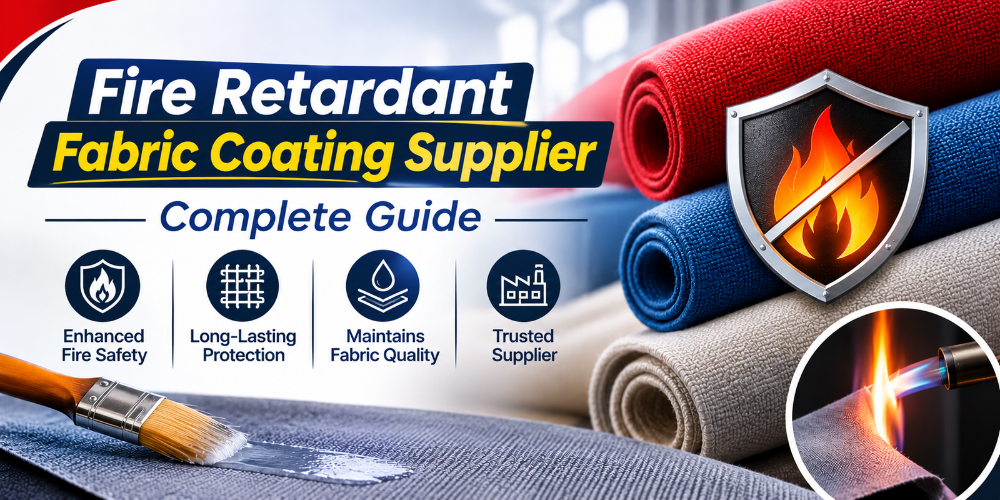
Fire Retardant Fabric Coating Supplier: Complete Guide to Fabric Fire Protection for Industrial and Commercial Applications
10. How Fire Retardant Fabric Coating Is Applied
The application process plays an important role in the performance of a fire retardant fabric coating. Even a technically suitable product may not deliver the expected results if it is applied incorrectly or used on an incompatible textile.
A professional Fire Retardant Fabric Coating Supplier should provide clear application instructions, including fabric compatibility, application quantity, drying conditions and recommended equipment.
The application process generally involves several stages.
Fabric Inspection
Before treatment, the fabric should be inspected to identify its fibre composition, construction, weight, existing finish and physical condition.
This inspection helps determine whether the selected coating is suitable for the material.
Important checks include:
- Fabric type and fibre composition.
- Fabric thickness and weight.
- Existing chemical treatments.
- Surface contamination.
- Colour and appearance.
- Intended application.
- Cleaning and maintenance requirements.
If the fabric has already received a chemical treatment, compatibility should be confirmed before applying another coating.
Cleaning and Surface Preparation
Fabric surfaces should be prepared according to the coating manufacturer’s instructions. Dust, oil, dirt and other contaminants may affect coating distribution or adhesion.
Some textile materials may require cleaning before treatment, while others may be damaged by unsuitable cleaning procedures.
The preparation method should therefore be selected according to the fabric and coating system.
Coating Application
Depending on the product formulation and textile application, fire retardant coatings may be applied using different methods.
Spray application: Spray equipment can distribute coating across fabric surfaces. Proper nozzle selection, spray distance and application control help achieve more uniform coverage.
Dip or immersion application: In this method, the fabric is immersed in a treatment solution. It may be suitable for certain textile processing applications where controlled absorption is required.
Padding application: Padding equipment is used in textile processing to apply a controlled quantity of treatment solution to fabric. This method can support consistent industrial processing when properly configured.
Brush application: Brush application may be suitable for small areas or specific repair and treatment applications where the manufacturer’s instructions permit it.
The selected application method should be supported by the product’s technical instructions and validated for the intended fabric.
Drying and Curing
After application, the treated fabric may need to undergo drying or curing.
The required conditions depend on the coating chemistry and the textile material. Temperature, airflow, humidity and processing time can influence the final finish.
Incorrect drying or curing may affect coating performance, fabric appearance or durability.
Always follow the manufacturer’s specified conditions rather than using a general drying procedure.
Final Inspection
Once treatment is complete, the fabric should be inspected for visible defects and application consistency.
Depending on the project requirements, checks may include:
- Uniformity of coating.
- Fabric appearance.
- Surface finish.
- Flexibility and texture.
- Treatment quantity.
- Drying or curing completion.
- Required fire performance testing.
A production record should identify the fabric batch, coating product, application procedure and relevant inspection results.
11. Important Fire Testing Standards for Treated Fabrics
Fire performance testing helps determine how a textile behaves under specified exposure conditions. Different standards measure different characteristics, so selecting the correct test method is essential.
A Fire Retardant Fabric Coating Supplier should be able to explain which test methods are relevant to the intended application and provide supporting documentation where available.
NFPA 701
NFPA 701 is a standard used to evaluate the flame propagation of textiles and films. It is commonly referenced for certain decorative fabrics, curtains and similar applications.
The applicable test method depends on the textile’s characteristics and intended use.
A fabric passing an NFPA 701 test should be understood in relation to the tested specimen and the specific test conditions. It does not automatically establish compliance with every building fire safety requirement.
BS 5867
BS 5867 is a British Standard associated with fabrics used for curtains, drapes and window blinds.
It includes performance requirements for fabrics intended for these applications.
Businesses specifying curtains or drapery materials should confirm which part and classification of the standard applies to their project.
EN 13773
EN 13773 provides a classification system for the burning behaviour of curtains and drapes.
It is relevant when evaluating textile materials intended for these applications under the applicable European requirements.
The classification should be supported by the appropriate test evidence.
ISO 6941
ISO 6941 describes a method for measuring the flame spread properties of vertically oriented textile fabrics.
It can help evaluate how flames propagate across a textile under defined laboratory conditions.
ISO 15025
ISO 15025 specifies methods for assessing the limited flame spread properties of clothing materials and related protective clothing assemblies.
It is particularly relevant to protective clothing applications rather than being a universal test for decorative textiles.
ASTM E84
ASTM E84 is a test method used to evaluate surface burning characteristics of building materials. It measures flame spread and smoke development under specified conditions.
It should not automatically be treated as a universal certification method for every fabric coating or textile product.
Choosing the Correct Test
The correct standard depends on the final use of the treated fabric.
For example, a curtain in a hotel, an acoustic fabric panel in an office and a protective industrial textile may have different testing requirements.
Before ordering a coating, businesses should identify:
- The final fabric application.
- The applicable local building and fire safety requirements.
- The relevant test method.
- The required performance classification.
- Whether testing must be conducted on the finished treated fabric.
- Whether the test report covers the exact fabric and treatment configuration.
A test result for one fabric construction should not automatically be applied to another.
12. Why Testing the Finished Treated Fabric Matters
Testing the coating in isolation may not provide enough information about how the complete textile will behave during fire exposure.
The fabric and coating work together as a treated material. Their interaction can influence the final performance.
For this reason, testing should represent the actual material and treatment process as closely as possible.
Fibre Composition
Cotton, polyester, nylon and blended textiles have different characteristics. A coating that works well on one fibre type may perform differently on another.
Coating Quantity
The amount of coating applied can influence the finished fabric’s performance, appearance and flexibility.
Too little material may result in inadequate treatment, while excessive application may affect fabric usability.
Fabric Construction
Fabric thickness, weave, density and surface structure can influence coating distribution and fire behaviour.
Processing Conditions
Application, drying and curing conditions may affect the final treatment.
Washing and Cleaning
Some treatments may lose effectiveness after washing or repeated cleaning. Where durability is required, testing should consider the relevant cleaning or ageing conditions.
The finished treated fabric should be tested by a competent laboratory using the standard specified for the application.
13. Quality Control in Fabric Fire Retardant Treatment
Quality control helps ensure that treated fabric meets the project specification and remains consistent across production batches.
A Fire Retardant Fabric Coating Supplier should support a documented quality process rather than relying only on general product claims.
Raw Material Verification
The coating product should be checked against its technical specifications before application.
Important details include:
- Product identification.
- Batch or lot number.
- Manufacturing and expiry information, where applicable.
- Storage conditions.
- Technical data sheet.
- Safety Data Sheet.
Fabric Batch Identification
The fabric being treated should also be identified. This is particularly important when multiple fibre types, colours or fabric weights are processed.
Application Monitoring
The application process should be monitored to maintain consistency.
Depending on the method, this may involve checking solution concentration, application quantity, coating distribution, equipment settings and processing conditions.
Drying and Curing Verification
The specified drying and curing process should be documented. Any variation should be evaluated before the treated fabric is approved for use.
Finished Fabric Inspection
Finished materials should be inspected for visible defects and compliance with the project specification.
Where required, representative samples should be sent for laboratory testing.
Documentation and Traceability
Maintaining complete records helps businesses trace the treatment process and investigate quality concerns.
Useful records include:
- Fabric identification.
- Coating batch details.
- Application date.
- Treatment method.
- Processing conditions.
- Inspection results.
- Test reports.
- Maintenance recommendations.
Good documentation is especially important for large projects involving multiple fabric batches or installation locations.
14. Durability and Maintenance of Fire Retardant Fabric Coatings
A fabric’s fire performance may change over time depending on how it is used, cleaned, stored and exposed to environmental conditions.
Not all fire retardant treatments have the same durability. Some are designed for specific processing conditions, while others may require periodic assessment or retreatment.
Before purchasing a coating, businesses should understand its expected service conditions and maintenance requirements.
Washing and Laundry
Repeated washing can affect certain fabric treatments. The effect depends on the coating chemistry, application process and washing conditions.
If a treated curtain, uniform or fabric cover needs regular washing, the coating should be suitable for the expected cleaning procedure.
The supplier should clarify whether the treatment is intended to withstand washing and whether additional testing is available.
Dry Cleaning
Some fabrics require dry cleaning rather than water washing.
The compatibility of the treatment with dry-cleaning chemicals and procedures should be confirmed before treatment.
Moisture Exposure
Moisture and humidity can affect some coating systems.
Fabrics used in outdoor areas, humid industrial environments or temporary structures should be evaluated under the expected environmental conditions.
Sunlight and UV Exposure
Outdoor textiles may experience prolonged sunlight and UV exposure.
Where this is relevant, businesses should ask for information about the coating’s suitability for outdoor use and any supporting durability tests.
Mechanical Wear
Fabrics used in seating, partitions, equipment covers and frequently handled products may experience abrasion or mechanical damage.
The coating’s ability to remain effective under these conditions should be considered.
Periodic Inspection
Treated fabrics should be inspected according to their use and the manufacturer’s recommendations.
Look for:
- Visible coating damage.
- Peeling or uneven surfaces.
- Changes in fabric condition.
- Evidence of repeated washing.
- Contamination.
- Mechanical wear.
- Repairs or alterations.
If the fabric is damaged, washed using an unapproved process or modified, its fire performance may need to be reassessed.
15. Industries That Benefit from Fire Retardant Fabric Treatment
Different industries use fabrics for different purposes. The required fire performance should be determined according to the material’s location, function and surrounding fire risks.
Hospitality Industry
Hotels, resorts and restaurants use curtains, upholstery, decorative fabrics and event materials.
Fire retardant treatment may be considered for selected textile applications where required by building specifications or local safety regulations.
Healthcare Industry
Hospitals and healthcare facilities use curtains, privacy screens, furniture upholstery and other textile products.
Treatment selection should consider cleaning, hygiene, durability and the applicable fire performance requirements.
Education Sector
Schools, colleges, universities and training centres use curtains, auditorium seating, stage backdrops and decorative fabrics.
Textile fire safety should form part of the institution’s overall fire risk management plan.
Entertainment and Event Industry
Theatres, cinemas, exhibition centres and event venues may use large fabric installations.
Stage curtains, backdrops, decorative partitions and temporary structures should meet the fire safety requirements applicable to the venue.
Manufacturing Industry
Manufacturing facilities may use fabric covers, flexible curtains and specialised industrial textiles.
Coatings should be selected according to the operating environment, including heat, dust, chemicals and mechanical exposure.
Transportation Sector
Textile materials are used in vehicle interiors, seating, curtains and other components.
The relevant automotive, railway, aviation or marine requirements must be checked separately. A coating suitable for general building textiles should not automatically be assumed suitable for transport applications.
Public Infrastructure
Public buildings, auditoriums, community halls and other shared facilities may contain substantial quantities of textile materials.
The fire performance requirements should be considered during material selection, renovation and maintenance.
16. How to Choose the Right Fire Retardant Fabric Coating Supplier
Choosing the right supplier is important because coating performance depends on product quality, textile compatibility and correct application.
Businesses should evaluate the supplier based on technical capability and supporting documentation rather than relying only on advertising claims.
Check Product Specifications
Review the product technical data sheet to understand its intended application, compatible fabric types, recommended usage and limitations.
Request Test Reports
Ask for relevant fire test reports. Confirm the tested fabric composition, treatment procedure, test standard and result.
A test report should be relevant to the actual textile application.
Confirm Application Support
Some fabric treatments require specialised equipment or controlled processing conditions.
The supplier should explain the correct application method and any important precautions.
Evaluate Durability
If the fabric will be washed, cleaned, exposed to sunlight or used outdoors, verify whether the coating is suitable for those conditions.
Review Safety Documentation
Request the Safety Data Sheet and follow the specified storage, handling, ventilation and personal protective equipment requirements.
Check Technical Assistance
A reliable supplier should be able to answer questions about fabric compatibility, product selection, testing and application.
Compare Total Project Requirements
The lowest-priced coating may not be the most suitable option.
Compare products according to their technical performance, application requirements, durability, testing evidence and overall suitability for the project.
A professional Fire Retardant Fabric Coating Supplier should help buyers understand these factors before finalising a purchase.
17. Common Mistakes to Avoid When Selecting Fabric Fire Retardant Coatings
Businesses can face performance and compliance problems when the treatment is selected without proper technical evaluation.
Assuming All Coatings Work on Every Fabric
Different fibres respond differently to chemical treatments.
A coating suitable for cotton may not provide the same results on polyester or blended textiles.
Always confirm compatibility.
Treating Fire Retardant as Fireproof
Fire retardant does not mean completely fireproof.
The treatment is intended to improve fire behaviour under defined conditions. It cannot guarantee that a fabric will never ignite or burn.
Ignoring the Test Standard
Different standards evaluate different fire performance characteristics.
Selecting a product based on an unrelated test report may result in an unsuitable specification.
Skipping Sample Testing
Large-scale treatment without first evaluating a fabric sample can create unnecessary risks.
Sample testing helps assess coating compatibility, appearance, texture and application behaviour.
Applying the Wrong Quantity
Incorrect coating quantity can affect the final result.
Follow the manufacturer’s instructions and maintain appropriate application controls.
Ignoring Cleaning Requirements
A treatment may be affected by washing or dry cleaning.
Businesses should confirm the maintenance requirements before installing treated textiles.
Relying on Unsupported Certification Claims
Always verify the original test report or certificate. Check the product identification, test method, tested material and scope of the document.
Failing to Maintain Records
Without treatment and testing records, it can be difficult to verify which materials were treated and whether they remain suitable for their intended use.
18. Fire Retardant Fabric Coating and Overall Fire Safety Management
Fabric fire protection should be included within a wider fire safety management programme.
Treating curtains, upholstery or industrial textiles does not replace the need for appropriate fire alarms, extinguishers, emergency exits, evacuation plans and other required fire protection systems.
A complete fire safety strategy should consider several areas.
Fire risk assessment: Identify combustible materials, ignition sources, occupancy conditions and potential fire spread routes.
Material selection: Select fabrics and treatments suitable for their intended locations.
Testing and documentation: Verify the performance of the finished treated fabric through appropriate test evidence.
Installation quality: Ensure that treated materials are installed and used according to the project specification.
Maintenance: Inspect textile materials for damage, cleaning-related deterioration and unauthorised alterations.
Emergency preparedness: Maintain suitable fire detection, firefighting equipment and evacuation procedures.
This approach helps organisations manage textile-related fire risks as part of their overall safety responsibilities.
19. Frequently Asked Questions About Fire Retardant Fabric Coating Suppliers
What does a Fire Retardant Fabric Coating Supplier provide?
A Fire Retardant Fabric Coating Supplier provides specialised coating products intended to improve the fire performance of compatible textile materials. Depending on the supplier, technical information, application instructions and supporting test documentation may also be available.
Is fire retardant fabric coating the same as fireproof coating?
No. Fire retardant coatings are designed to reduce or delay certain aspects of fire development under specified conditions. They do not make fabric completely fireproof.
Can fire retardant coating be applied to cotton fabric?
Some fire retardant coatings are suitable for cotton fabrics. Compatibility depends on the product formulation, fabric construction and intended application.
Can polyester fabric receive fire retardant treatment?
Some formulations may be suitable for polyester, but the coating must be specifically compatible with the material. The treated fabric should be tested for the required performance.
Does fire retardant treatment change the appearance of fabric?
It can. Depending on the formulation and application quantity, treatment may affect colour, softness, flexibility, weight or surface finish. A sample application is recommended before full-scale treatment.
Is fire retardant fabric coating waterproof?
Not necessarily. Fire retardant performance and water resistance are different properties. Waterproof performance should only be claimed when supported by the product’s specifications and appropriate testing.
Does washing reduce fire retardant performance?
It may. Some treatments can be affected by washing or cleaning, while others are designed for particular durability requirements. Always follow the manufacturer’s maintenance instructions.
Which standard is suitable for fire retardant curtains?
The appropriate standard depends on the country, building type and intended application. Standards such as NFPA 701, BS 5867 and EN 13773 may be relevant in particular circumstances. The project specification and local regulations should determine the required test.
How can businesses verify a coating’s fire performance?
Request the original test report or applicable certification documents. Check that the tested fabric, coating, application procedure and test standard match the intended use.
Can one coating be used for all industrial textile applications?
No. Different textile materials and operating environments have different requirements. A coating should be selected for the specific fabric and application.
Why is sample testing recommended?
Sample testing helps evaluate coating compatibility, appearance, application quality and fire performance before treating large quantities of fabric.
How often should treated fabric be inspected?
Inspection frequency depends on the application, environmental exposure, cleaning procedures and manufacturer recommendations. Fabrics should also be checked after damage, washing or modification.
20. Why Technical Knowledge Matters When Selecting a Fabric Fire Protection Solution
Choosing a suitable textile fire protection treatment requires an understanding of the fabric, coating chemistry, application method and required fire performance.
Businesses should avoid selecting materials based only on general descriptions such as flame resistant, fire retardant or fireproof. These terms should be supported by clear technical information and appropriate testing.
The right selection process begins with identifying the final application. A hotel curtain, industrial fabric cover, theatre backdrop and protective textile may each require a different treatment and testing approach.
A professional Fire Retardant Fabric Coating Supplier should provide product information that helps buyers evaluate compatibility, performance, durability and application requirements.
Gopalfiresafety shares information about fire protection products and industrial safety through https://gopalfiresafety.com/. Businesses can explore the website and follow Gopalfiresafety on Instagram for updates and fire safety awareness.
Conclusion
Fire retardant fabric coating is an important consideration for businesses using textiles in commercial buildings, industrial facilities, hospitality environments, healthcare institutions and public infrastructure.
A suitable treatment can help improve the fire performance of compatible fabrics when applied correctly and verified through relevant testing. However, the final result depends on the fibre composition, coating formulation, application quantity, processing conditions and maintenance requirements.
Choosing the right Fire Retardant Fabric Coating Supplier requires careful evaluation of technical specifications, fabric compatibility, laboratory test reports, application support and product durability.
Businesses should test the finished treated fabric, follow the manufacturer’s instructions and verify compliance with the standards applicable to their specific project.
For additional information about fire protection products and industrial fire safety, visit Gopalfiresafety and explore the company’s updates on Instagram. A properly planned approach to textile fire protection can support a safer environment when combined with suitable fire detection, firefighting equipment, emergency planning and regular maintenance.