fire retardant coating for steel structures
This is where fire retardant coating for steel structures becomes essential. These specialized coatings are designed to protect steel members by delaying temperature rise, maintaining structural integrity, and allowing safe evacuation during a fire emergency.
A professionally applied fire retardant coating for steel structures can mean the difference between controlled damage and total structural collapse. Gopal Fire Safety provides certified fire retardant coating solutions for steel structures, ensuring safety, compliance, and long-term protection. Learn more at gopalfiresafety.com.
Why Steel Structures Need Fire Retardant Coating
Steel begins to lose strength at temperatures above 500°C. In a real fire scenario, temperatures can exceed 1000°C within minutes. Without protection, uncoated steel structures can fail quickly, leading to catastrophic consequences.
A fire retardant for steel structures offers:
- Slowed heat transfer to steel
- Extended fire resistance rating (30, 60, 90, 120 minutes)
- Improved evacuation time
- Reduced structural damage
- Compliance with fire safety regulations
Because of these benefits, fire authorities and building codes mandate the use of fire retardant coatings on exposed steel.
What Is Fire Retardant Coating for Steel Structures?
A fire retardant coating for steel structures is a specially formulated material applied to steel surfaces to resist fire exposure. When subjected to heat, the coating reacts by forming an insulating barrier that protects the steel underneath.
There are different types of coatings used depending on fire rating, environment, and application area. A certified applicator like Gopal Fire Safety ensures the correct coating system is selected and applied according to standards.
Types of Fire Retardant for Steel Structures
1. Intumescent Fire Retardant
Intumescent coatings are the most widely used fire coating for steel structures in commercial and architectural buildings.
How it works:
- Expands when exposed to fire
- Forms a thick, charred insulating layer
- Slows heat transfer to steel
Applications:
- Commercial buildings
- Malls and airports
- Hotels and hospitals
- Office towers
2. Cementitious Fire Retardant
Cementitious coatings are thicker and more robust, commonly used in industrial environments.
Advantages:
- High fire resistance
- Durable and impact-resistant
- Cost-effective for large areas
Applications:
- Power plants
- Refineries
- Industrial warehouses
- Petrochemical facilities
3. Epoxy-Based Fire Retardant
Epoxy fire retardant coatings are used in harsh environments where corrosion resistance is also required.
Features:
- Excellent fire protection
- Chemical and moisture resistance
- Suitable for offshore and oil & gas facilities
A professional fire retardant for steel structures system may involve a combination of these coatings based on site conditions.
Importance of Fire Retardant Coating in Modern Construction
Modern steel buildings prioritize open designs, exposed beams, and large spans. While visually appealing, exposed steel requires fire protection to meet safety norms.
A certified fire retardant for steel structures ensures:
- Structural stability during fire
- Protection of critical load-bearing members
- Compliance with National Building Code (NBC)
- Approval for Fire NOC
Gopal Fire Safety works closely with architects, consultants, and contractors to integrate fire retardant coating into construction planning.
Fire Retardant Coating and Fire NOC Compliance
Fire authorities assess fire resistance of steel structures during Fire NOC inspections. They evaluate:
- Type of fire retardant coating used
- Thickness and application method
- Fire resistance rating achieved
- Test certificates and approvals
A properly applied fire retardant coating for steel structures helps secure Fire NOC approval without delays or objections.
Key Areas Where Fire Retardant Coating Is Applied
A comprehensive fire coating for steel structures covers:
- Columns and beams
- Trusses and rafters
- Mezzanine structures
- Staircase steel
- Pipe racks and cable trays
- Structural frames
Incomplete coverage can compromise fire safety, which is why professional execution is critical.
Application Process of Fire Retardant Coating for Steel Structures
Step 1: Surface Preparation
- Cleaning and degreasing
- Removal of rust and contaminants
- Surface profiling for adhesion
Step 2: Primer Application
- Anti-corrosion primer
- Ensures coating durability
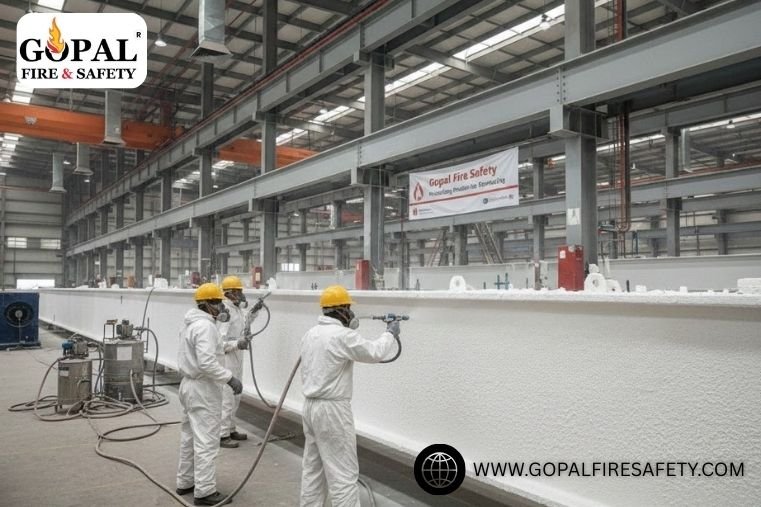
Step 3: Fire Retardant Coating Application
- Spray, brush, or roller application
- Controlled thickness as per fire rating
Step 4: Inspection and Testing
- Dry film thickness measurement
- Visual and adhesion checks
Gopal Fire Safety follows approved application procedures to ensure consistent and certified results.
Fire Resistance Ratings Explained
A fire retardant coating for steel structures is rated based on the time it can withstand fire exposure:
- 30 minutes
- 60 minutes
- 90 minutes
- 120 minutes
The required rating depends on building type, occupancy, and regulatory requirements.
Advantages of Fire Retardant Coating for Steel Structures
- Life Safety: Allows safe evacuation
- Structural Integrity: Prevents early collapse
- Aesthetic Appeal: Maintains exposed steel design
- Cost Efficiency: Reduces need for bulky fireproofing
- Regulatory Compliance: Meets NBC and IS standards
Industries That Require Fire Retardant Coating
- Commercial buildings
- Industrial plants
- Oil & gas facilities
- Power plants
- Airports and metros
- Warehouses and logistics centers
In all these sectors, fire retardant for steel structures is not optional—it is mandatory.
Why Choose Gopal Fire Safety
Gopal Fire Safety is a trusted provider of fire retardant for steel structures, offering:
- Certified fireproofing materials
- Trained application teams
- Compliance with NBC & IS standards
- Fire NOC documentation support
- Long-term maintenance guidance
Visit https://www.gopalfiresafety.com for expert fire protection solutions.